
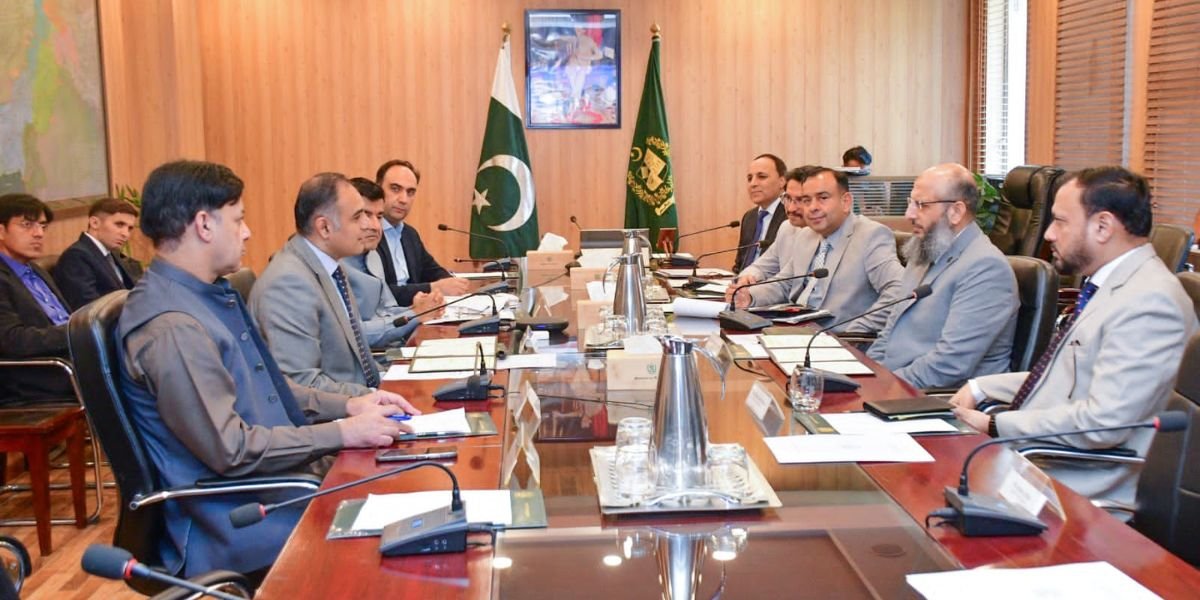
ISLAMABAD: Pakistan and Azerbaijan are stepping up efforts to forge a strategic railway partnership aimed at enhancing trade and transport links across Central and South Asia, following high-level talks held in Islamabad on June 3.
The meeting, chaired by Minister of State for Railways and Head of the Prime Minister’s Delivery Unit, Bilal Azhar Kayani, brought together top officials from the Ministry of Railways, the Ministry of Communications, the Special Investment Facilitation Council (SIFC), and the National Logistics Cell (NLC). Among the key attendees was Major General Asad Cheema, Director General of the SIFC.
The dialogue centered on expanding railway cooperation between the two countries, including freight and passenger services, infrastructure development, and broader logistics integration. Officials also reviewed proposals for Railway Board engagement and logistical frameworks that could significantly improve cross-border transport and regional supply chains.
The discussions mark a continuation of bilateral momentum following Minister Kayani’s visit to Baku on May 15, where he met with Azerbaijan’s Deputy Minister of Agriculture Servan Jafarov and Rovshan Rustamov, Chairman of Azerbaijan Railways.
During the Baku meeting, Rustamov expressed Azerbaijan’s firm interest in strengthening ties with Pakistan in the railway sector, describing Pakistan as a “critical partner” in regional connectivity efforts. Both sides acknowledged the strategic opportunity to utilize their geographic locations to develop more efficient trade corridors linking South Asia, Central Asia, and beyond.
“We believe Pakistan and Azerbaijan have a shared vision for improving regional connectivity through rail,” said Kayani during the Islamabad meeting, according to a statement from the Ministry of Railways.
The proposed collaboration is seen as part of a broader initiative to reimagine Eurasian trade routes in a multipolar world, as global powers increasingly turn to overland logistics to hedge against maritime chokepoints and geopolitical volatility.
Railway experts say the Pakistan-Azerbaijan axis could potentially serve as a key link in the evolving Middle Corridor—connecting China and Central Asia to Turkey and Europe via the South Caucasus—while also reinforcing southbound links to Pakistani ports like Gwadar and Karachi.
While formal agreements are yet to be signed, both Islamabad and Baku have signaled readiness to move forward with feasibility studies and technical discussions in the coming weeks.
The meeting concluded with a mutual understanding to explore concrete next steps, including joint working groups, investment planning, and pilot logistics projects that could pave the way for an integrated railway ecosystem connecting the two nations.