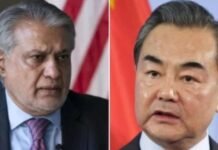
ISLAMABAD: Islamabad and China on Tuesday have agreed on a comprehensive five-point framework aimed at restoring peace and stability in the Gulf and Middle East, after high-level talks.
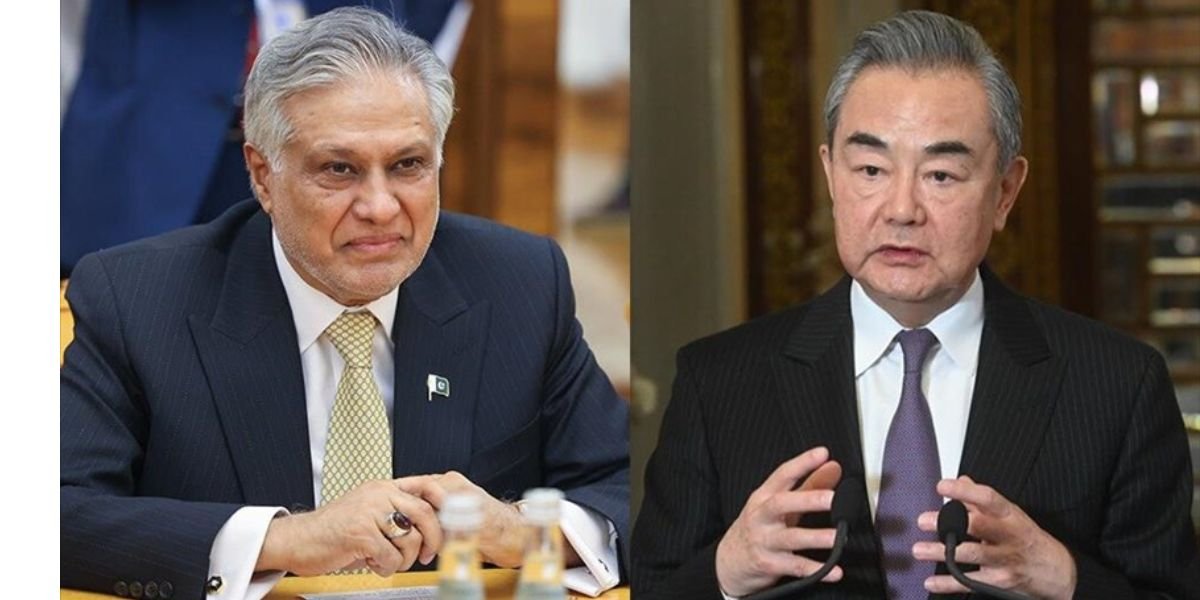
The development came as Deputy Prime Minister and Foreign Minister Ishaq Dar undertook a one-day visit to Beijing at the invitation of China’s Foreign Minister Wang Yi, for “in-depth discussions on regional developments”, according to the Foreign Office (FO).
The two sides called for an immediate cessation of hostilities, the initiation of dialogue among all parties, protection of civilians and critical infrastructure, ensuring the security of key maritime routes including the Strait of Hormuz, and upholding the principles of the United Nations Charter to achieve lasting peace in the region, Pakistan’s Foreign Ministry said.
China to ‘strengthen’ cooperation with Pakistan on Iran
Earlier in the day, China said it would strengthen cooperation with Pakistan on Iran.
“The two foreign ministers will strengthen strategic communication and coordination on the Iran situation and… make new efforts toward advocating for peace,” Chinese foreign ministry spokeswoman Mao Ning told a press conference, calling China and Pakistan “all-weather” strategic partners.
Dar landed in Beijing in the late afternoon and was greeted by high-ranking Chinese officials. He was later received by the Chinese foreign minister at Diaoytai State Guest House for their bilateral meeting.
The trip marks his second official visit to Beijing this year, the FO noted in a post sharing Dar’s departure from Islamabad.
Launch of structured peace negotiations
A central pillar of the initiative is the urgent commencement of peace talks. Both Islamabad and Beijing underscored that dialogue and diplomacy remain the only sustainable path forward, calling on all stakeholders to engage in “meaningful and sincere” negotiations.
They reiterated that any resolution must respect the sovereignty, territorial integrity and national independence of all states, including Iran and Gulf countries, and must be based on mutual consent rather than coercion.
‘Diplomacy a gradual process’
Pakistan’s Ambassador to the United States, Rizwan Saeed Sheikh, said diplomacy remains essential despite being a gradual process.
“Diplomacy takes time and patience, but efforts are underway to accelerate progress in the interest of regional stability,” he said in an interview with Fox News, expressing optimism about ongoing de-escalation efforts.
Also read:Afghanistan storms and floods kill at least 28, destroy homes across provinces