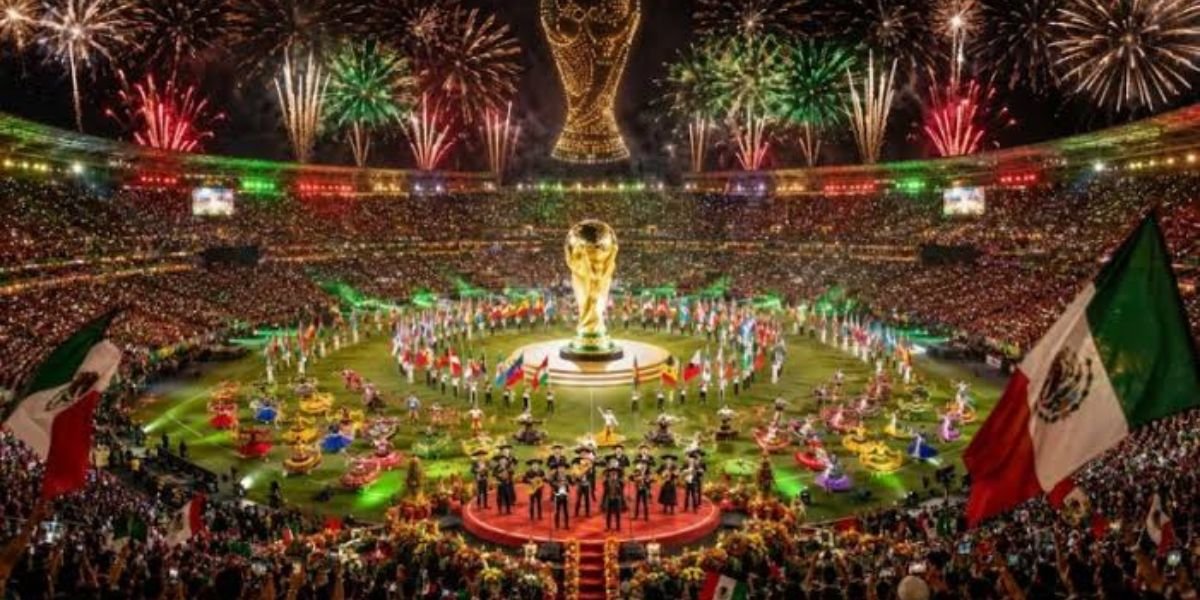
It is the story of Muslim football at the 2026 FIFA World Cup. The first 48-team World Cup has provided an unprecedented platform for nations from Africa, Asia and the Middle East, and the strong presence of Muslim-majority countries has become one of the tournament’s most heartening features. Their participation demonstrates how dramatically the football map has changed within only a few decades.
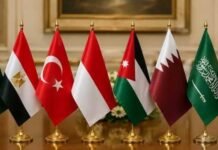
Fourteen Muslim-majority nations entered the tournament, representing diverse football traditions and levels of development. Morocco, Egypt, Algeria, Senegal, Côte d’Ivoire and Tunisia came from Africa; Iran, Saudi Arabia, Qatar, Iraq, Jordan and Uzbekistan represented Asia and the Middle East; while Türkiye and Bosnia and Herzegovina carried the hopes of their supporters from the European football landscape.
Six Muslim-majority nations went further and reached the Round of 32: Morocco, Egypt, Algeria, Senegal, Bosnia and Herzegovina and Côte d’Ivoire. Some were eliminated after courageous battles, but their collective presence in the knockout phase reflected the steady rise of football across societies that, only a few decades ago, enjoyed limited representation at the highest level.
After a tense 1–1 battle with Australia, the Egyptians held their nerve in the decisive penalty shootout and won 4–2. Their reward is a formidable Round-of-16 confrontation with Argentina. Whatever the eventual result, Egypt has already demonstrated the psychological strength, organisation and competitive character required to survive knockout football.
Then came Morocco. On July 4, the Atlas Lions defeated co-host Canada 3–0 and marched into the quarterfinals. Four years after becoming the first African and Arab nation to reach a World Cup semifinal, Morocco has again placed itself among football’s elite. Its repeated success can no longer be dismissed as a fortunate tournament run or a momentary sporting miracle.
Morocco’s rise is the product of planning, investment, scouting, academies, coaching and intelligent integration of players developed in highly competitive football environments. Great teams are not assembled a few months before qualifying matches. They are constructed patiently through systems that discover talent early, monitor its progress and protect its development until gifted children mature into international professionals.
This is perhaps the most important lesson for Pakistan. Talent without a system is frequently wasted, and Pakistan is one of the most painful examples of this reality. A country of more than 240 million people, blessed with enormous youth energy and a powerful overseas community, remains far removed from the greatest football competition on earth.
The contradiction is particularly striking because footballs manufactured in Sialkot have repeatedly been associated with the world’s biggest football tournaments. Pakistani hands can manufacture a ball worthy of the World Cup stage, yet Pakistan has failed to develop a national team capable of consistently approaching that stage. This contradiction should not merely disappoint us; it should embarrass us into action.
Football is played with passion in Lyari, Karachi, Quetta, Chaman, Gilgit-Baltistan, Punjab and countless streets and school grounds across Pakistan. Pakistani children growing up in Europe, North America and the Middle East are also exposed to sophisticated football cultures. The human material exists, but there is no uninterrupted production line capable of discovering, adopting, training and projecting it towards elite competition.
Here lies the uncomfortable truth. Asking Pakistan to establish another national mechanism, create another committee, launch another academy programme and invite coaches from successful football countries may sound impressive, but it is unlikely to produce the required revolution. Pakistan’s sporting history is already littered with institutions, federations, plans, committees and announcements that began with ambition and disappeared into administrative lethargy.
The problem is deeper than coaching. A system vulnerable to political interference, nepotism, personal recommendations, institutional rivalries and painfully slow decision-making cannot be repaired merely by importing a Moroccan or Egyptian coach. Even the finest international expert will eventually become trapped inside a structure that does not identify children transparently, protect merit or maintain a development programme for 15 consecutive years. Pakistan therefore does not need another football institution operating exclusively within Pakistan.
It needs access to a larger, independent and professionally governed international football development mechanism. The 2026 World Cup should inspire the creation of a Muslim Football Development Alliance representing participating Muslim-majority countries and operating beyond the weaknesses of individual national sporting bureaucracies.
The Muslim world has already understood the importance of collective mechanisms in security, finance, trade and diplomacy. Pakistan’s strategic importance in security cooperation is often linked to its military capability and nuclear status. Football obviously belongs to an entirely different field, but the institutional principle of pooling complementary strengths remains relevant. Countries possessing different assets can achieve collectively what weaker members cannot accomplish alone.
A Muslim Football Development Alliance should therefore have its own constitution, independent secretariat, professional management, scouting directorate, technical board and transparent funding system. It should not be controlled by the football federation of Pakistan, Morocco, Saudi Arabia or any other single member. Its loyalty must be to football development, measurable performance and the children selected purely on talent.
Most importantly, the alliance must go to the talent rather than wait for talent to navigate broken national systems. Its international scouting teams should travel to Pakistan, Bangladesh, Indonesia, Malaysia, Central Asia, Africa and other Muslim-majority societies where millions of children play football but professional development pathways remain weak or nonexistent.
The scouts should visit schools, streets, village grounds, local clubs and community tournaments. In Pakistan, they should go to Lyari, Chaman, Quetta, Gilgit-Baltistan, Karachi, Punjab and every region where football is played with passion. A child should not require a political recommendation, family connection, federation official or influential telephone call to be seen. The football field must introduce the child.
Once exceptional talent is identified, the alliance should effectively adopt the player’s football development. This does not mean separating children recklessly from their families or cultures. It means assuming professional responsibility for their sporting journey by providing scholarships, nutrition, education support, medical care, sports science, qualified coaching and regular international exposure.
Every selected child should have a digital development record that follows him throughout the programme. At ten, technical control, balance and football intelligence should be measured. At twelve, physical development and positional potential should be assessed. At fourteen, advanced tactical training should intensify, and by sixteen the strongest prospects should regularly compete against international opposition.
At eighteen, the best players should already be connected with professional clubs, elite academies or competitive leagues. The alliance must maintain responsibility for the pathway rather than simply organise a trial, distribute certificates, take photographs and disappear. A gifted child discovered at nine may require ten years of uninterrupted attention before becoming capable of representing a national team.
The objective should never be to create one combined Muslim football team. Every player must ultimately represent his own country under international football regulations and national eligibility requirements. The alliance’s purpose would be to develop human talent for national teams that currently lack the institutional ability to identify and nurture their best children.
Football is also a gigantic economic industry encompassing broadcasting, sponsorship, stadiums, academies, merchandising, tourism, sports medicine, data analytics and professional leagues. The Muslim world possesses money, youth, passion and successful football models, but it lacks a common mechanism capable of systematically transferring those strengths to countries where talent is abundant but development structures are weak.
Pakistan’s World Cup dream is not impossible. Its talent has simply been left undiscovered, unprotected and undeveloped for too long. Morocco has shown what a system can achieve, while the wider Muslim world possesses the money, knowledge and infrastructure to build something greater together. Pakistan already makes the ball. Now, together, the Muslim world must help Pakistan make the players who can conquer it.