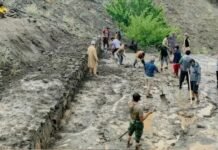
Pakistan faces a double climate threat—Glacial Lake Outburst Floods (GLOFs) and extreme weather—as rising temperatures and pounding monsoon rains converge, putting millions at risk.
In areas like Chitral, Swat, Dir, and Kohistan, glaciers are melting at an alarming rate, warns the Provincial Disaster Management Authority (PDMA). The Ministry of Climate Change says over 7 million people in Gilgit-Baltistan and KP are vulnerable.
What is a GLOF?
A Glacial Lake Outburst Flood happens when a glacial lake suddenly bursts, unleashing a violent flood that can wipe out villages, roads, and entire communities within minutes—a ticking time bomb in the mountains.
Rains Add Fuel to the Fire
As glaciers melt, heavy monsoon rains have made matters worse. The National Disaster Management Authority (NDMA) reports that 64 people died in rain-related incidents in just one week, including 23 in KP. In one tragic case, a flash flood in Swat swept away 17 members of a tourist family.
And it’s not over yet. Starting July 5, a new wave of monsoon rain is expected, raising the risk of floods, landslides, and GLOF events, especially in Gilgit-Baltistan and northern KP.
Authorities on High Alert—but Is It Enough?
PDMA and NDMA have placed local administrations on high alert, setting up evacuation points and keeping emergency teams on standby. The public has been urged to stay away from rivers, canals, and fast-moving water.
But warnings often fall short. NDMA Chairman Lt. Gen. Inam Haider admitted that despite sounding alarms six months in advance, delays and poor coordination continue to hinder disaster response.
2022: A Painful Reminder
The current crisis echoes 2022, when Pakistan faced deadly floods caused by glacial melt and monsoon rains, leaving over 1,700 dead and causing $33 billion in damages. Yet many lessons remain unlearned.
Climate Change Is No Joke
Pakistan, one of the world’s most climate-vulnerable countries, faces a dangerous mix of rising heat, melting glaciers, extreme rain, and poor planning.
NDMA warns that by 2025, the country could face severe water shortages, while cities like Lahore, Sialkot, and Narowal may face urban flooding. In hilly regions, landslides and flash floods could isolate towns, block roads, and endanger lives.
Also Read: Swat River Disaster Signals Pakistan’s Growing Climate Risk