ISLAMABAD: In the global climate arena, carbon markets are emerging as a powerful tool to curb emissions and generate new economic value. This month, Pakistan signaled its intention to play a more prominent role in that space.
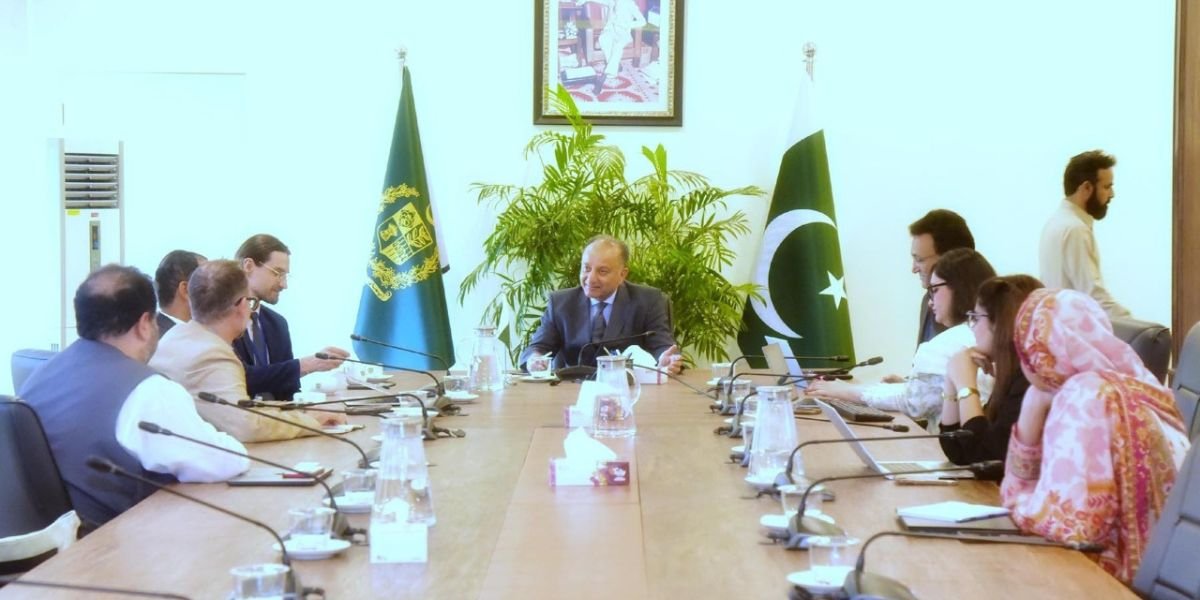
In a high-level meeting in Islamabad, Federal Minister for Climate Change and Environmental Coordination, Dr. Musadik Malik, met with a delegation from SPAR6C — the Supporting Preparedness for Article 6 Cooperation initiative — to discuss Pakistan’s roadmap for entering international carbon markets. Backed by the United Nations Environment Programme (UNEP), the SPAR6C program is helping countries such as Pakistan, Colombia, Thailand, and Zambia develop the technical and institutional frameworks needed to participate in carbon credit trading under Article 6 of the Paris Agreement.
The visit marked a pivotal moment for Pakistan’s evolving climate strategy. It signaled a shift from policy declarations to practical readiness, built on collaboration, skills development, and capacity-building.
‘Pakistan is committed to building a robust, transparent, and inclusive carbon market,’ said Dr. Malik. ‘We are not just preparing to trade carbon credits — we are investing in human capital and systems that can sustain low-carbon growth.’
What is Article 6 — and Why It Matters to Pakistan
Article 6 of the Paris Agreement allows countries to voluntarily cooperate in meeting climate targets, including through carbon markets that permit the trading of emission reductions, also known as carbon credits. This mechanism could unlock billions in climate finance for developing countries — but only if they are institutionally ready and environmentally credible.
Pakistan’s entry into this space is timely. With its vulnerability to climate change well-documented — from record-breaking floods to rising coastal erosion — the country seeks not only resilience but also revenue from responsible environmental stewardship.
Launched in 2022 and running through 2027, the SPAR6C initiative aims to help Pakistan align its national carbon governance with global standards, develop monitoring and verification systems, and build a pipeline of projects capable of generating tradeable carbon credits.
Students at the Center of Climate Preparedness
A notable feature of the SPAR6C-Pakistan partnership is its focus on youth and academic development.
The Islamabad meeting highlighted a student sponsorship program that has already supported Pakistani students engaged in research, training, or higher education related to carbon markets and Article 6. The government and UNEP are now exploring ways to formally connect this emerging expertise with national programs, regulatory bodies, and pilot projects.
‘We’re talking about building long-term institutions — and that means investing in people,’ said one UNEP representative during the closed-door session, as reported by Arab News. ‘Pakistan’s young climate professionals could be its strongest asset in the global carbon economy.’
Dr. Malik echoed that sentiment, stressing the importance of collaboration between government, academia, and the private sector.
A Market in the Making
Carbon trading in Pakistan remains in its early stages. However, pilot projects are already being assessed, particularly in sectors such as energy, forestry, agriculture, and waste management.
According to Energy Update, Dr. Malik and the SPAR6C team also discussed possible bilateral and multilateral trading partnerships, implementation structures, and the policy environment required to support credible offset projects. The discussions stressed the need for transparency and data integrity from the start.
‘Carbon markets can’t succeed if they’re built on weak data or poor governance,’ noted the SPAR6C team. ‘That’s why we’re supporting Pakistan not just in trading, but in regulation, verification, and compliance.’
Domestic Challenges, Global Opportunity
Despite the promise, experts warn that Pakistan’s carbon market journey could stall without addressing key challenges such as regulatory gaps, institutional overlap, and low public awareness.
Still, the opportunity is substantial. The global voluntary carbon market is projected to surpass $50 billion by 2030, according to Carbon Herald. Even a modest share of that could provide Pakistan with crucial climate finance and attract green investments.
Participation in Article 6 markets could also strengthen Pakistan’s international reputation, bring in advanced technologies, and better align national development with climate responsibility.
The Road Ahead
As the SPAR6C initiative enters its mid-phase, Pakistan’s next steps include:
-
Finalizing national carbon market guidelines
-
Expanding student and expert engagement
-
Identifying pilot projects across key sectors
-
Establishing a national registry and verification system
-
Deepening cooperation with international and domestic partners
Whether these goals turn into tangible outcomes will depend on the government’s ability to sustain focus and manage complex reforms — something Dr. Malik acknowledged during the meeting.
‘Climate change is not only a challenge of emissions, it’s a challenge of governance,’ he said. ‘Pakistan must act, and act with integrity, if it wants to lead.’
For now, Pakistan’s carbon economy remains in its infancy. But with global support, national resolve, and a rising generation of climate professionals, the foundation is taking shape — one meeting, one policy, and one carbon credit at a time.