BY RAJA FURQAN
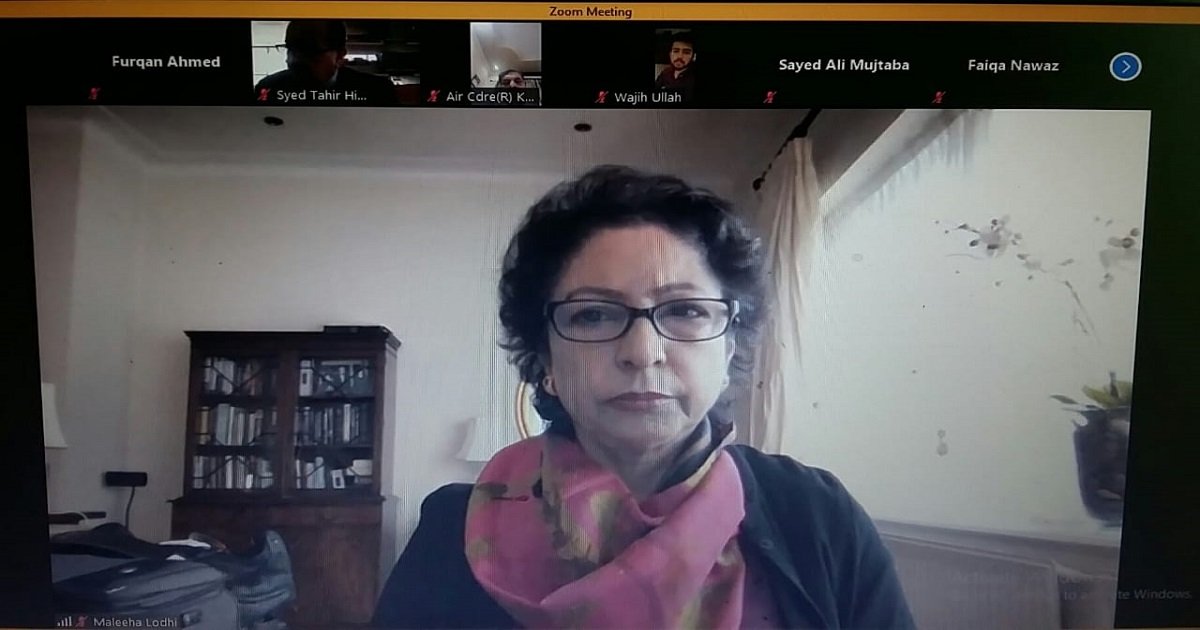
ISLAMABAD: Former Pakistan’s Ambassador to the United Nations, Maleeha Lodhi has said that Pakistan’s ties with China are strategic, historic and pivotal to the country’s foreign policy.
She was speaking at a webinar organized by Muslim Youth University (MYU), International Relations department. The webinar titled “Multidimensional challenges to the Foreign Policy of Pakistan: A way forward.”
The former envoy said that Pakistan faces daunting foreign policy challenges in a turbulent global and regional environment. Rising tensions between the US and China have a direct bearing on Pakistan, she said.
Lodhi believes CPEC is emblematic of China’s aim to strengthen Pakistan, economically and strategically and must remain an overriding priority.
On Afghanistan, she said Pakistan should extend whatever assistance it can to the much-delayed peace process. Islamabad should also need to think long term policy and prepare for different scenarios that might emerge in Afghanistan, she said.
While discussing UAE-Israel peace agreement, she said that deal is a betrayal to the Palestinian cause. Pakistan stands for two-state nations.
On Kashmir issue, Lodhi said Pakistan needs consistency on Kashmir. “We need to keep highlighting the Kashmir issue. Pakistan can use the United Nations Security Council platform in which Pakistan need 16 states vote to called the session,” said the former envoy.
Pakistan should move forward in economical ties and search new markets such as Africa should be the new trade rote for Pakistan.
Dr Syed Rifaat Hussain, while providing an overview of changing international strategic environment and imperatives of Pakistan foreign policy, stated that the foreign policy should be a priority for the government and it also try to improve relations with neighbouring states.
Earlier, in his welcome remarks, vice-chancellor Muslim Youth University Dr Syed Tahir Hijazi welcomed the speakers, and broached agenda for the discussion.
Dr Muhammad Munir, Head of Department International Relations concluded the session by thanking the guest speakers for sharing their opinion.
The webinar was attended by more than 100 participants from civil society, media professionals, academia, international organisations and students.