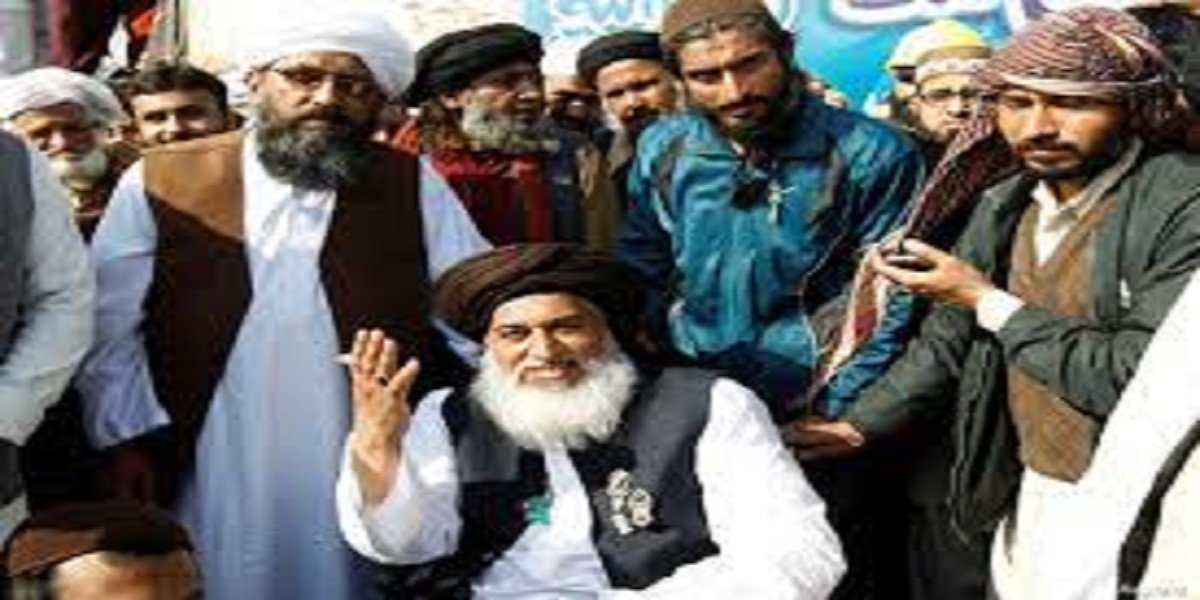
ISLAMABAD: The government has decided to impose a ban on the Tehreek-e-Labbaik Pakistan (TLP) a Sunni based Religio-Politico Party, under the anti-terrorism law.
This was announced by Interior Minister Sheikh Rasheed Ahmed on Wednesday.
A Summary in this regard will be taken to the Federal Cabinet for approval, he said, pointing out that the decision was taken on the request of the Punjab government.
“They [the protesters] were well-prepared,” the minister said. “TLP leaders used to come to all talks with the government but after issuing instructions to their workers regarding road closures.”
Supporters of the religious party took to the streets Monday afternoon after TLP Chief Saad Hussain Rizvi was arrested by the Lahore police. Main roads in Karachi, Lahore, Islamabad, and other cities were blocked following this, and people were stuck in traffic for hours.
On Tuesday, thousands of protesters clashed with the police. Four people were killed during protests in Karachi’s Orangi and Korangi. A police officer in Lahore was killed during the demonstration while hundreds of others were injured.
Rasheed assured that all highways, motorways, and roads in Punjab have now been cleared. “The protesters created a lot of problems for the government and the public.”
Our police and Rangers have done an excellent job and controlled the situation in the country within hours, he remarked.
The minister assured that a bill on the finality of the Prophet will be presented in Parliament. “But what they want will tarnish Pakistan’s image internationally.”
If the TLP is banned, this would automatically mean that its candidates cannot be elected representatives. The by-election for NA-249 is scheduled to take place April 29 on the seat vacated by the PTI’s Faisal Vawda.
Before the TLP, Pakistan had two Barelvi political groups: the Sunni Tehreek and Jamiat Ulema-e-Pakistan. (Barelvi as opposed to Deoband). None of them was mainstream, explains Sabookh Syed, an Islamabad-based analyst who monitors such groups. “The JUP and Sunni Tehreek never fielded candidates all over the country but the TLP did in the last election.”
There is only one man who deserves credit for making TLP mainstream and that was Allama Rizvi, said Syed. Of course, every religious group tried to erect Mumtaz Qadri as their symbol but they all failed where Rizvi succeeded. “He had a charismatic personality and an aggressive unique style of delivering sermons that made him the centre of attraction.”
Syed said in his opinion it would be an uphill task for his son to mimic such style and aggression and the party could lose support in the next elections.
Saad Rizvi, Allama Rizvi’s 26-year-old son, was chosen to lead the party by its 18-member shura. He has been active in the party for the past few years, serving as its deputy secretary-general. He used to stay in touch with reporters and made the party presence felt on social media.
According to his friend Salman, Saad is a student of Darja-e-Aaliya of Dars-e-Nizami. He is studying at his father’s Abuzar Ghaffari seminary.
“He is a smart man with a deep interest in books,” said Salman. “Unlike other madrassa students, Saad knows the importance of social media and used it to spread his father’s message.”
The TLP and its members had accounts on Facebook but they knew nothing about Twitter, said, Salman. Saad knew that the microblogging site was a very important platform and believed that the party should have a presence on it because the mainstream media wasn’t giving them coverage.
“He visited several madrassas and explained Twitter and its use to the students,” his friend said. “Now, you can see TLP trends on Twitter.”
Saad is popular among young party workers and also worked as a bridge between them and Allama Rizvi, according to his friend.
Read more: Premier approves summary to ban TLP, it will now be tabled in a cabinet meeting