Pakistan’s Prime Minister Urges UN to Intervene on Kashmir, Warns Against Indian Aggression in South Asia

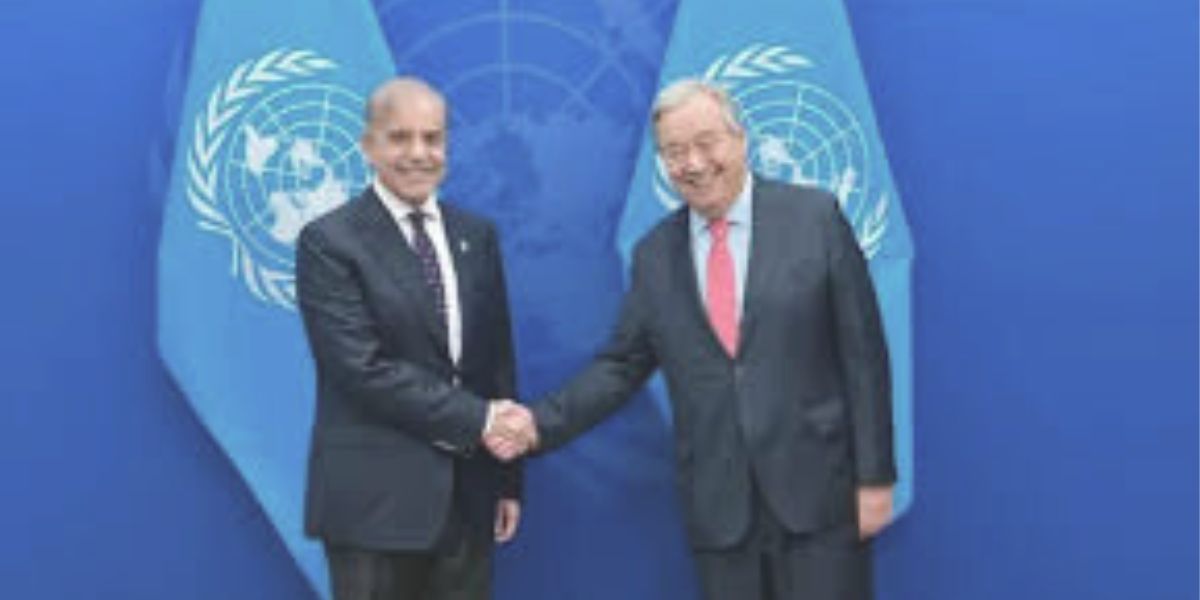
Shahbaz Shareef and UN Secretary General
Islamabad:  Rising tobacco and nicotine use among Pakistan’s youth, especially around educational institutions, emerged as the central concern at a national review session on tobacco control held by the Aurat Foundation in Islamabad. Participants from Parliament, government departments, health organizations, and civil society warned that easy availability of cigarettes, vapes, nicotine pouches, and flavored tobacco near schools is creating a growing public health threat. The discussion also pointed to a noticeable increase in tobacco use among women, indicating a shifting trend. The session called for stronger legislation, faster policy action, and strict enforcement to counter the rapid spread of emerging nicotine products. Speakers emphasized that existing laws remain poorly implemented due to procedural delays, weak monitoring, and limited coordination between federal and provincial bodies. The need for clear parental awareness, community engagement, and better recognition of new nicotine products was highlighted as an essential part of early prevention. Officials noted that families and schools often remain unaware of modern products marketed to young people. Technical briefings identified major enforcement gaps and policy loopholes that allow the tobacco industry to expand its reach. Participants noted that companies are increasingly using social media trends, entertainment content, and youth-focused marketing to promote vaping in urban areas. Government representatives reaffirmed ongoing federal efforts to implement the Prohibition of Smoking and Protection of Non-Smokers Health Ordinance 2002 and to tighten regulations where required. Provincial representatives also announced plans to introduce new resolutions to strengthen tobacco control. Education sector officials raised alarms over the rise of nicotine products around private institutions and called for tougher regulatory checks. Regulatory authorities stressed the need for a broader social movement to counter tobacco use nationwide. Closing the event, the Aurat Foundation reiterated its commitment to evidence-based advocacy, cross-sector collaboration, and long-term public awareness initiatives aimed at building a healthier, tobacco-free society.

ISLAMABAD: In a high-level diplomatic exchange amid growing regional tensions, Prime Minister Muhammad Shehbaz Sharif held a crucial telephone conversation this evening with United Nations Secretary-General António Guterres, focusing on recent developments in South Asia.

During the call, the Prime Minister categorically rejected Indian allegations linking Pakistan to the recent Pahalgam incident, labeling them “baseless” and politically motivated. He reiterated Pakistan’s unequivocal condemnation of terrorism in all its forms, while highlighting the country’s extensive sacrifices in the global fight against terror.

Advertisment

Sharif urged for a transparent and impartial international investigation into the Pahalgam episode, dismissing any attempts to malign Pakistan’s reputation through unsubstantiated accusations.

Expressing deep concern over India’s actions in Indian Illegally Occupied Jammu and Kashmir (IIOJK), the Prime Minister criticized what he called New Delhi’s efforts to delegitimize the Kashmiri freedom movement by conflating it with terrorism. He pointed to documented evidence of state-sponsored violence in the region and denounced India’s alleged weaponization of the Indus Basin waters, warning that any disruption to this critical resource—lifeline to 240 million people—was unacceptable.

In a stern message, the Prime Minister asserted that Pakistan will defend its sovereignty and territorial integrity against any potential misadventure. He appealed to the UN Secretary-General to counsel India to act with restraint and responsibility to avoid further regional instability.

Sharif reaffirmed that the unresolved Jammu & Kashmir dispute remains the core cause of conflict in South Asia, and urged the UN to take an active role in facilitating its just resolution in line with Security Council resolutions.

The Prime Minister also reiterated Pakistan’s commitment to international peace and security, particularly as a non-permanent member of the UN Security Council.

In response, Secretary-General Guterres acknowledged Pakistan’s continued efforts to maintain peace in the region and emphasized that the world cannot afford any escalation in South Asia, especially at this critical juncture in global affairs.

Subscribe
Notify of
0 Comments
Inline Feedbacks
View all comments