
ISLAMABAD: Pakistan’s economy is losing over a staggering Rs. 300 billion annually due to an unsustainable tax regime, which has inadvertently incentivised illegal trade in the cigarette sector; a crisis that threatens not just tax revenues but also challenges the writ of the state.
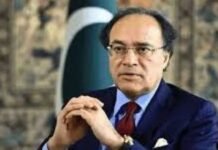
This alarming revelation was made in a report titled “Towards an Optimal Tax Regime for Pakistan’s Tobacco Sector,” authored by renowned economist, Sakib Sherani and launched by ACT Alliance Pakistan at an event in the capital.
ACT Alliance Pakistan, a civil society network working since 2016 to combat illegal economy, tax evasion, smuggling, and counterfeiting, estimates that Pakistan loses close to $100 billion annually due to various illegal economic activities.
The findings of the report underscored the urgent need for strong policy interventions and enforcement measures to address the rapid expansion of illegal cigarette trade, which now dominates the market.
The report argues that the government has crossed the “optimal tax point”, where increasing tax rates now reduce revenue instead of raising it.
The price elasticity of demand for cigarettes in Pakistan is -1.4, meaning that higher prices significantly reduce legal sales while boosting illicit trade.
“The current tax policy on cigarettes is failing on multiple fronts,” explained Sakib Sherani. “Not only has it encouraged an expansion in illegal trade, but it has also created severe distortions in the market. The formal sector, which contributes over 98% of tax revenue collected from the industry, is shrinking, while illegal operators continue to thrive without any accountability.”
For the first time in Pakistan’s history, illegal cigarette volumes have surpassed legitimate sales for two consecutive years, making up 56% of the total market. Despite continuous tax increases on legally compliant brands, these measures have failed to achieve the intended revenue targets. Instead, higher prices on legal brands have driven consumers toward cheaper, tax-evading alternatives, depriving the government of much-needed revenue.
“The unchecked growth of illegal cigarettes is not just about lost tax revenue; it is an economic emergency,” said Mubashir Akram, National Convenor of ACT Alliance Pakistan. “Illegal trade in every sector, including cigarettes, fuels corruption, discourages investment, and cripples Pakistan’s ability to provide essential public services.
The government must now ensure implementation and enforcement of tax laws across the country”
The report analyses Pakistan’s tobacco taxation system, highlighting inefficiencies that have led to a significant rise in illicit cigarette sales, revenue losses, and public health concerns.
It argues for a balanced tax regime in the medium term that maximizes government revenue while addressing market distortions caused by excessive taxation.
Mubashir Akram argued that by maintaining the status quo, legal businesses have been overburdened while illegal operators have flourished. However, if real reforms are implemented, excise is rationalized and strict enforcement is carried out to bring illegal businesses into the net, Pakistan can progress to become economically secure.
The report outlines key policy recommendations to fix the system, including strengthening enforcement against tax-evading cigarette brands, ensuring full compliance with Track and Trace, and stopping predatory tax hikes on legally compliant businesses.
“Pakistan’s current tobacco taxation strategy is ineffective, leading to a decline in formal sector sales, a surge in illicit trade, and massive revenue losses. A more balanced, well-enforced tax regime is needed to ensure sustainable revenue generation while minimizing market distortions and public health risks,” concluded Sakib Sherani.
ACT Alliance Pakistan called on the government, regulatory bodies, civil society, and media to join forces against illegal economic activities. “The cost of inaction is too high. The country’s financial security, investor confidence, and economic sovereignty depend on eliminating the illegal economy and ensuring a fair, transparent system for all,” Mubashir Akram said
Read more: US, EU Condemn Jaffar Express Train-jacking Episode in Balochistan