By Reuters
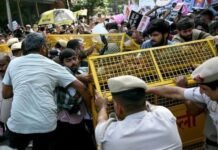
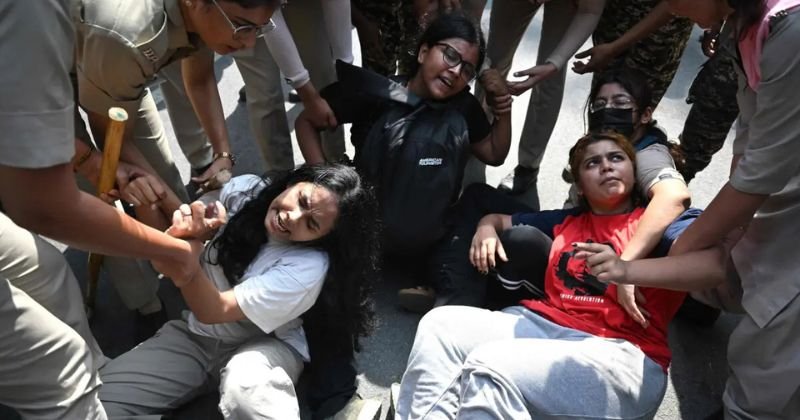
NEW DELHI: Police detained hundreds of protesters in Delhi for a second day on Sunday as sporadic protests broke out demanding India’s election chief quit, while a court ordered the release of “cockroach” movement founder Abhijeet Dipke and two other senior leaders.
Dipke and the other leaders of the Cockroach Janta Party (CJP), a nationwide youth protest movement, were detained when their plane landed in Delhi on Saturday as the movement planned to gather thousands of people at Jantar Mantar in Central Delhi.
The court ordered their release with an undertaking to “maintain public peace”, the CJP said in a statement.
The youth movement, which has mobilised protests in recent months against a range of issues from government school infrastructure to jobs for young people, is one of the biggest political challenges to Prime Minister Narendra Modi and his Bharatiya Janata Party (BJP) in his 12 years in power.
The protesters are calling for the resignation of Chief Election Commissioner Gyanesh Kumar over a revision of voter lists that critics say disproportionately benefits Modi.
Youth protesters, many of them from students organisations affiliated with India’s communist parties, launched sporadic protests on Sunday afternoon in Delhi before police detained them and hauled them away in vehicles.
Small protests by dozens of people were also held in the cities of Mumbai, Kolkata, Panaji and Pune, local media reported.
Abhita Ruheja, a protester who was detained on Sunday, said the authorities had turned Delhi into a fortress.
“Is this how a democracy works? They have been scrapping rights after rights and this is turning into a dictatorship,” she said.
The All India Students’ Association alleged in a post on X that those detained in Delhi were assaulted by police inside the vehicles.
A video posted on X by the Communist Party of India (Marxist) showed one of its lawmakers, John Brittas, who was briefly detained, being helped from a bus to an autorickshaw as he appeared to be in distress.
Reuters could not verify claims about detainees being assaulted by police.
Police also detained several journalists covering the protests, many of whom were carrying microphones and had their press cards prominently displayed, according to a Reuters witness.
CJP’s Dipke said he was going back to his home in India’s western state of Maharashtra as his grandmother had died but added that the protests would continue.
“Haven’t signed any bond that says we won’t protest. We will hit the streets again,” he said in a post on X.
Thousands of police and paramilitary personnel continued to be deployed across Delhi, although metro stations reopened and mobile internet services were restored after authorities locked down the city in an attempt to thwart Saturday’s protests.
The police spokesperson said 2,400 people were detained on Saturday and most were released the same night.
Opposition parties and critics of Modi’s government criticised what they said was the high-handed use of force against the protesters, while a UN body called on authorities to ensure that the right to peaceful assembly was respected and fulfilled.
India’s foreign ministry said the UN’s statement constituted “an unwarranted interference in the internal affairs of India”.
At an unusually packed hearing on a Sunday, the Supreme Court recorded the government’s assurance that lawyers and journalists would not be impeded while performing their duties.
Lawyers protesting outside the Supreme Court were detained briefly on Saturday, as were several reporters including a Reuters journalist.
Sporadic protests have been going on across India since the Indian Express newspaper in late September reported that Kumar’s two deputies had raised several concerns internally about voter list revisions, registration procedures and digital systems.
The Election Commission says differing views are normal in internal deliberations, and has denied favouring any party.
Election Commission data shows about 130 million names, more than the population of Japan, have been deleted from electoral rolls during the verification exercise, including 28 million people who had died, 63 million who had relocated and 30 million who could not be traced.
Modi’s BJP has accused groups opposed to it of trying to undermine the country’s democracy by wrongly questioning legitimate electoral processes. The Election Commission has said that voters wrongly deleted can re-enrol.
The BJP and the Commission deny allegations of manipulation, although opposition parties allege Muslim voters and other minorities, who are unlikely to support the Hindu nationalist ruling party, are disproportionately impacted by the deletions.
Also read:Saudi-led coalition says new attack at Riyadh airport causes fire, day after strike kills 12