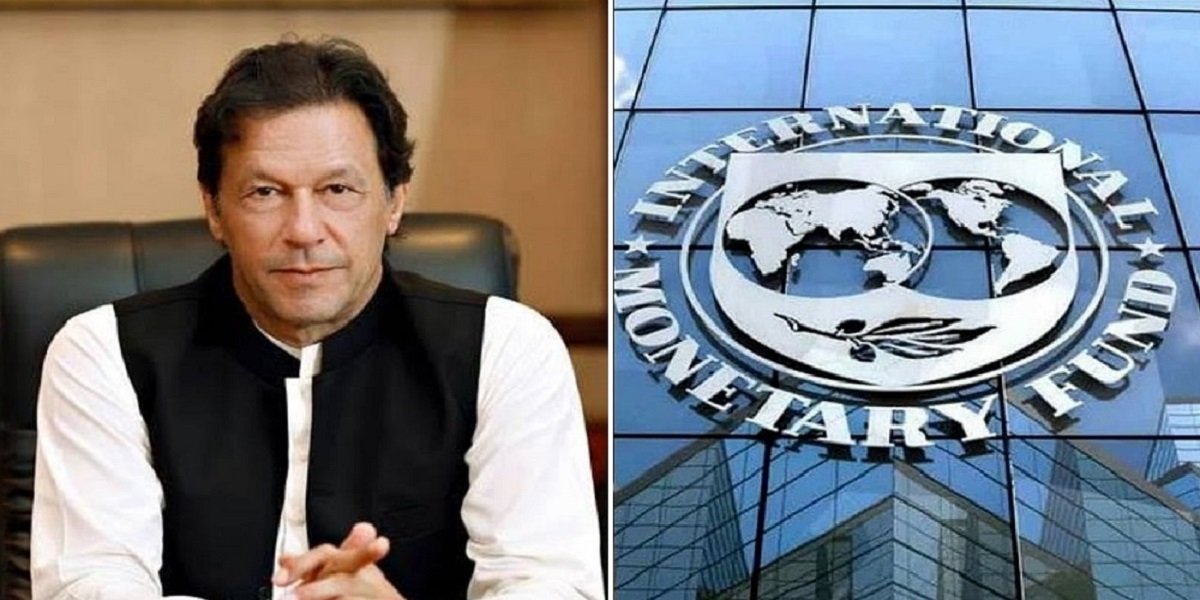
ISLAMABAD: Previous regime of Imran Khan-led Pakistan Tehreek-e-Insaf (PTI), during its tenure (2018-2022) paid the highest interest on its loans to the International Monetary Fund (IMF), an official document showed.
The documents revealed that the Pakistan People’s Party (PPP) regime (2008-2013) remained the leading borrower from the International Money Lender followed by Pakistan Muslim League Nawaz (PML-N).
The document was tabled in the lower house of the Parliament (the National Assembly) by the Ministry of Economic Affairs, regarding a query from the National Assembly’s Standing Committee.
The document tabled stated that the PPP government secured loans amounting to 5.23 billion in Special Drawing Rights (SDRs), equivalent to over $7.72 billion.
Over $3 billion in loans were repaid to the IMF between 2008 and 2013. Additionally, the PPP paid more than $484 million in interest to the IMF.
On the other hand, the PML-N is not far behind the PPP in adding to the country’s indebtedness as the Nawaz Sharif-led government borrowed 4.39 billion in SDRs from 2013 to 2018. This amount translates to over $6.48 billion over the five years.
The PML-N-led regime repaid loans of more than 4 billion in SDRs, or $5.92 billion in currency terms, and paid over $317 million in interest during their tenure.
The document presented by the Ministry of Economic Affairs before the standing Committee revealed that the PTI government secured a loan totaling over 4.5 billion in SDRs or $6 billion from the IMF, the document shows.
The PTI government repaid over $4.02 billion or 2.72 billion in SDRs on top of $791 million in interest to the IMF during this period.
Interestingly, the PTI regime emerges as the borrower that paid the highest interest on the IMF loans, surpassing the interest payments made by both the PPP and PML-N in their respective tenures.
It is worth mentioning that last month, the ruling PML-N-led coalition and the IMF reached an agreement for a $7 billion, 37-month loan program with tough measures such as raising tax on farm income.
The staff-level agreement caps negotiations that started in May after Islamabad completed a short-term, $3 billion program that helped stabilize the economy, avert a sovereign debt default and set challenging revenue targets in its budget to get IMF approval.
Pakistan has been struggling with boom-and-bust cycles for decades, leading to 22 IMF bailouts since 1958. Currently, the IMF is the fifth-largest debtor, owing $6.28 billion as of July 11, according to the lender’s data.
The latest economic crisis has been the most prolonged and has seen the highest-ever levels of inflation, pushing the country to the brink of a sovereign default last summer before an IMF bailout.
The conditions of the program have become tougher. The latest bailout is aimed at cementing stability and inclusive growth in the crisis-plagued South Asian country, the IMF said.
Read more: Bangladeshi Students Launch Nationwide Civil Disobedience Movement