
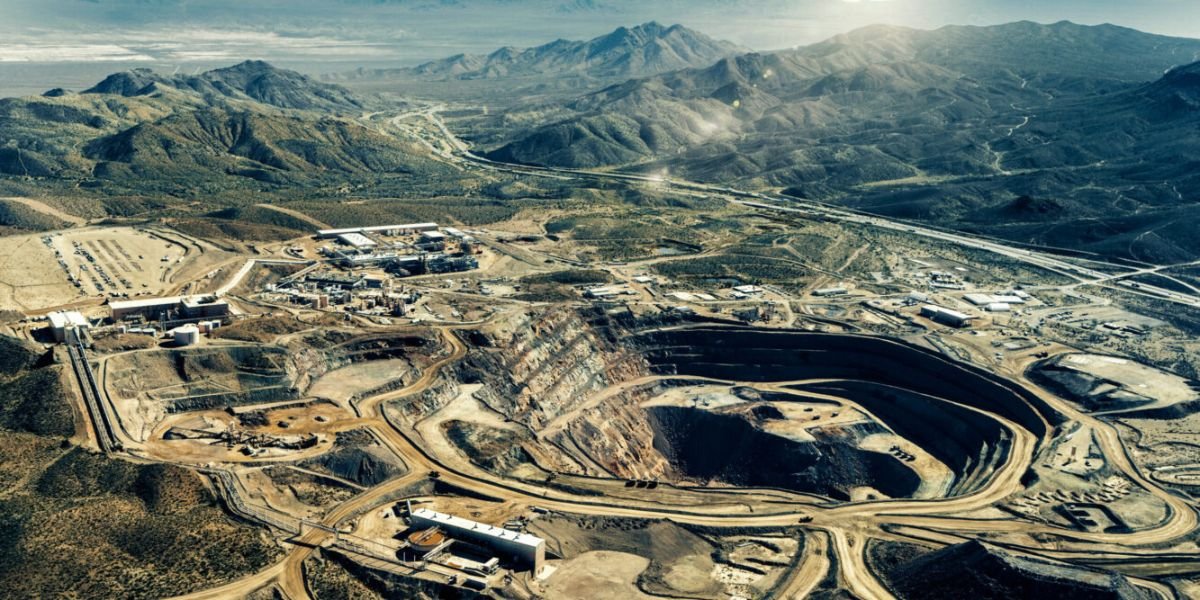
On February 2, 2026, President Donald Trump authorized the creation of a $12 billion strategic fund to establish a national reserve of rare earth minerals and rare earth magnets, and to rebuild the domestic supply chain from the ground up. The initiative was designed to restore American control over materials essential to defense systems, energy infrastructure, and high-technology manufacturing. It marked the first serious attempt in decades to reverse the erosion of U.S. strategic autonomy—and, in doing so, quietly acknowledged how dangerously exposed the nation had become.
That exposure did not occur overnight. It was the cumulative result of decades of policy failure under successive administrations, across party lines, that systematically dismantled America’s rare earth ecosystem. Mining capacity was neglected, refining and separation facilities were allowed to disappear, magnet manufacturing was abandoned, and strategic planning was replaced with short-term cost calculations. Even more alarming, foreign—primarily Chinese—companies were permitted to operate rare earth mines on U.S. soil, export raw material abroad for processing, and then sell finished products back to American industry. By the time Washington acted, control had already been surrendered.
The trigger that finally brought this negligence into the open was the tariff regime introduced after President Trump took office on January 20, 2025. Intended to correct trade imbalances and assert economic leverage against China, the tariffs instead exposed the fragile foundations of the American industrial system. China’s response was not confined to reciprocal tariffs; it deployed a far more potent tool: control over the export of rare earth minerals and, more critically, rare earth magnets.
Rare earth elements consist of seventeen minerals, including neodymium, praseodymium, dysprosium, and terbium. These elements are not rare in a geological sense; the United States itself holds substantial reserves. What makes them strategically rare is the difficulty of extracting, separating, and refining them into usable industrial forms. This process is capital-intensive, environmentally complex, and technologically demanding. While the United States gradually exited this space, China invested patiently, mastering every stage of the value chain.
Rare earth magnets represent the point at which strategic value becomes decisive. Neodymium-iron-boron magnets are exponentially stronger and more efficient than conventional magnets, enabling compact, high-performance systems on which modern technology depends. Electric vehicles rely on them for efficient motors. Wind turbines depend on them for power generation. Smartphones, computers, robotics, and medical imaging equipment cannot function without them. Most critically, advanced weapons systems—fighter aircraft, submarines, missile guidance platforms, radar arrays, satellites, and space systems—are built around rare earth magnet technology. In modern warfare and high-tech industry alike, these magnets are more essential than oil, gas, or even nuclear fuel.
When China signaled restrictions on the free flow of these materials in response to trade pressure, the impact on the United States was immediate. Defense contractors warned of supply disruptions. Electric vehicle manufacturers faced production uncertainty. Semiconductor, robotics, and aerospace industries confronted bottlenecks that threatened to halt assembly lines. The message was unmistakable: without access to Chinese-controlled supply chains, large segments of the American economy could not function.
Manufacturing leaders rushed to Washington with stark warnings. Defense suppliers and technology firms made clear that prolonged disruption would cripple production and weaken national security. Temporary diplomatic adjustments followed, easing immediate pressure, but the strategic lesson could no longer be ignored. The United States had allowed a single external power to dominate the most critical inputs of the modern economy.
It was this realization that culminated in the February 2026 decision to create a strategic reserve and rebuild domestic capacity. Yet the very scale of the initiative underscored the depth of the problem. Constructing mines, refineries, separation plants, alloy facilities, and magnet factories is not a short-term exercise. Rebuilding expertise, securing environmental approvals, training skilled labor, and establishing industrial scale will take a decade or more. Until then, American industries remain exposed, and defense stockpiles continue to thin. Despite political rhetoric, many firms will remain dependent on Chinese supply—on Chinese terms.
The rare earth crisis also exposed a second, even more consequential failure: the hollowing out of America’s manufacturing base. Over the past four decades, production was systematically outsourced to Asia and other regions. The United States retained innovation, design, finance, and branding, while physical manufacturing migrated abroad. This model delivered profits during periods of stability, but under stress it proved dangerously fragile.
By the mid-2020s, manufacturing employment represented only a fraction of the U.S. workforce compared to its historical peak. The tariff shock revealed a hard truth: innovation without manufacturing depth is not power; it is dependence. Ideas alone cannot build vehicles, weapons, energy systems, or infrastructure when supply chains fracture.
The domestic consequences are increasingly visible. Job insecurity has risen, real wage growth has lagged, and many households rely on savings or government support to maintain stability. A nation that once projected industrial confidence now faces growing public anxiety about economic security and employment resilience.
Geopolitically, the tariff era produced an outcome few anticipated. Rather than isolating China, it accelerated China’s centrality. Allies and competitors alike were penalized, prompting many to seek stability by deepening engagement with Beijing. Across Europe, Asia, Africa, and the Middle East, countries moved pragmatically toward China—not out of ideology, but necessity.
China’s strength at this moment lies not in coercion, but in integration. It controls critical processing chokepoints, maintains manufacturing scale, and sustains trade relationships across political systems. While the United States pushed partners away through pressure, China welcomed them through industrial cooperation and long-term planning.
The historical irony is profound. In 1949, China emerged impoverished and marginalized. Over the following decades, it built the world’s most comprehensive manufacturing ecosystem and lifted hundreds of millions out of poverty. By mastering the unglamorous foundations of power—mining, refining, processing, and manufacturing—it positioned itself at the center of the global economy.
The February 2026 strategic reserve initiative is therefore both a correction and a confession. It corrects course by finally investing in material sovereignty. It confesses how long those foundations were ignored. True independence cannot be declared through tariffs alone; it must be constructed patiently—mine by mine, refinery by refinery, factory by factory, magnet by magnet.
In the modern world, power belongs not to those who move fastest or speak loudest, but to those who build relentlessly and plan for decades. In that race, slow and steady does not merely win—it defines the future.