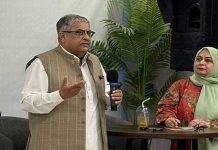
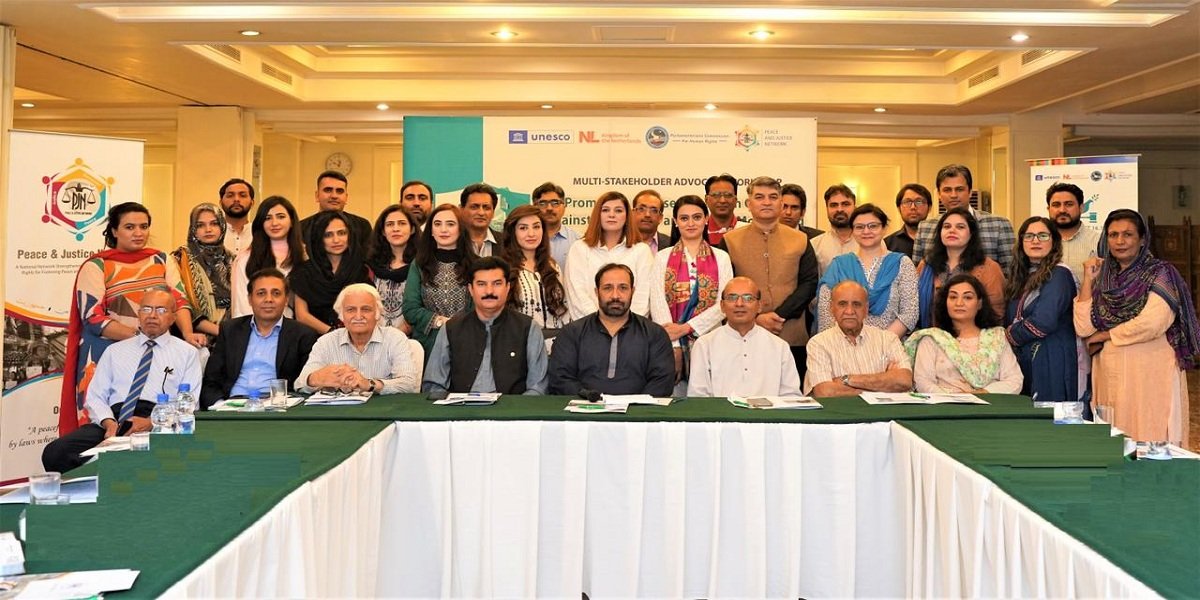
ISLAMABAD: In the continuation of UNESCO programs and workshops, on the safety of journalists and the importance of data on crimes against journalists the multi-stakeholder advocacy seminar was held on Thursday for “Promoting the use of Data on Crime against Journalists and related Monitoring Mechanisms for ensuring effective and efficient State response to the Protection needs of Journalists and for creating a Balanced, Strong, and Gender-responsive media environment in Pakistan”.
The event was jointly organized by the Parliamentary commission for human rights (PCHR) and Peace and Justice network (PCHR) in collaboration with UNESCO.
The Advocacy Seminar was organized for development partners, civil society, media development organizations, and journalists , civil society and other organizations and journalists so that they can come up with suggestions for an effective response to the protection needs of journalists and can perform their responsible role.
A large number of Journalists, representatives of federal and provincial Unions of Journalists, representatives of Civil Society and media development organizations participated in the event.
Shafeeq Chaudhary The Executive Director of Parliamentarian Commission for human rights said that The safety of journalists and ending impunity for crimes against them are essential to preserving the fundamental right to freedom of expression, guaranteed by Article 19 of the
Constitution of Pakistan.
Freedom of expression and safety of journalists are indispensable elements for flourishing democracies and for fostering citizen participation in the 2030 Development Agenda.
Freedom of expression makes democracy more meaningful and institutions are more accountable. It contributes to a free and balanced debate. It acts as a catalyst- freedom of expression allows people to demand other human rights, such as justice, equality before the law, and freedom of religion or belief.
When freedom of expression and the safety of journalists are protected, the media can play a vital role in preventing conflict and in supporting peaceful democratic processes.
Raza Ali Naqvi, Executive Director of Peace and Justice network emphasized on the data collection and its effective use is inevitable for a democratic country like Pakistan. In his presentation he elaborated on how he started his effort for the collection of Data with Police departments, and created a mechanism with government organizations and relevant departments.
Now the practice has been done and a mechanism has been created so it’s time to let our Civil society and media organizations know that now effective data mechanisms have been completed and anyone can use it for effective purposes.
He also emphasized that SDGs 16.1 demands two important formalities for the collection of data and that is first a credible and verified data and then if crime has been done against the journalist while in the line of duty category wise Gender and nature of crimes.
He further showed Verified data shared by National Police bureau actually collected by all Pakistan Police stations.
Myra Imran a very senior journalist representing National press club Islamabad, highlighted the gender crime reporting mechanism and suggested women journalists should be part of the Commission for the safety of journalists to investigate crimes against women journalists.
Hafiz Tahir Khalil, a senior journalist and bureau chief of jang newspaper, also suggested that the National press club and bodies of all unions working for the journalist’s rights should form up a committee for the collection of effective and verified data.
Speakers and panelists from civil society and organizations working for online news agencies also suggested identifying the term ‘Journalist’ before reporting crimes against them.
Asad Baig online media expert suggested that harassing journalists and bloggers have become another challenge in the era of freedom of expression.
Data about crimes on line should be added in the data of crimes against journalists.
Afzal Butt President PFUJ used the term of factories of fake news and deep fakes maligning and attacking online journalists which needs a strict state policy to deal with them. He also offered his forum for the joint effort for the collection and maintenance of verified data.
Faisal Kareem Kundi a seasoned politician also talked about the mechanism which should eradicate trends of trolling online which is causing traumas to families of the journalists.
Chief guest of the workshop Farhat Ullah Babar rightly suggested while in his concluding remarks that it was a great effort of data collection and its mechanism now there is a time to utilize it for further policy making and in way forward plans.
Pakistan has been proactively pursuing the Sustainable Development Goals (SDGs) 2030 Agenda since it signed it in 2015. On the one hand, the government is following a whole government approach and corroborating it with the whole nation’s approach to the SDGs. Pakistan National Framework on SDGs approved by the National Economic Council declared SDGs Target 16.10.1 Safety of Journalists and Human Rights Defenders as one of the priority targets for Pakistan Sustainable Development Goal target 16.10 reflects the fact that freedom of expression is the touchstone of all other human rights and underpins the achievement of all SDGs.
Read more: Bilawal rejects Imran’s allegations, rebuilds ties with West at Davos