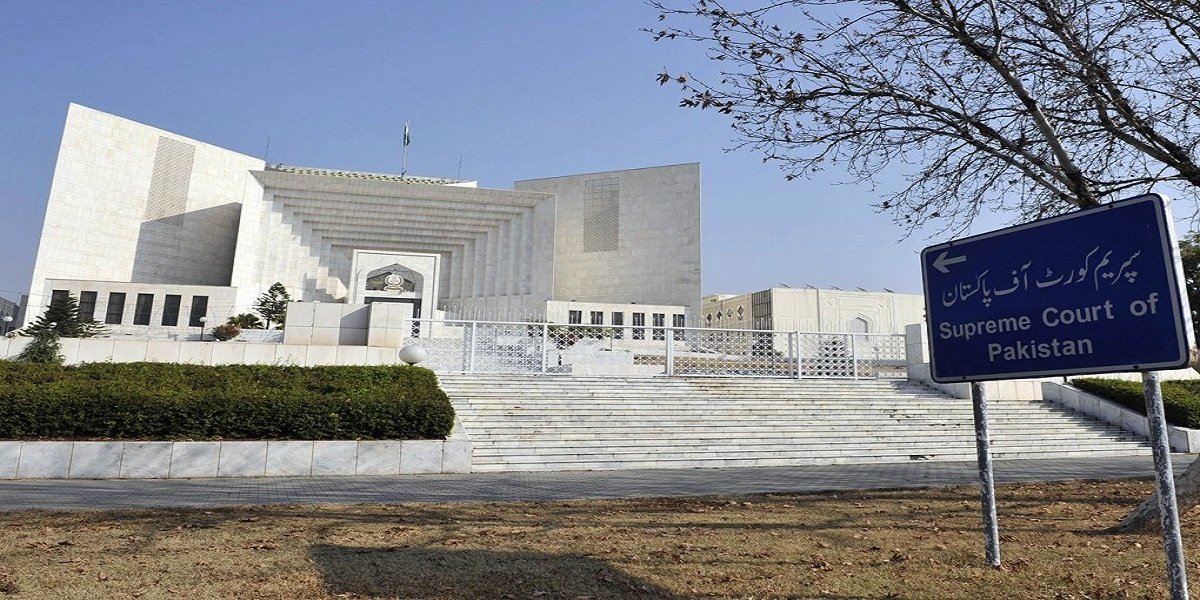
ISLAMABAD: The Supreme Court of Pakistan (SCP) is set to resume hearing of the suo motu case pertaining to delay in the announcement of a date for elections in Punjab and Khyber Pakhtunkhwa today (Friday).
A nine-member bench, headed by Chief Justice Umar Ata Bandial, and comprising Justice Ijazul Ahsan, Justice Munib Akhtar, Justice Syed Mazahar Ali Akbar Naqvi, Justice Syed Mansoor Ali Shah, Justice Jamal Khan Mandokhail, Justice Yahya Afridi, Justice Athar Minallah and Justice Muhammad Ali Mazhar, will hear the case.
On Thursday, the bench issued notices to Attorney General for Pakistan (AGP) Shehzad Ata Elahi, Election Commission of Pakistan (ECP), government through the cabinet secretary, chief secretaries of Punjab and KP, Pakistan Bar Council (PBC), the Supreme Court Bar Association (SCBA), all the advocate generals of the provinces, and the Pakistan Democratic Movement (PDM), directing them to submit their arguments on Friday (today).
As no notices can be issued to President Dr Arif Alvi and the two governors under Article 248 that provides them immunity, the apex court has ordered principal secretaries to contact them to get the point of view on the matter.
Bench Appears Divided on Suo Motu in Thursday’s Hearing
During yesterday’s hearing, Justice raised objection on the suo motu notice and called it “unjustified”. He said the Punjab and KP speakers had filed their petitions before the apex court’s notice. He said the notice was taken on the note of Justice Naqvi and Justice Ahsan who had given it during the hearing of the case pertaining to transfer of Lahore Capital City Police Officer Ghulam Mahmood Dogar.
He highlighted that the chief election commissioner was summoned by the both judges in the case despite the fact that he was not a party in it.
Irrespective of the CEC reply, Justice Ahsan and Justice Naqvi referred the matter to the CJP to take the suo motu notice. He observed there was no connection between the election and Lahore CCPO’s case. In these circumstances, it was not justified to send the matter to the chief justice to take the suo motu notice under Article 184 (3).
Two other judges – Justice Athar Minahllah and Justice Syed Mansoor Ali Shah – highlighted other aspects in the case with raising questions over motivation behind dissolution of the assemblies.
At the outset, CJP Bandial said the bench would hear three related cases and determine who was supposed to give the elections’ dates. He said it was an important case and should be dealt with in line with the Constitution. The apex court, he said, would not tolerate violation of the constitution. He said the schedule of next week had been put off to give due weightage to this case. He said the judges would listen to the viewpoint of all concerned and salient features would be discussed on Friday.
He said multiple factors led the apex court to take the suo motu notice, adding that the 90-day period for conducting provincial elections was running out. He said the matter was also pending with the Lahore High Court, adding that the high court could be bypassed in case of emergency. The CJP remarked, “We want implementation of the Constitution dictates”.
At that point, Barrister Ali Zafar said he wanted to bring some things related to the president’s announcement about the date for elections on the record. The CJP replied Arif Alvi announced the date for elections in the provinces under Section 57 (notification of election programme) of the Elections Act 2017. He said multiple opinions had surfaced about this part of the act and it needed to be interpreted.
Ali Zafar requested the court to take up a relevant petition filed by him. However, CJP Bandial remarked that the court was looking into three different matters. “We have to determine who has the authority to give date for elections after the dissolution of the assemblies”.
At one point during the hearing, the attorney general of Pakistan sought time from the court for preparation in the case. He said it would be difficult to come up with preparation during Friday’s hearing if so many notices were issued to people. In reply, the top judge said the court would discuss only essential things, adding that the detailed hearing of the case would be held on Monday next week.
He said the court wanted to wrap up the case as soon as possible and the time given by the Constitution for the election was running out. Saying the court would not tolerate violation of the Constitution, the CJP remarked the time for elections could only be extended if there was a serious situation. He said the situation had changed after the president announced a date for the elections. The top court would see the constitutional points in the case and then implement it, he added.