By Sabaena Siddiqui
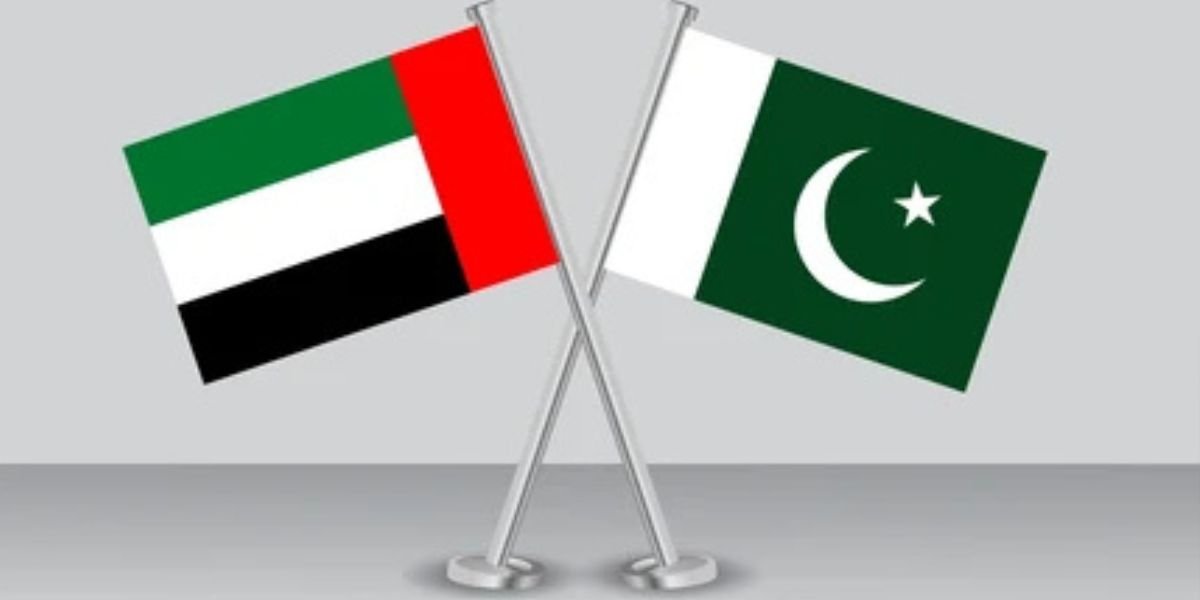
The message emerging from Abu Dhabi this week was more than diplomatic — it was a statement of shared destiny. When Pakistan’s Chief of Defence Staff, Syed Asim Munir, met with Sheikh Tahnoon bin Zayed Al Nahyan, the discussion went beyond formalities.
According to Inter-Services Public Relations (ISPR), Field Marshal Munir told his host, “The security and stability of the United Arab Emirates are an integral part of Pakistan’s own security.” The statement carried weight because it was backed by decades of intertwined interests spanning military cooperation, economic partnership, and people-to-people ties. It was a reminder that in today’s complex regional environment, the fates of Islamabad and Abu Dhabi are closely linked.
This strategic alignment is rooted in history. Pakistan was the first country to recognize the United Arab Emirates after its unification in 1971, laying the foundation for a relationship built on shared Islamic heritage and mutual security concerns. Over the years, Pakistan’s military has provided training, advisory support, and personnel to help develop UAE armed forces. From armor and artillery programs in the 1970s to more recent joint naval exercises like the “Nasl Al Bahr” series, Islamabad’s defense expertise has long contributed to Gulf security.
Munir reflected on this legacy during his Abu Dhabi visit: “We sincerely appreciate the UAE’s longstanding support to Pakistan’s economy and security, which reflects our deep-rooted historical relations and brotherly bonds.”
Economic ties have been equally vital. Bilateral trade surged to $10.1 billion in fiscal year 2024–25, reflecting a 20 percent increase driven by Pakistan’s exports of textiles, rice, and fruits, while the UAE exports petroleum products and machinery. Beyond trade, the UAE has consistently supported Pakistan financially, including direct investments in energy, infrastructure, and technology sectors.
Remittances from over 1.5 million Pakistani expatriates in the UAE contribute nearly $7 billion annually, bolstering Pakistan’s foreign reserves and creating enduring social and economic linkages. These flows, Field Marshal Munir noted, are not just numbers — they represent a bridge between two societies, sustaining livelihoods and reinforcing mutual trust.
What sets this partnership apart today is the intertwining of security and economic cooperation. Modern threats rarely respect borders; terrorism financing, online radicalization, and money laundering increasingly challenge national stability. To address this, Pakistan’s National Accountability Bureau has partnered with UAE authorities on legal and financial coordination, ensuring that economic stability and national security reinforce each other.
As Munir emphasized, “Our joint efforts in security and economic collaboration are essential for peace and stability in the region.” Analysts at the Tactics Institute for Security and Counter-Terrorism note that this level of alignment is a natural consequence when two countries share overlapping vulnerabilities: sustained engagement fosters converging strategic priorities, transforming historically transactional ties into a deeply integrated partnership.
The convergence between Islamabad and Abu Dhabi is visible across multiple dimensions. Militarily, both sides are enhancing interoperability, conducting joint exercises, and sharing intelligence on regional threats. Financially, the UAE continues to extend critical investments, oil grants, and deferred payments during Pakistan’s economic challenges, demonstrating a level of trust that goes beyond conventional diplomacy.
Politically, both countries maintain continuous dialogue to manage regional crises — from conflicts in Afghanistan to broader Gulf tensions. Each step reflects an understanding that stability in one country directly benefits the other, forming a web of interdependence that makes unilateral strategies less viable.
Yet the relationship has not been without challenges. At times, divergent foreign policy priorities have created friction. Pakistan’s cautious stance during the Yemen intervention and the Qatar diplomatic crisis tested coordination. Similarly, the UAE’s strategic engagement with India and normalization with Israel prompted debate within Pakistan, highlighting the need to balance economic pragmatism with domestic and ideological considerations.
Despite these pressures, dialogue and shared interests have prevailed, ensuring that disagreements do not unravel the broader partnership.
During the Abu Dhabi meetings, Field Marshal Munir reiterated Pakistan’s commitment to expanding cooperation. “Pakistan is committed to expanding this partnership in all fields, ensuring peace, stability, and prosperity for our brotherly nations,” he said — underscoring a forward-looking approach in which military, economic, and diplomatic coordination increasingly intersect.
Ultimately, the evolving Pakistan–UAE relationship reflects a broader truth about modern alliances. Stability in Abu Dhabi reinforces stability in Islamabad, while financial and human linkages create shared stakes. Military exercises, economic investments, and counter-terrorism coordination are no longer separate strands — they form a coherent fabric of mutual interest.
In a region often defined by uncertainty, this partnership demonstrates that enduring collaboration is forged not only through agreements but through shared realities, shared vulnerabilities, and shared futures.
Sabaena Siddiqui, a NUML graduate, is a freelancer and content writer covering
international relations and exploring global security, foreign policy and power
dynamics through a strategic and analytical lens.