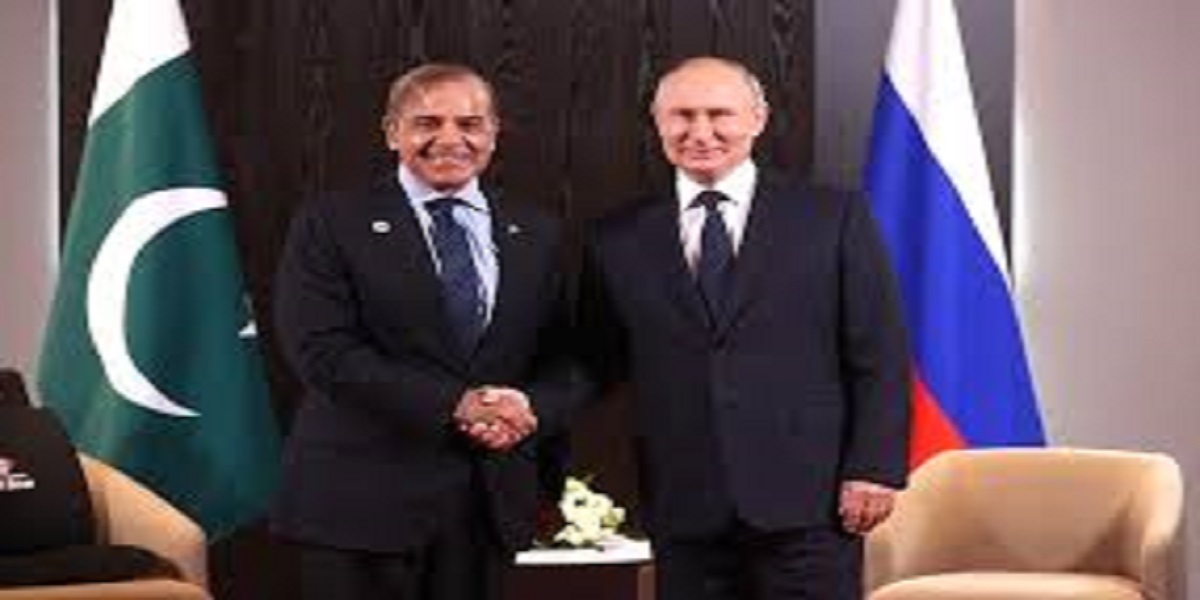
BEIJING: Prime Minister Shehbaz Sharif held a meeting with Russian President Vladimir Putin in Beijing and reaffirmed Pakistan’s resolve to strengthening bilateral ties and exploring new avenues of cooperation.
During the meeting, Prime Minister Shehbaz expressed gratitude to President Putin for inviting him to visit Russia. He said he would be “very happy” to make the visit, highlighting Islamabad’s desire to take relations with Moscow to new heights.
“Because of your personal interest, we are going in the right direction,” the PM told the Russian leader, noting that Pakistan and Russia are determined to take bilateral relations to new heights.
Prime Minister Shehbaz highlighted that trade between Pakistan and Russia had grown over the past year and stressed that both countries were working to expand cooperation in agriculture, energy, transport, and other sectors. He emphasised that Pakistan and Russia were committed to building a future-oriented partnership.
The Premier also noted that Russia could play an important role in the development of the region, while expressing Pakistan’s desire to deepen cooperation in trade and other key areas. He also said Pakistan had made serious and sincere efforts to strengthen bilateral ties.
Premier Shehbaz Sharif noted that Pakistan’s purchase of oil from Russia had significantly increased trade volume, while several protocols had been signed to pave the way for cooperation in key sectors.
“We have made very serious and sincere efforts to develop our bilateral relations. Our oil imports from Russia have boosted trade, and the protocols we have signed will enhance collaboration in areas such as agriculture, steel, energy, and transport. Together, these steps reflect our firm commitment to building a strong partnership without any doubt,” Shehbaz said.
Shehbaz Sharif said Pakistan seeks to establish relations that are complementary and contribute to making the region more developed, prosperous, and stable.
President Putin, on his part, expressed solidarity with Pakistan over the devastation caused by recent floods, acknowledging that the country is facing a natural disaster. He reiterated Russia’s commitment to enhancing bilateral relations with Pakistan, which he described as “excellent.”
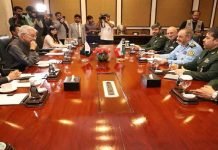
Shehbaz was accompanied by a high-level delegation, including Deputy Prime Minister Ishaq Dar, army chief Field Marshal Asim Munir, Interior Minister Mohsin Naqvi, and Information Minister Atta Tarar.
Prime Minister Shehbaz also recalled his meeting with President Putin in Astana, after which several high-level visits took place between the two countries. He said this momentum reflected the growing trust and understanding between Islamabad and Moscow.
Earlier, Chinese President Xi Jinping also met with Prime Minister Shehbaz Sharif where both leaders reaffirmed their commitment to strengthening the all-weather strategic cooperative partnership between China and Pakistan.
President Xi emphasized that as the world undergoes “changes unseen in a century,” a stronger China-Pakistan relationship is vital to safeguarding regional peace, stability, and development.
He called for accelerating the building of “an even closer China-Pakistan community with a shared future in the new era,” adding that both sides should work toward upgrading the China-Pakistan Economic Corridor (CPEC) and the China-Pakistan Free Trade Agreement (FTA).
Xi also expressed hope that Pakistan would take effective measures to ensure the safety of Chinese personnel, projects, and institutions operating in the country.
In his remarks, Prime Minister Shehbaz congratulated President Xi on the successful hosting of the SCO Summit and the 80th anniversary of the victory in the Anti-Fascist War.
Shehbaz Sharif reaffirmed Pakistan’s resolve to continue working with China to launch the next upgraded phase of CPEC, which he described as a flagship of the Belt and Road Initiative (BRI).
Prime Minister Shehbaz Sharif revealed that five new development corridors have been added to CPEC’s next phase, aimed at strengthening connectivity and building a stronger Pakistan-China community with a shared future.
He further appreciated China’s unwavering support for Pakistan’s sovereignty, territorial integrity, and economic development, pledging that Pakistan would “spare no effort in ensuring the safety of all Chinese personnel and projects.”
Both leaders stressed that their partnership goes beyond bilateral ties and serves as a model of cooperation for the wider neighborhood. They also vowed to strengthen coordination in regional peace efforts, counter-terrorism, and global development initiatives.
Read more: US President Not Worried Over China, Russia Forming Axis Against US