
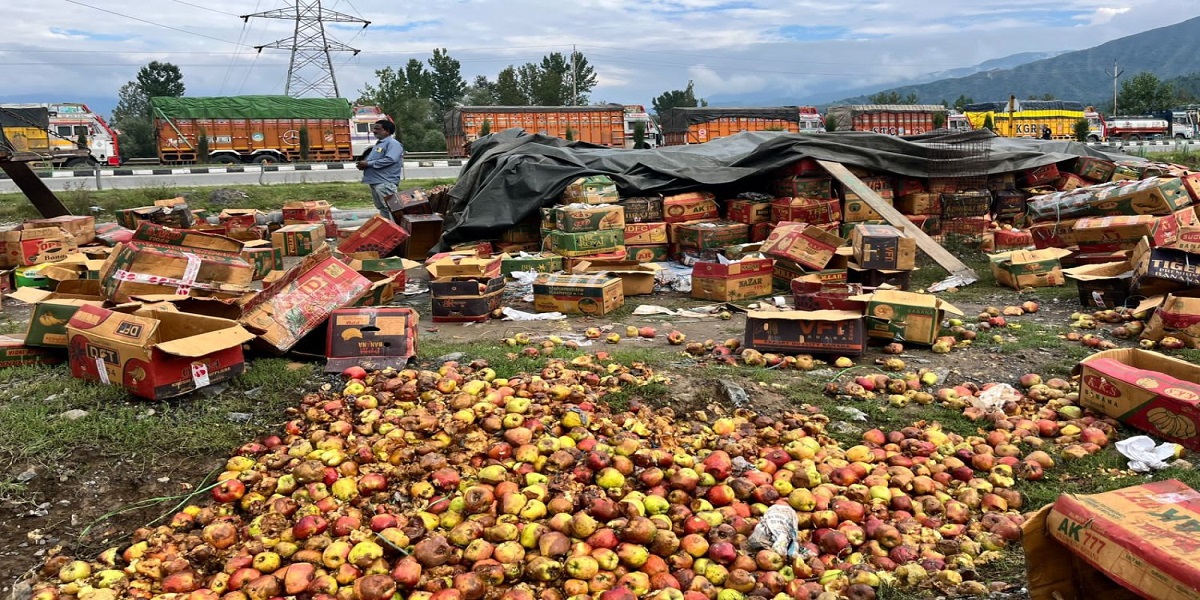
Srinagar-Jammu Highway Blockade Destroys Rs 1200bn Kashmir Apple Industry

Destroyed Apple - The News Today - TNT
Islamabad:  Rising tobacco and nicotine use among Pakistan’s youth, especially around educational institutions, emerged as the central concern at a national review session on tobacco control held by the Aurat Foundation in Islamabad. Participants from Parliament, government departments, health organizations, and civil society warned that easy availability of cigarettes, vapes, nicotine pouches, and flavored tobacco near schools is creating a growing public health threat. The discussion also pointed to a noticeable increase in tobacco use among women, indicating a shifting trend. The session called for stronger legislation, faster policy action, and strict enforcement to counter the rapid spread of emerging nicotine products. Speakers emphasized that existing laws remain poorly implemented due to procedural delays, weak monitoring, and limited coordination between federal and provincial bodies. The need for clear parental awareness, community engagement, and better recognition of new nicotine products was highlighted as an essential part of early prevention. Officials noted that families and schools often remain unaware of modern products marketed to young people. Technical briefings identified major enforcement gaps and policy loopholes that allow the tobacco industry to expand its reach. Participants noted that companies are increasingly using social media trends, entertainment content, and youth-focused marketing to promote vaping in urban areas. Government representatives reaffirmed ongoing federal efforts to implement the Prohibition of Smoking and Protection of Non-Smokers Health Ordinance 2002 and to tighten regulations where required. Provincial representatives also announced plans to introduce new resolutions to strengthen tobacco control. Education sector officials raised alarms over the rise of nicotine products around private institutions and called for tougher regulatory checks. Regulatory authorities stressed the need for a broader social movement to counter tobacco use nationwide. Closing the event, the Aurat Foundation reiterated its commitment to evidence-based advocacy, cross-sector collaboration, and long-term public awareness initiatives aimed at building a healthier, tobacco-free society.

SRINAGAR: The Kashmir apple growers have been expressing deep concern over the prolonged closure of the Srinagar-Jammu highway, warning that the transport disruption has placed Kashmir’s most lucrative industry under severe stress.

With the highway closed for over 15 days now, not just farmers but traders too are reeling under the impact, as supplies dry up and markets face an unprecedented crisis.

Advertisment

Recent floods have already damaged orchards, worsening the plight of farmers. With soaring transport costs now eroding profit margins, growers fear that thousands of families who depend on the trade are staring at a bleak season.

A delegation of apple growers told mediaperson that the highway blockades have led to a sharp hike in freight charges, making it difficult for them to ship their produce to markets outside the valley.

They stressed that timely transportation is crucial as the bulk of Kashmir’s fruit exports are perishable and delay leads to massive financial losses.

The figues underlines the magnitude of the crisis and revealed that Kashmir’s apple industry is valued at more than Rs 1,200 billion, generating higher revenue than the tourism sector, which has long been seen as the region’s economic mainstay.

The industry directly or indirectly supports around 3.5 million people and contributes nearly 10 per cent of Jammu and Kashmir’s gross domestic product.

During the 2023–24 period, the union territory produced about 26.43 lakh metric tonnes of horticultural produce, of which 18.57 lakh metric tonnes were exported.

Apples made up the overwhelming share of these exports.

Sopore Fruit Mandi, one of Asia’s largest fruit markets, alone accounts for nearly Rs300 billion turnover and handles almost 40 per cent of Kashmir’s apple production.

Shopian, known as the “Apple Bowl of Kashmir,” provides more than 60 per cent of local employment and continues to expand its orchard area.

Apple growers fear that without urgent intervention, the transport blockade could cripple a sector that not only surpasses tourism in economic value but also forms the backbone of rural livelihood in the valley.

Read more: Karachi Streams Swell As Heavy Rains Wreak Havoc In Metropolis

Subscribe
Notify of
0 Comments
Inline Feedbacks
View all comments