
ISLAMABAD: Pakistan’s economy will grow at a higher rate in the outgoing fiscal year, beating international lenders’ predictions. However, due to a downturn in the manufacturing and service sectors, it failed to meet budgetary projections.
The provisional GDP growth is anticipated to be 2.38 per cent for FY24, surpassing the projections of the International Monetary Fund’s 2 percent, the Asian Development Bank’s 1.9 percent, and the World Bank’s 1.8 percent. However, the State Bank of Pakistan has forecast a 2-3 percent economic growth in FY24.
The National Accounts Committee (NAC) confirmed quarterly GDP growth rates for Q1 (revised), Q2 (revised), and Q3 of FY24, as well as the annual provisional growth rate for FY24. The committee finalized and updated growth rates for FY22 and FY23, respectively.
According to provisional NAC figures, the economy grew steadily at 2.09 percent during the third quarter of FY24. Agriculture, industry, and services all grew at 3.94 percent, 3.84 percent, and 0.83 percent. During the third quarter, all agricultural constituents contributed favorably, including key crops (2.89 percent due to wheat), other crops (1.14 percent), cotton ginning (61.75 percent), and livestock (4.20 percent).
The NAC has also revised its growth estimates for the first two quarters of the fiscal year upwards; Q1 now stands at 2.71 percent and Q2 at 1.79 percent, reflecting an improvement from the initial projections of 2.50 percent and 1 percent, respectively.
Based on the estimates for the first three quarters, the NAC has also projected an estimate for the entire FY24, which suggests that the economy will grow at 2.38 percent owing to higher-than-expected growth in the agriculture sector.
Agriculture’s provisional growth rate is 6.25 per cent, while industry and services’ growth rates are 1.21 per cent each.
Agriculture emerged as the primary engine of growth in FY24. The overall increase in the agriculture sector not only exceeded the target of 3.50 percent but also remained higher than the 2.27 per cent growth of last year.
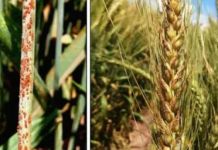
Further analysis shows that agriculture’s healthy growth is mostly owing to double-digit growth in important crops—16.82 per cent in FY24, driven by bumper wheat crops of 11.64 percent. Wheat production is expected to reach 31.44 million tonnes in FY24, up from 28.16 million tonnes the previous year.
Cotton production will increase by 108.22 per cent, from 4.91 to 10.22 million bales, while rice yield will increase by 34.78 per cent, from 7.32 to 9.87 million tonnes.
Two important crops, sugarcane and maize, are expected to fall slightly in FY24. Sugarcane yield would fall 0.39 per cent from 87.98 million tonnes to 87.64 million tonnes in FY24, while maize yield will fall by 10.35 per cent to 9.85 million tonnes from 10.99 million tonnes. Furthermore, the provisional increase in other crops is 0.90 per cent, cotton ginning & miscellaneous components 47.23 per cent, livestock 3.89 per cent, and forestry 3.05 per cent.
The industrial sector grew by 1.21 per cent in FY24, falling short of the target of 3.40 per cent. In FY24, the mining and quarrying industries outperformed projections, while manufacturing growth fell short of the projected target. The mining and quarrying industry witnessed a growth of 4.85 per cent because of an increase in crude oil production (1.51 percent), coal (37.72 per cent), other minerals (7.57 per cent), limestone (7.95 per cent), and marble (23.22 per cent).
Large-scale manufacturing has witnessed a nominal growth of 0.07 percent with a mixed trend in the production of various groups—food (1.69 per cent), wood (12.09 percent), coke & petroleum (4.85 per cent), pharmaceuticals (23.19 per cent), beverages (-3.43 per cent), textile (-8.27 per cent), tobacco (-33.59 per cent), and non-metallic mineral products (-3.89 per cent).
The electricity, gas, and water supply industries showed negative growth of 10.55 percent due to a decrease in subsidies in real terms due to the high deflator. The construction industry increased by 5.86 per cent due to an increase in construction-related expenditures by private and public sector enterprises.
The services industry also grew by 1.21 per cent in FY24, but fell short of the target of 3.60 per cent. However, it remains slightly higher than the previous year’s growth of 0.01 per cent. Detailed analysis of the industry reflects a mixed trend. Wholesale and retail trade has witnessed a growth of 0.32 per cent because of positive growth in agricultural output. The transport and storage industry has increased by 1.19 per cent because of an increase in the output of railways, water transport, and road transport.
Due to high inflation, real growth in the information and communication, finance and insurance, public administration, and social security industries has become negative at 3.02 per cent, 9.64 per cent, and 5.25 per cent, respectively. Furthermore, both the education and human health and social work industries have posted positive growth at 10.30 per cent and 6.80 per cent, respectively.
Read more: Consumers’ down-trading to illegal cigarettes cost Rs 310bn loss to National Exchequer: NUST Report