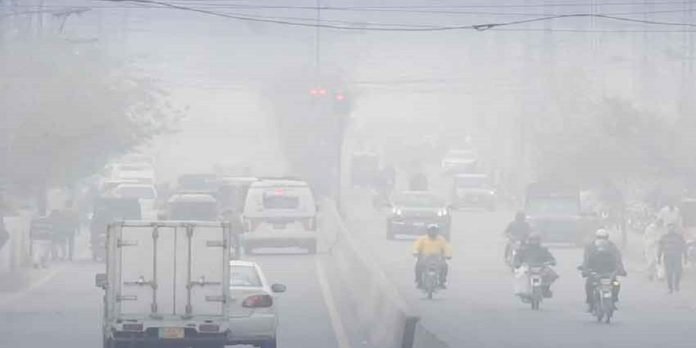
ISLAMABAD: Air Pollution of Islamabad continues to worsen, with the Air Quality Index (AQI) reaching a hazardous level of 210, according to recent reports.
This level is 26.9 per cent higher than the World Health Organization’s recommended guidelines, posing health risks, especially for those with respiratory conditions. Residents are advised to wear masks to mitigate exposure to harmful pollutants.
The Pakistan Meteoroligical Department (PMD) has forecast dry weather to persist in and around Islamabad along with smog and foggy conditions.
Meanwhile, Karachi is experiencing a shift in weather. The Met Department reported that the city’s morning temperatures are cool and chilly, though dry heat prevails during the day.
Karachi’s current temperature stands at 26 degrees Celsius, with the highest likely to go to 34 degrees. The minimum recorded temperature was 22 degrees Celsius, and the humidity level is at 86%. Pollution levels have also been recorded, with 137 PM2.5 particulate matter in the air, indicating moderate pollution.
The Met Department also issued warnings of smog and fog across various regions in Pakistan due to dry weather conditions. These include cities in Punjab like Lahore, Kasur, Okara, Hafizabad, Toba Tek Sindh, Jhang, Narowal, Sialkot, and others, where dense fog and smog are expected. Chance of fog and smog are also likely in Attock, Jhelum, Chakwal, Mangala, Gujrat, Gujranwala, Sargodha, Sheikhupura, Sahiwal and Faisalabad.
Smog is also likely in areas of Khyber Pakhtunkhwa such as Peshawar, Mardan, Kohistan and Kohat. Chitral, Dir, Swat, and surrounding areas may experience cloudy weather, with rain and snowfall on the mountainous regions.
In Sindh, districts including Sukkur and Larkana may see foggy conditions in the early morning and late-night hours, while most of Balochistan will remain dry with cooler temperatures in the hilly areas during mornings and nights.
ISLAMABAD: The International Monetary Fund (IMF) is looking to revert back to a three-month review schedule of the $7 billion bailout package after seeing early slippages, but the Pakistani authorities insist that no final decision has so far been taken.
The issue of returning to the quarterly reviews surfaced during an unscheduled visit of the IMF mission that had to rush to Islamabad to keep the program on track.
The finance ministry is also struggling to keep the provinces on the right track, ministry sources said.
They said that a quarterly review would help in constant monitoring of about 40 conditions agreed under the $7 billion deal. However, the officials told that there was no final decision on the issue of the biannual and the quarterly reviews.
About six weeks ago, the IMF board had approved the $7 billion deal and released the $1.1 billion upfront. The remaining amount of around $6 billion will be distributed in six equal tranches, subject to the successful completion of half-yearly reviews.
The completion and the approval of the first review was scheduled for March next year but due to multiple challenges on the fiscal, taxation and external financing fronts, the mission arrived before time. The last Extended Fund Facility (EEF) of the 2019-22 deal was also based on the quarterly reviews.
In case of the quarterly reviews, the IMF can ensure strong implementation by keeping a close check on the government, the sources said. The quarterly reviews would also strengthen the hands of the Ministry of Finance to ensure monitoring of the 40 conditions, they added.
IMF Mission took the first round of briefings from various ministries, while Mission Chief Nathan Porter held opening talks with Finance Minister Muhammad Aurangzeb and State Bank of Pakistan (SBP) Governor Jameel Ahmad on Tuesday.
The IMF’s new Resident Representative to Pakistan Mahir Bicini also attended the opening meeting. The finance minister hosted a luncheon in honour of the outgoing representative Esther Perez. The finance ministry did not issue a press statement after the opening session.
The IMF held different rounds of discussions on the issues of Federal Board of Revenue’s (FBR) performance, reliability of the power sector statistics and performance of the macroeconomic targets. An important round was also held on the status of the implementation of the National Fiscal Pact.
The FBR gave an overview of its performance during the first quarter. The IMF was told that the three-month shortfall of Rs90 billion was because the macroeconomic assumptions went off the mark.
ISLAMABAD: Earthquake has jolted the Federal Capital (Islamabad), Peshawar and surrounding areas of the capital and Khyber Pakhtunkhwa on Wednesday.
According to the Seismological Centre, tremors were also reported in Swabi, Malakand, Battagram, Mardan, Swat, Nowshera, Landi Kotal, Hangu and Abbottabad, as well as in Chitral, Buner, and Mansehra.
The Seismological Centre reported that the earthquake had a magnitude of 5.3 on Richter Scale, with its epicenter located in the Hindukush region of Afghanistan at a depth of 220 kilometres.
Earlier, a 5.7 magnitude earthquake jolted the federal capital and parts of Punjab and KP on September11.
ISLAMABAD: Chief Justice of Pakistan (CJP) Yahya Khan Afridi launched initiatives for comprehensive jail reforms for effective prison system to ensure a fair legal framework.
The discussion was also attended by members from both treasury and opposition political parties Ahad Khan Cheema and Ms Khadijah Shah who have experienced imprisonment in jail.
This session marked the inaugural discussion for developing National Jail Reform Policy, focusing on prison reforms and the welfare of inmates as part of a broader criminal justice reform strategy for Pakistan.
Chief Justice Afridi shared his vision for modernising Pakistan’s criminal justice system, stressing that a humane and effective prison system is essential to ensure a fair legal framework.
He noted that data collected by Law and Justice Commission of Pakistan (LJCP) reveals a deeply concerning situation nationwide, with 108,643 inmates housed in facilities with an authorized capacity of only 66,625.
Punjab faces particularly severe challenges, with 67,837 prisoners confined in prisons built to accommodate just 36,365. Further analysis shows that 36,128 of these are under-trial prisoners, many of whom have been awaiting trial for over a year, highlighting a critical issue for the justice system.
Chief Justice Afridi emphasised the importance of addressing these urgent issues in Punjab, beginning a phased approach that will ultimately extend to the entire country.
The agenda centered on the LJCP’s proposal, a National Jail Reform Policy in alignment with international standards, including the Nelson Mandela Rules, Bangkok Rules, and Beijing Rules, to ensure humane and rehabilitative management across Pakistan’s correctional facilities.
This proposal received strong support from attendees, who considered a phased plan to promote alternative sentencing options and rehabilitation initiatives for under-trial prisoners.
The Chief Justice of Pakistan constituted a sub-committee comprising Justice (R) Shabbar Raza Rizvi, Ms Saima Amin Khawaja (Advocate), Senator Ahad Khan Cheema and Ms Khadija Shah to inspect the jails across the province and to give recommendations to streamline processes to address the high numbers of under-trial prisoners and promote alternative sentencing options, including community service and probation.
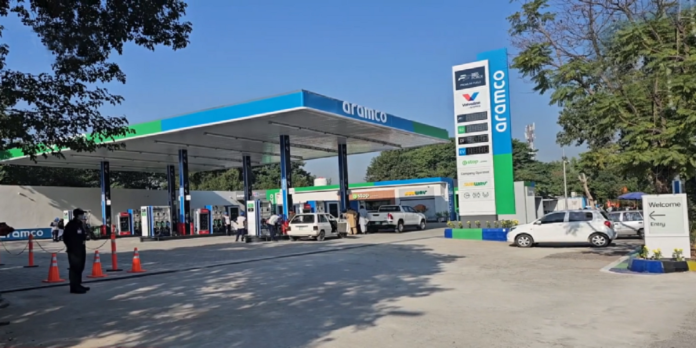
ISLAMABAD: Saudi Arabia’s leading oil giant, Aramco, has inaugurated its second branded fuel station in Pakistan, strategically located on Embassy Road Islamabad.
This new station, following the first Aramco site in Lahore, offers an array of premium services including an EV charging point, a modern convenience store, a service station, and a tyre shop, setting a high benchmark for quality and customer care in the local market.
The latest addition comes amid positive public feedback, with customers noting the station’s high standards, well-trained staff, and enhanced offerings, which they hope other local stations will emulate. “Foreign investment is a positive force, creating jobs and introducing quality standards that benefit the community,” said one customer.
This expansion marks a significant milestone in Aramco’s retail footprint in Pakistan. In May, Aramco acquired a 40 per cent stake in Gas & Oil Pakistan Ltd. (GO), one of the country’s largest petroleum distributors. Through its partnership with GO, Aramco aims to further expand its retail network, providing world-class fuel and automotive services across Pakistan.
Aramco’s entry into Pakistan’s fuel retail market follows the broader context of Pakistan-Saudi Arabia economic cooperation, where investment projects, including a $5 billion investment package, are underway.
The two nations have historically maintained strong trade, defense, and cultural ties, with Pakistan being a key market for Saudi energy products and the Kingdom serving as the top source of remittances for Pakistan.
Aramco’s new service stations and infrastructure upgrades reflect Saudi Arabia’s continued investment commitment to Pakistan, contributing to economic growth and bringing modern energy solutions to the market.
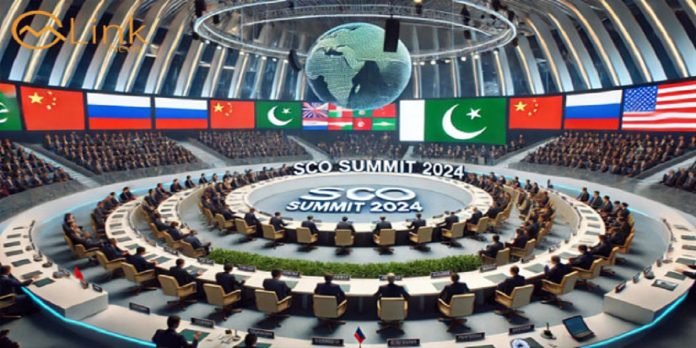
ISLAMABAD: The two-day Shanghai Cooperation Organisation (SCO) summit begins in the federal capital on Tuesday under a heavy security blanket, with more than 10,000 personnel deployed for the safety of the esteemed delegates.
Prime Minister Shehbaz Sharif will preside over the 23rd SCO Summit, with SCO member states represented by the prime ministers of China, Russia, Belarus, Kazakhstan, Kyrgyzstan, Tajikistan, and Uzbekistan, as well as the First Vice President of Iran and the External Affairs Minister of India.
China will be represented by State Council Premier Li Qiang. The prime minister of Mongolia, as an observer state, and the Deputy Chairman of the Cabinet of Ministers and Foreign Minister of Turkmenistan, as a special guest, will also participate in the meeting.
The SCO Council of Heads of Government will discuss ongoing cooperation in the fields of economy, trade, environment, and sociocultural linkages, and review the organization’s performance.
Prime Minister Shehbaz Sharif will also hold important bilateral meetings with the visiting heads of delegations on the sidelines of the summit.
The SCO summit is expected to serve as a key platform for fostering regional cooperation, bolstering trade and investment, and enhancing socioeconomic and cultural ties among its member states.
Diplomatic and political experts believe that this important meeting of the heads of government from SCO member states will not only help address pressing regional issues collectively but also significantly enhance Pakistan’s role on the global stage as a leader.
The SCO, which includes member states that account for approximately 40 percent of the global population and 32 percent of the world’s GDP, presents Pakistan with an excellent opportunity to shape its economic and investment future.
The SCO’s origins trace back to the Shanghai Five, established in 1996, and it evolved significantly after Uzbekistan joined in 2001. More recently, Pakistan became a full member in 2017 after performing excellently in its observer role from 2015 to 2017.
Experts assert that the collective strength of the SCO can be harnessed through collaborative initiatives aimed at promoting regional cooperation and deepening economic ties, which are vital for the shared prosperity of all SCO member states.
They further highlight that Pakistan’s significance in the region has increased after the launch of the China-Pakistan Economic Corridor (CPEC), making it an ideal destination for investment.
For Pakistan, fostering an environment of open dialogue and cooperation will be essential in addressing key challenges and trade barriers. Experts express hope that Pakistan will effectively present its viewpoint on regional issues during the summit.
They also emphasize that the SCO summit represents a pivotal moment for regional diplomacy and economic cooperation, with the potential to positively impact not only Pakistan but also the wider region.
Meanwhile, the two-day event, to be held at the Jinnah Convention Center on October 16, will bring together leaders from SCO member countries to discuss key regional and international issues.
Prime Minister Shehbaz Sharif will host a dinner in honor of the visiting delegations. He will then formally welcome the guests upon their arrival at the convention center. Following the arrival of the guests, reception, and group photos, the conference will officially commence.
According to the Foreign Office, Prime Minister Shehbaz Sharif will inaugurate the conference with a welcome address, followed by speeches from the heads of the foreign delegations.
Later, the event will include the signing of important documents as part of the meeting’s agenda, culminating in concluding remarks from Prime Minister Sharif. A luncheon will also be held in honor of the participants.
At the conclusion of the event, Deputy Prime Minister Ishaq Dar and the SCO Secretary-General will address the media to share key outcomes and insights from the conference.
ISLAMABAD: The 23rd summit of the Shanghai Cooperation Organization (SCO) is officially underway in Pakistan as high-profile delegates, including prime ministers and foreign ministers from member nations, have begun arriving in Islamabad for the two-day event.
Prime ministers from three member states have already touched down in the capital for the two-day event, where they were warmly welcomed by federal ministers.
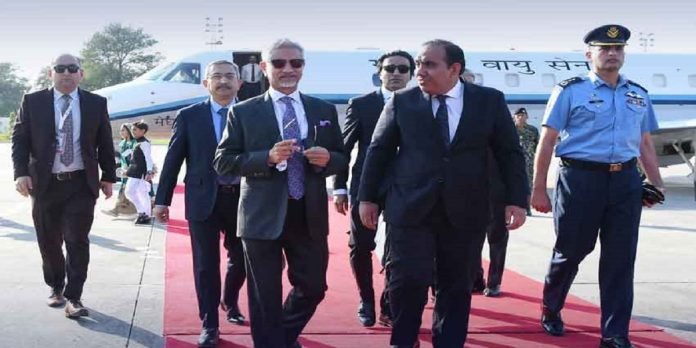
Indian External Affairs Minister S Jaishankar has touched down in Islamabad, marking a historic moment between the two countries. His presence has sparked interest as it could offer a platform for indirect dialogue between the two neighbouring nations despite ongoing tensions.
This is the first time in around a decade that an Indian external affairs minister has arrived in Pakistan since the previous one by the late Sushma Swaraj. Jaishankar was received at the Nur Khan airbase by Foreign Office Director General (South Asia & SAARC) Ilyas Mehmood Nizami.
Landed in Islamabad to take part in SCO Council of Heads of Government Meeting.
Later, the visiting Indian minister tweeted from his official X handle that he landed in Islamabad for the SCO Council of Heads of Government meeting.
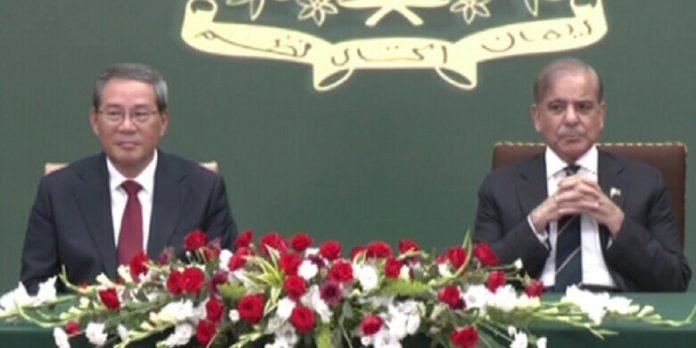
ISLAMABAD: Prime Minister Muhammad Shehbaz Sharif has reiterated that he held the most productive talks with Chinese Premier Li Qiang.
“We expressed satisfaction at the progress of various important initiatives of the China Pakistan Economic Corridor (CPEC) and agreed to ensure their timely execution”.
The Premier also said that the two leaders also discussed ways to further enhance cooperation in multiple areas including trade, investment, economy, energy, agriculture, IT, and defence as well as regional peace and security,” the prime minister posted on X handle.
He further said that their strategic partnership and full understanding on the core issues was a cornerstone of regional stability and prosperity.
“We presided over the completion ceremony of New Gwadar Airport and witnessed the exchange of important MoUs that will enhance bilateral cooperation in various fields. Long live Pakistan-China friendship!” he further posted.
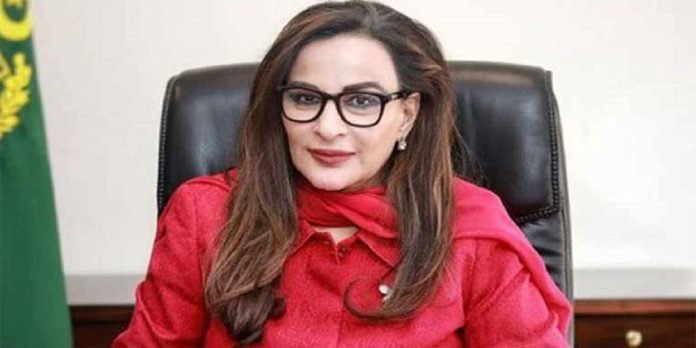
ISLAMABAD: The Vice President of Pakistan People’s Party (PPP) Senator Sherry Rehman has expressed hope that after Pakistan hosting the high-level delegations for the SCO Summit, that will pave way for economic growth of the country.
Talking to a private news channel, Sherry Rehman said that after decades, such high-level delegations were visiting the country for economic, diplomatic, and strategic ties.
She emphasized that political parties should set aside their differences and work together for the summit’s success.
She highlighted that the 23rd SCO summit is a pivotal geopolitical moment, as the economic trajectory is shifting towards Asia, and Pakistan is a key player in this process.
ISLAMABAD: The two-day Shanghai Cooperation Organization (SCO) Summit begins today (Tuesday) in the federal capital, Islamabad, under tight security.
Prime Minister Shehbaz Sharif will preside over the meeting, while the SCO member states will be represented by the Prime Ministers of Russia, Belarus, Kazakhstan, Kyrgyzstan, Tajikistan, and Uzbekistan, as well as the First Vice President of Iran and the External Affairs Minister of India.
Premier Li Qiang of the State Council of China will represent his country.
The Prime Minister of Mongolia, as an Observer State, and the Deputy Chairman of the Cabinet of Ministers and Foreign Minister of Turkmenistan, as a Special Guest, will also participate in the meeting.
The SCO Council of Heads of Government will discuss ongoing cooperation in the fields of economy, trade, environment, and socio-cultural linkages, and review the organization’s performance.
Prime Minister Shehbaz Sharif is also scheduled to hold important bilateral meetings with visiting heads of delegations on the sidelines of the Summit.
The SCO Summit is expected to serve as a key platform for fostering regional cooperation, boosting trade and investment, and enhancing socio-economic and cultural ties among member states.
Diplomatic and political experts believe that this significant meeting of the heads of government from SCO member states will not only foster collaborative efforts to address pressing regional issues but also elevate Pakistan’s standing on the global stage as a leader.
The SCO, comprising member states that account for approximately 40 percent of the global population and 32 percent of the world’s GDP, provides Pakistan with an excellent opportunity to shape its economic and investment future.
The roots of the SCO trace back to the Shanghai Five, established in 1996, evolving significantly after Uzbekistan joined in 2001. More recently, Pakistan became a full member in 2017, following its successful role as an observer from 2015 to 2017.
Experts highlight that the collective strength of the SCO can be harnessed through collaborative initiatives aimed at promoting regional cooperation and deepening economic partnerships, which are vital for the shared prosperity of the people across SCO states.
They further noted that Pakistan’s significance in the region has grown since the launch of the China-Pakistan Economic Corridor (CPEC), making the country an attractive destination for investment.
For Pakistan, fostering an environment of open dialogue and cooperation is essential to addressing key challenges, including trade barriers. Experts expressed hope that Pakistan will effectively present its stance on regional issues during the summit.
They also emphasized that the SCO summit represents a pivotal moment for regional diplomacy and the advancement of economic cooperation, with the potential to positively impact not only Pakistan but also the broader region.