ISLAMABAD: Pakistan’s former Prime Minister Imran Khan has been moved back to prison after spending a few hours overnight at a hospital, according to his party spokesman.
Following a Supreme Court order this week, Khan was transferred to a hospital in Islamabad early on Friday for medical examination.
A spokesperson for Khan’s party, Pakistan Tehreek-e-Insaf, confirmed that the former prime minister had been taken back to Adiala prison in the garrison city of Rawalpindi.
Khan has been imprisoned since August 2023. He says the cases against him are politically motivated, an accusation the government denies.
Reuters reported that his lawyers say his health has deteriorated in prison and that he has lost significant vision in his right eye. The government has said medical reports disclosed no condition requiring immediate treatment.
The Supreme Court told authorities to transfer Khan to Shifa International Hospital in Islamabad within 48 hours and allow him access to a medical panel that includes his personal physician.
RAWALPINDI: Rescue 1122 Rawalpindi has been placed on high alert amid continued rainfall in Rawalpindi and Islamabad, with emergency personnel deployed around Nullah Lai and other low-lying areas to respond to any emergency, APP reported.
Rescue 1122 spokesperson said that rescue personnel have been deployed in Kattarian, Gawalmandi and other vulnerable low-lying areas. The teams would remain on duty at these locations throughout the rainy spell.
The authorities urged citizens to exercise extreme caution during the monsoon season and advised parents to prevent children from going near Nullah Lai and electricity poles during rainfall.
Citizens were also advised to drive at slow speeds during rain and move to safer locations before the situation develops into urban flooding.
The emergency service cautioned people against taking shelter under weak or dilapidated roofs and urged them to avoid crossing rivers, streams and drains during heavy rainfall.
In view of the risk of intense rainfall and cloudbursts, the officials advised the citizens to avoid visiting tourist destinations during severe weather. the public was also appealed to immediately contact the emergency helpline 1122 in case of any emergency.
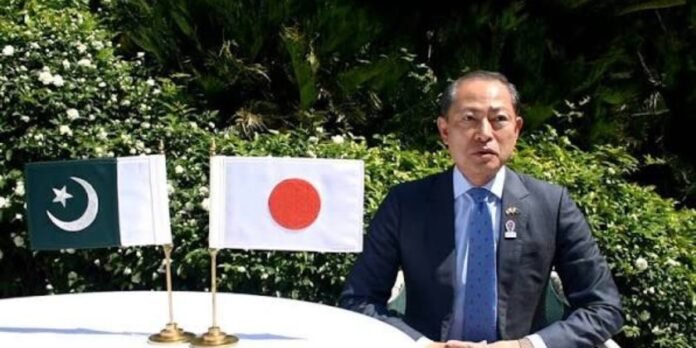
ISLAMABAD: As Pakistan marks its 80th Independence Day on August 14, Japan has extended congratulations and renewed its commitment to stronger bilateral cooperation ahead of the 75th anniversary of diplomatic relations in 2027.
In a message marking the occasion, Japan’s Ambassador to Pakistan, Akamatsu Shuichi, underscored the long-standing partnership between the two countries and pledged continued collaboration for peace, development, and stability.
The Ambassador conveyed greetings on behalf of the Government and people of Japan to Pakistan’s government and citizens on the country’s Independence Day.
In a video message, Ambassador Akamatsu said Japan values its relationship with Pakistan and looks forward to celebrating 75 years of diplomatic relations in 2027. He noted that both countries have worked together over the decades and will continue to strengthen cooperation in different fields.
The envoy said Japan and Pakistan remain trusted partners and share a commitment to promoting peace, progress, and regional stability. He added that both nations would continue efforts to deepen mutual understanding and expand friendly relations in the years ahead.
Reaffirming the bond between the two countries, Ambassador Akamatsu expressed confidence in the future of Japan-Pakistan relations and reiterated Japan’s support for continued engagement and cooperation.
Concluding his message, he highlighted the enduring friendship between the two nations with the slogan, “Japan-Pakistan Dosti Zindabad.”
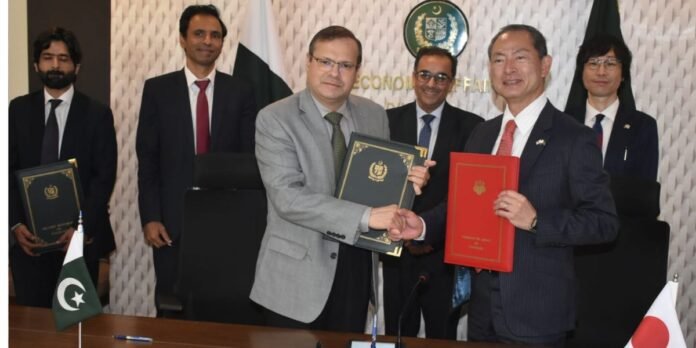
ISLAMABAD: Japan has extended grant aid worth 350 million Japanese Yen for the implementation of the Human Resource Development Scholarship (JDS) FY 2026 Programme to strengthen the administrative capacities of the Government of Pakistan.
The JDS Program, which was launched in 2018, offers highly capable Pakistani government officers the opportunity to pursue Master’s and Ph.D. degrees at leading Japanese universities. These officers are selected from those involved in planning and implementing social and economic development policies.
A formal signing ceremony was held in Islamabad, where Notes Verbale were signed and exchanged between AKAMATSU Shuichi, Ambassador of Japan to Pakistan, and Muhammad Humair Karim Kidwai, Secretary, Ministry of Economic Affairs, Government of Pakistan.
Through the JDS Program, JICA has so far dispatched more than 100 government officers to Japan. To date more than 80 scholars have successfully completed their studies and returned to Pakistan, contributing their enhanced knowledge and skills to the country’s development.
On this occasion, Japan’s Ambassador AKAMATSU Shuichi highlighted that the program is built on a simple but powerful belief — that investing in people is the most sustainable investment a nation can make. “When we support a young civil servant to pursue a Master’s or doctoral degree at a leading Japanese university, we are not simply funding an academic qualification. We are helping to shape a future leader — someone who will return to Pakistan with new knowledge, new perspectives, and a deepened understanding of Japan, its people, its culture, and its values,” he added.
The ambassador noted that it is these human bridges — built one scholar at a time — that sustain and strengthen the longstanding friendship between our two nations. He added that Japan deeply values its relationship with Pakistan, and the JDS Program is one of the most personal and enduring ways we invest in that relationship.
Highlighting the importance of the project, Chief Representative of JICA Pakistan Office SHINOZAKI Yusuke said that: “I sincerely hope that the JICA’s cooperation through this project will support the Government of Pakistan to enhance institutional capacity, thereby contributing to Pakistan’s sustainable development.” He added the third phase aims to continue strengthening the capacities of Pakistani government officials and further deepen the longstanding partnership between Japan and Pakistan. He also stated that this initiative indirectly meet one of the priority objectives of JICA’s country assistance policy which is balanced and stable regional development by supporting human resource development.
ISLAMABAD: Pakistan’s Prime Minister Shehbaz Sharif on Tuesday expressed profound sorrow over the tragic loss of lives and widespread devastation caused by a powerful earthquake in Colombia.
In a statement on his X timeline, the prime minister conveyed heartfelt condolences to Colombian President Abelardo De La Espriella, the people of Colombia, and the bereaved families.
“Our thoughts and prayers are with the injured and all those affected by this tragedy. Pakistan stands in solidarity with the people of Colombia in this difficult hour,” Prime Minister Shehbaz said.
The powerful 7.4-magnitude earthquake struck western Colombia near the municipality of San José del Palmar in Chocó department, causing widespread destruction.
The calamity resulted in more than 100 deaths, dozens of injuries, and the collapse of over 60 buildings across several major cities, prompting President De La Espriella to declare a national state of emergency, according to the media reports.
Colombia sits along the seismically active Pacific Ring of Fire and records thousands of mostly minor earthquakes each month.
Northwestern University seismologist Suzan van der Lee said the quake’s powerful magnitude, inland location and strike-slip motion may have amplified damage in populated valleys despite its considerable depth.
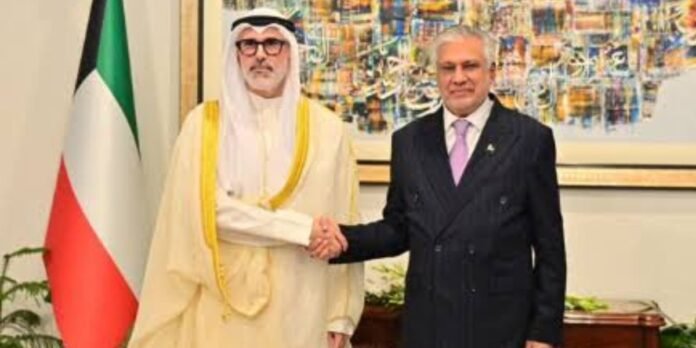
ISLAMABAD: Pakistan’s Deputy Prime Minister and Foreign Minister Senator Mohammad Ishaq Dar spoke with Kuwaiti Foreign Minister Sheikh Jarrah Jaber Al-Ahmad Al-Sabah, during which they discussed bilateral and regional matters of mutual interest.
Foreign Minister Jarrah, during the conversation late Sunday night, felicitated the Deputy Prime Minister Dar on the recent signing of the Makkah Joint Defence Agreement between Pakistan, Saudi Arabia and Türkiye.
They also exchanged views on the regional situation, including Occupied East Jerusalem, besides agreeing to remain closely engaged.
The two leaders discussed Pakistan-Kuwait bilateral relations and other matters of mutual interest, including follow-up to Foreign Minister Jarrah’s recent visit to Pakistan and further enhancing cooperation and investment in key sectors.
ISLAMABAD: Pakistan’s Federal Minister for Information and Broadcasting Attaullah Tarar has praised the historic defense pact among Pakistan, Saudi Arabia, and Turkiye, describing it as a matter of immense pride for both the Pakistani people and the entire Muslim Ummah, APP reported.
During an exclusive talk with media Tarar expressed his profound gratitude to the Almighty for the blessed agreement, noting that this partnership among the three brotherly nations is a special blessing for the global Muslim community.
The minister underscored that the entire nation is celebrating the Makkah Accord with great fervor. He pointed out that the flags of Pakistan, Saudi Arabia, and Turkiye are proudly displayed across the country, and the public is overwhelmed with joy by this landmark development.
He commended the crucial role played by the country’s leadership including Prime Minister Shehbaz Sharif and Field Marshal Syed Asim Munir for their dedicated efforts in signing the agreement.
Through this trilateral partnership, Tarar noted that Pakistan has finally achieved a prestigious status it has dreamed of for a long time.
He remarked that Allah has blessed Pakistan with the profound honor and responsibility of being the defender and protector of the Harmain Sharifain.
The minister congratulated the Pakistani nation on this monumental achievement, emphasizing that the three countries will now move forward together in accordance with this milestone pact.
ISLAMABAD: A monsoon tree plantation drive under the banner “Together for a Greener Tomorrow” was launched, aiming to expand the federal capital’s green cover and foster long-term environmental sustainability.
Under the initiative of Defence Housing Authority, around 50,000 indigenous and fruit-bearing saplings will be planted to bolster local environment system.
The launch event witnessed enthusiastic participation from school and university students, youth volunteers, and civil society representatives, who actively planted saplings to mark the inauguration of the campaign.
Highlighting the critical importance of afforestation, participants emphasised that large-scale tree plantation is essential to safeguard Pakistan against the severe adverse impacts of global climate change. They noted that Pakistan remains among the countries most vulnerable to climate-induced environmental disruptions, making immediate and sustained ecological action imperative.
“Trees serve as a crucial natural shield against environmental pollution and play a pivotal role in purifying the air. Increasing tree cover is vital to mitigating extreme weather patterns and securing a safer, healthier environment for future generations,” the speakers at the event viewed.
They stressed that tree plantation must not be treated as a one-day event, but rather as a continuous national obligation, highlighting that post-plantation care, nourishment, and protection of saplings are just as crucial as the initial planting process.
Urging the younger generation to lead environmental preservation efforts, organizers and participants called for collective societal action, emphasizing that every individual must contribute toward building a clean, green, and climate-resilient Pakistan.
Calling the saplings an asset for future generations, the speakers said that afforestation was need of the hour for a green and healthy Pakistan and that the plantation drive was meant to achieve the very objectives by promoting the establishment of an eco-friendly and green society.
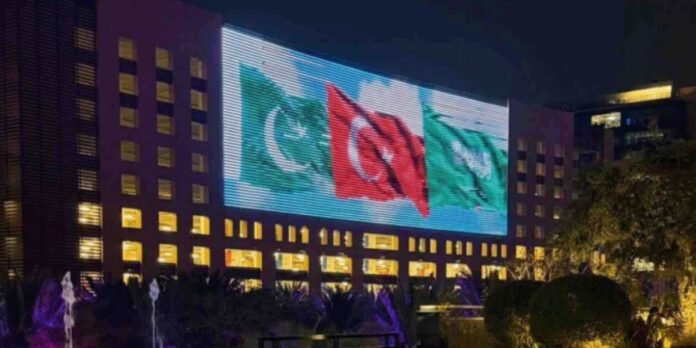
ISLAMABAD: the capital of Pakistan, Islamabad has been decorated with coloured lights, LED screens and the national flags of Pakistan, Saudi Arabia and Turkiye to commemorate the Makkah Joint Defence Agreement signed by the three countries on Friday.
According to state-run news agency APP, the Constitution Avenue is lined with digital displays of the three flags, while government buildings, including Parliament House, have been illuminated for the occasion.
LED screens installed at prominent points along Constitution Avenue and elsewhere in the city are carrying messages on the historical ties, mutual cooperation and shared defence commitments among the three countries.
The prominent displays reflect the strategic significance of the Makkah Agreement and the cementing of ties between Islamabad, Ankara, and Riyadh.
The festive atmosphere is being hailed as a beautiful manifestation of brotherhood, mutual trust, and a shared vision for defense cooperation.
The special decorations across Islamabad’s major thoroughfares have drawn significant public attention, with citizens expressing immense joy over the growing trilateral cooperation and praising the city’s breathtaking displays in honor of the historic defense pact.
ISLAMABAD: Former Senate chairman Mian Raza Rabbani on Wednesday opposed proposals to create new provinces on administrative grounds, arguing that Pakistan’s governance challenges stem from constitutional and institutional failures rather than the country’s existing federal structure.
In a statement, Rabbani said the failure of the system of governance, if any, was not a consequence of Pakistan having four provinces but was the result of repeated derailment of the democratic process, shrinking political space for elected representatives, centralization of powers in Islamabad and weakening of constitutional institutions.
He said governance had also suffered due to constitutional amendments introduced by military rulers, experimentation with multiple systems of governance since 1947, policymaking outside Parliament, failure to hold free, fair and transparent elections, violations of the Constitution, disregard for the separation of powers, rule by law instead of the rule of law and denial of provincial autonomy.
Calling these issues “just the tip of the iceberg,” Rabbani said Pakistan was created as a federation through the unanimous accession of its federating units and that the country’s strength lay in its ethnic, linguistic and cultural diversity.
He maintained that provinces established on historical and constitutional realities could not be divided on the basis of administrative considerations, warning that reopening such a debate at the current juncture could deepen existing internal fault lines.
The former Senate chairman said any move to bifurcate the federating units could strengthen militant movements in Balochistan, Khyber Pakhtunkhwa and other parts of the country, encourage extreme nationalist forces, sharpen linguistic and ethnic divisions and raise disputes over the distribution of natural resources.
Instead of creating new provinces, Rabbani called for strict adherence to the Constitution, including upholding its supremacy, ensuring the rule of law, implementing provincial autonomy, respecting the constitutional separation of powers and devolving political, administrative and financial authority to elected local governments in accordance with Article 140-A of the Constitution.
He warned that pursuing the path of dividing federating units could engulf the federation in further political instability and aggravate existing security and governance challenges.