WASHINGTON: The White House gave the government agencies 30 days to ensure they do not have Chinese-owned app TikTok on federal devices and systems.
In a bid to keep U.S. data safe, all federal agencies must eliminate TikTok from phones and systems and prohibit internet traffic from reaching the company, Office of Management and Budget Director Shalanda Young told agencies in a guidance memorandum.
The ban, ordered by Congress late last year, follows similar actions from Canada, the EU, Taiwan and more than half of U.S. states.
The device ban — while impacting a tiny portion of TikTok’s U.S. user base — adds fuel to calls for an outright ban on the video-sharing app. National security concerns about China surged in recent weeks after a Chinese balloon drifted over the U.S.
ByteDance-owned TikTok has said the concerns are fueled by misinformation and has denied using the app to spy on Americans.
The action does not affect the more than 100 million Americans who use TikTok on private or company-owned devices. TikTok did not immediately comment on the White House memo.
Congress in December voted to bar federal employees from using the Chinese-owned video app on government-owned devices and gave the Biden administration 60 days to issue agency directives. The vote was the latest action by U.S. lawmakers to crack down on Chinese companies amid national security fears that Beijing could use them to spy on Americans.
Federal Chief Information Security Officer Chris DeRusha said “this guidance is part of the Administration’s ongoing commitment to securing our digital infrastructure and protecting the American people’s security and privacy.”
Many government agencies including the White House, Department of Defense, Department of Homeland Security, and the State Department had banned TikTok from government devices before the vote.
The TikTok ban does not apply if there are national security, law enforcement or security research activities but agency leadership must approve these activities, Young’s memo said and “blanket exceptions applying to an entire agency are not permitted.”
On Tuesday, the House Foreign Affairs Committee is set to vote on a bill that would give President Joe Biden the authority to ban TikTok from all U.S. devices.
“My bill empowers the administration to ban TikTok or any software applications that threaten U.S. national security,” Representative Mike McCaul, the committee chair, said. “Anyone with TikTok downloaded on their device has given the (Chinese Communist Party) a backdoor to all their personal information. It’s a spy balloon into your phone.”
The American Civil Liberties Union said it opposed a congressional ban on TikTok.
The White House memo said within 90 days, agencies must address any use of TikTok by IT vendors through contracts and with 120 days agencies will include a new prohibition on TikTok in all new solicitations.
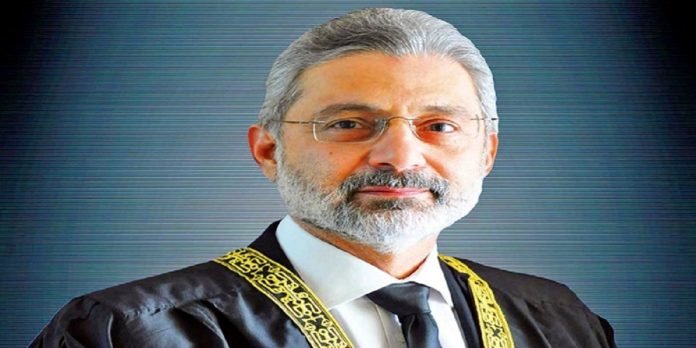
ISLAMABAD: Casting doubts on the transparency of the case-assigning procedure, Supreme Court of Pakistan (SCP) judge Justice Qazi Faez Isa Tuesday refused to hear the scheduled cases after the registrar shook up the benches without keeping the concerned judges and other stakeholders in the loop.
The registrar reshuffled the benches today and replaced Justice Hasan Rizvi with another judge after which Justice Isa and Justice Yahya Afridi raised objections to the allocation of cases.
The judges questioned the procedure of assigning cases in the top court. During the hearing, the court also summoned the registrar of the Supreme Court along with all the records.
“I am a Supreme Court judge and have been the chief justice of Balochistan High Court for five years,” said Justice Isa, adding that he wants transparency.
“How will there be transparency if the registrar transfers a case from one bench to another?” he questioned.
“It seems like the registrar has more power than a judge like me,” he said, adding, “He cannot hear the cases from the year 2010 as the registrar appoints the judges by himself”.
“Can I ask the registrar to appoint a specific case to a specific bench?” Justice Isa asked.
At this, the registrar said that the hearing of the cases is scheduled only after Chief Justice of Pakistan Umar Ata Bandial’s approval.
“The bench included Justice Hasan Rizvi. Why did it change?” questioned Justice Afridi.
Amanullah, former president Supreme Court Bar Association (SCBA) said people had tired themselves out by asking but their cases were not fixed for hearing.
“What is the policy behind the allocation of cases?” Justice Isa asked the SC registrar.
He said that the court had ordered the registrar on April 2, 2022, to set the procedure for scheduling cases.
Justice Isa said there was no transparency in the case-assigning procedure at the registrar’s office.
“Why were mine and Justice Yahya Afridi’s benches changed?” he asked the registrar and argued that changing the benches without informing the stakeholders created suspicions in the minds of the people.
The registrar said that the chief justice’s staff officer made a proposal regarding the reshuffling of benches on verbal instructions.
He added that the officer had said that the roster of the judges was to be changed on the chief justice’s directives.
Justice Yahya Afridi asked the registrar how was the weekly roster changed. “Was this roster set by Chief Justice rather than you (registrar)?” Justice Afridi asked.
“The initial roster is sent to the Chief Justice after setting the benches,” the registrar responded.
To this Justice Isa said, “think before you speak, people look to Supreme Court for justice”.
“Present the file and the approval upon which the note was sent,” Qazi Isa told the registrar. “Sir, there’s no file, we send it on paper like this one,” the registrar responded.
“You kill half the justice if you bring my brother’s case forward for hearing on my behest by pushing the scheduled ones back,” Justice Isa remarked.
“I am sorry to the petitioners and the lawyers, I will not be conducting the hearings today,” said Justice Isa, adding that a reason was not given regarding the sudden change of benches.
“The sudden change in benches and the rescheduling of the cases cast doubts on the whole judicial process,” he remarked.
He said that Article 10-A was about basic rights, “which say that a person shall be entitled to due process”.
“There should be legal reasons to change a bench,” he said, adding that the dignity of the judiciary would be affected if there was no transparency.
“The cases that were filed first should get precedence and be heard first,” he added.
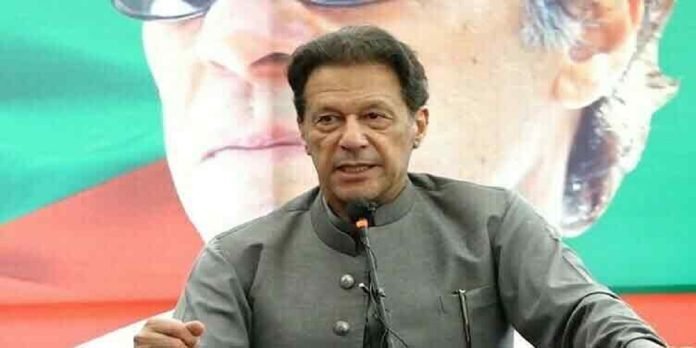
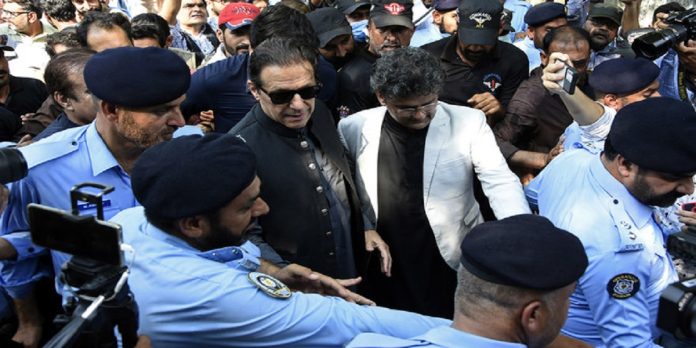
ISLAMABAD: A district and sessions court in the federal capital on Tuesday issued non-bailable arrest warrant for PTI Chairman Imran Khan in the Toshakhana case.
Additional Sessions Judge Zafar Iqbal issued the warrant on non-appearance in the case while rejecting the exemption plea of former prime minister. Earlier, Imran Khan filed a petition seeking adjournment of the case for five days due to his tight schedule as he was to appear in other courts today.
The former prime minister’s lawyer, Ali Bokhari, told the judge that his client was coming to Islamabad from Lahore as he was due to appear before two other courts in the Judicial Complex. He said his client would not be able to attend the hearing of the Toshakhana case due to shortage of time.
At this, the judge expressed outrage, stating: “Why he [Imran Khan] cannot appear before court when he is attending hearings in the Judicial Complex?”. He remarked the PTI chief should first come here for indictment and then he could go anywhere.
ECP lawyer Saad Hassan also opposed the adjournment plea, saying the suspect did not want to appear before the court. Later, the judge adjourned the hearing for later today and ordered Imran Khan to appear before him.
Meanwhile, the Islamabad High Court (IHC) has fixed a petition filed by the PTI chief seeking pre-arrest bail plea in the Toshakhana case for hearing later today. Imran Khan is expected to appear in the high court where Justice Aamer Farooq would hear the case.
The Case
Last year, the top electoral body had sent the reference to the district and sessions court under Sections 137, 170, and 167 of the Election Act, seeking initiation of criminal proceedings against Imran Khan for incorrect declaration of assets for 2017-2018 and 2018-19. The ECP, in the petition, has called for a three-year jail term and imposing a fine on the PTI chief.
On Dec 15, the court admitted the commission’s plea against Imran Khan. In its three-page verdict, the court noted that prima facie, the former premier didn’t mention the details of the gifts he acquired from the Toshakhana. In August last, the Pakistan Democratic Movement (PDM) moved the ECP against Imran Khan over not filing the details of gifts he obtained from Toshakhana for Rs21.5 million.
Later in October, the ECP, in a unanimous decision, found the former prime minister guilty of “corrupt practices” and disqualified him from being a member of parliament.
ISLAMABAD: Five judges of the nine-member bench of the Supreme Court of Pakistan (SCP) on Monday resumed hearing on a suo motu case related to delay in the Punjab and Khyber Pakhtunkhwa elections after four others dissociated themselves from the case.
The bench originally comprised Chief Justice Umar Ata Bandial Justice Ijazul Ahsan, Justice Munib Akhtar, Justice Syed Mazahar Ali Akbar Naqvi, Justice Syed Mansoor Ali Shah, Justice Jamal Khan Mandokhail, Justice Yahya Afridi, Justice Athar Minallah and Justice Muhammad Ali Mazhar.
Last week, Justice Mandokhail, Justice Shah, Justice Afridi and Justice Minallah wrote additional notes in the February 23 decision, raising objection to the constitution of the bench citing various reasons.
CJP Bandial, Justice Shah, Justice Mandokhail, Justice Akhtar and Justice Mazhar are currently hearing the case which has been adjourned till 4pm.
Justice Ahsan and Justice Naqvi have refused to hear the case after the ruling coalition raised objection against them. It is recalled that Justice Mandokhail in the first hearing of the case called the suo motu action of the top judge unjustified.
At the outset of Monday’s hearing, CJP Bandial remarked that the four judges had shown grace and distanced themselves from the bench. He said the remaining members of the bench would continue to hear the case for the interpretation of the Constitution.
The CJP said the court would again hear the suo motu case at 9:30am tomorrow (Tuesday) and try to wrap it up. Talking about the leak of Justice Mandokhail’s note to social media, he said precautionary measures would be taken to avoid such incidents.
At one point during the hearing, Barrister Ali Zafar said the elections in the provinces should be held within 90 days after the dissolution of the assemblies as per the Constitution. He said the Lahore High Court (LHC) had ordered the ECP to hold a meeting with governor to decide a date for elections but that meeting ended without any outcome. Later, the president unilaterally announced the date after the electoral body refused to attend the meeting called by him on the matter.
In the previous hearing, the PML-N, the PPP, the JUI-F and other parties raised objection against two judges of the nine-member bench of the apex court, saying a full bench should be made to hear the case.The ruling coaltition has also submitted an application seeking formation of the full bench case.
Barrister Ali Zafar represented the Punjab and KP speakers. The JUI-F is represented by Kamran Murtaza, PPP by Farooq H Naek, Nayer Bukhar and Farhatullah Babar, PML-N by Mansoor Awan, the Punjab governor by Advocate Mustafa Ramday. Supreme Court Bar Association President Abid Zuberi, Islamabad High Court Bar President Shoaib Shaheen and Attorney General of Pakistan Shehzad Ata Elahi and Additional Attorney General Amir Rehman attended Friday’s hearing.
At the outset of the hearing, Mr Naek had raised objections over inclusion of Justice Ijazul Ahsan and Justice Mazahar Naqvi. He said the suo motu notice was taken by the chief justice on the note of both judges in Ghulam Mahmood Dogar’s service case, therefore, they should separate themselves from the bench. The PPP lawyer also sought formation of the larger bench to hear the poll date case.
Meanwhile, the PML-N, the JUI-F and the PPP had also submitted a joint statement in the court, raising objection to the presence of two judges. They said both judges should not hear the case.
The CJP remarked it was his prerogative to take a suo motu notice. “Today is meant to mark the attendance of all stakeholders,” he said, adding that representatives of all four provinces were present in court. Later, the chief justice adjourned the hearing till Monday.
On Thursday in last week, the bench issued notices to Attorney General for Pakistan (AGP) Shehzad Ata Elahi, Election Commission of Pakistan (ECP), government through the cabinet secretary, chief secretaries of Punjab and KP, Pakistan Bar Council (PBC), the Supreme Court Bar Association (SCBA), all the advocate generals of the provinces, and the Pakistan Democratic Movement (PDM), directing them to submit their arguments on Friday (today).
As no notices can be issued to President Dr Arif Alvi and the two governors under Article 248 that provides them immunity, the apex court has ordered principal secretaries to contact them to get the point of view on the matter.
During Thursday’s hearing, Justice Mandokhel raised objection to the suo motu notice and called it “unjustified”. He said the Punjab and KP speakers had filed their petitions before the apex court’s notice. He said the notice was taken on the note of Justice Naqvi and Justice Ahsan who had given it during the hearing of the case pertaining to transfer of Lahore Capital City Police Officer Ghulam Mahmood Dogar.
He highlighted that the chief election commissioner was summoned by both judges in the case despite the fact that he was not a party in it.
Irrespective of the CEC reply, Justice Ahsan and Justice Naqvi referred the matter to the CJP to take the suo motu notice. He observed there was no connection between the election and Lahore CCPO’s case. In these circumstances, it was not justified to send the matter to the chief justice to take the suo motu notice under Article 184 (3).
Two other judges – Justice Athar Minallah and Justice Syed Mansoor Ali Shah – highlighted other aspects of the case while raising questions about motivation behind dissolution of the assemblies.
CJP Bandial, on the day one, said the bench would hear three related cases and determine who was supposed to give the elections’ dates. He said it was an important case and should be dealt with in line with the Constitution. The apex court, he said, would not tolerate violation of the constitution. He said the schedule of next week had been put off to give due weightage to this case. He said the judges would listen to the viewpoint of all concerned and salient features would be discussed on Friday.
He said multiple factors led the apex court to take the suo motu notice, adding that the 90-day period for conducting provincial elections was running out. He said the matter was also pending with the Lahore High Court, adding that the high court could be bypassed in case of emergency. The CJP remarked, “We want implementation of the Constitution dictates”.
At that point, Barrister Ali Zafar said he wanted to bring some things related to the president’s announcement about the date for elections on the record. The CJP replied Mr Alvi announced the date for elections in the provinces under Section 57 (notification of election programme) of the Elections Act 2017. He said multiple opinions had surfaced about this part of the act and it needed to be interpreted.
Ali Zafar requested the court to take up a relevant petition filed by him. However, CJP Bandial remarked that the court was looking into three different matters. “We have to determine who has the authority to give date for elections after the dissolution of the assemblies”.
At one point during the hearing, the attorney general of Pakistan sought time from the court for preparation in the case. He said it would be difficult to come up with preparation during Friday’s hearing if so many notices were issued to people. In reply, the top judge said the court would discuss only essential things, adding that the detailed hearing of the case would be held on Monday next week.
He said the court wanted to wrap up the case as soon as possible and the time given by the Constitution for the election was running out. Saying the court would not tolerate violation of the Constitution, the CJP remarked the time for elections could only be extended if there was a serious situation. He said the situation had changed after the president announced a date for the elections. The top court would see the constitutional points in the case and then implement it, he added.
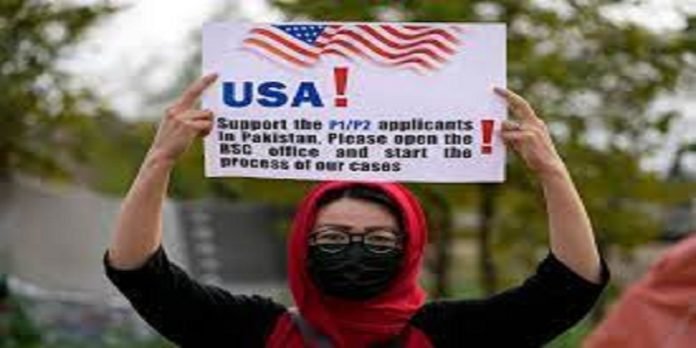
ISLAMABAD: The U.S. government’s Priority 1 and Priority 2, known as P1 and P2 refugee programs were meant to fast track visas for at-risk Afghans including journalists and rights activists after the Taliban takeover in their homeland.
Those eligible must have worked for the U.S. government, a U.S.-based media organization or nongovernmental organization in Afghanistan, and must be referred by the U.S.-based employer.
Applicants have been waiting in Pakistan for more than one and a half years for U.S. officials to process their visa applications.
The delay in approving visas and resettlement has left Afghan applicants in a highly vulnerable position as they contend with economic hardship and lack of access to health, education and other services in Pakistan.
ISLAMABAD: Pakistan marks today as fourth anniversary of befitting response to the airstrikes conducted by India on 26 February 2019 in violation of the international law and the UN Charter.
The incidents of 26-27 February 2019 bear witness to India’s belligerence and jingoism, and the tremendous restraint and responsibility demonstrated by Pakistan. The captured Indian pilot was returned as a gesture of peace.
India must remain mindful of the consequences of its reckless conduct and realize that the Pakistani nation remains ready to fully safeguard its sovereignty and territorial integrity.
At the same time, Pakistan is committed to peaceful co-existence and resolution of long-standing disputes. We also underscore that durable peace in South Asia remains contingent upon peaceful resolution of the Jammu and Kashmir dispute in accordance with the relevant UN Security Council Resolutions and the wishes of the Kashmiri people.
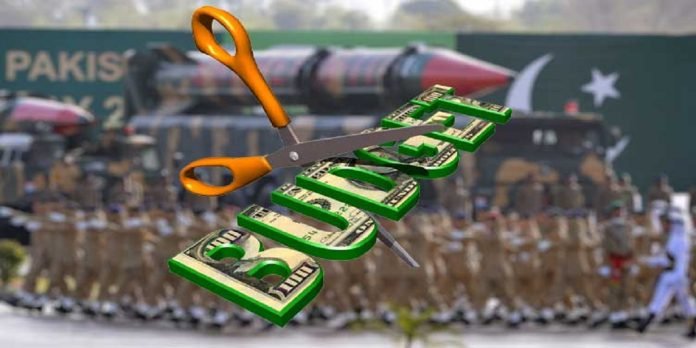
ISLAMABAD: The Federal Government on Saturday decided to decrease country’s defence budget as the economy struggles to cope with rising debt, global inflation and political instability.
Sources said it had been decided to reduce the expenditure of the army by 35 per cent on petroleum products and 35 to 40 per cent on the utility bills. Reduction in expenditure on food allowance and food items in the defence budget would save more than Rs20 billion.
Sources further said a ban had also been imposed on all sorts of non-operational spending in the army and import of defence and military equipment would be in local currency or currency swap. It has also been decided to increase modern technology and online meetings for trainings, and reduction all kinds of expenses had been implemented immediately to improve the country’s economy.
Earlier this week, Prime Minister Shehbaz Sharif unveiled austerity measures that would save Rs200 billion per year. He admitted that the move would not significantly improve the economic condition of the country but it is a gesture to show the inflation-stricken citizen that the government remains empathetic to their concerns. He also announced that the ministers, state ministers and special advisers to the premier would forego their salaries and perks as part of the austerity.
Pakistan’s foreign exchange reserves, which fell to a critically low level of USD 2.9 billion a few weeks ago, have now risen closer to USD 4 billion, even as the country eagerly waits for the USD 1.1 billion tranches of funding from the International Monetary Fund (IMF).
On Friday, Pakistan received a new $4 billion loan from China to help shore up its foreign exchange reserves, in another step to help the Islamabad recover from an economic crisis.
The credit facility, made through the state-owned China Development Bank has boosted Pakistan’s forex reserves to $4 billion and comes as the country is thrashing out a deal with the International Monetary Fund (IMF) to unlock funds from a $6.5 billion bailout.
Sources privy to the State Bank of Pakistan (SBP) said that the money was transferred by China Development Bank after the rollover agreement.
Sources further said that an agreement had been reached between Pakistan and China in this regard.
“The foreign exchange reserves of Pakistan have reached close to $4 billion after receiving the money.
Previously, while addressing the cabinet, Prime Minister Shehbaz Sharif said that he was hopeful of reaching a deal with the IMF as soon as the country completes a series of steps demanded by the lender, Dunya News reported.
Pakistan is struggling with its worst economic crisis in decades and its foreign exchange reserves, at their lowest in 10 years, are only enough to pay for less than three weeks’ worth of imports. Meanwhile, fiscal adjustments demanded by the IMF are fuelling decades-high inflation.
On Wednesday, the country’s international bonds extended their decline with the 2027 dollar-denominated bonds dropping more than 1.2 cents in the dollar to trade just over 40 cents.
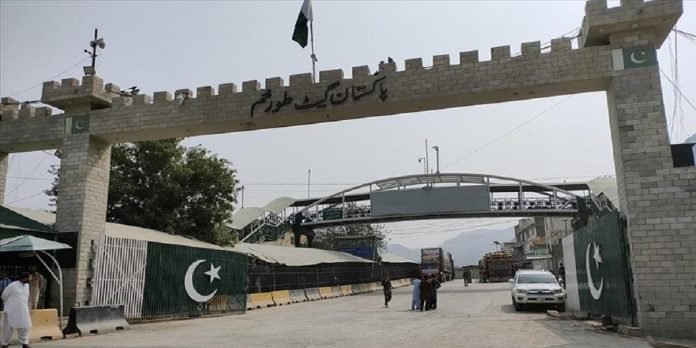
PESHAWAR: The usual trade and movement of people between Pakistan and Afghanistan has fully resumed after the two sides reopened a key border crossing that was closed nearly a week ago by Afghanistan’s Taliban rulers, stranding people and thousands of trucks carrying food and essential items.
The media reported that Torkham border crossing was reopened as of 6am (0130 GMT) Saturday, Afghan customs official Muslim Khaksar said at the waypoint in Afghanistan’s eastern Nangarhar province. “The border is now open from both sides for civilians as well as for traders,” he said.
The Afghan embassy in Islamabad, also announced the reopening of the Torkham border on Twitter.
Meanwhile, a Pakistani customs official said “trucks carrying rice, cement, construction material, medicines and other edibles were sent to Afghanistan”, adding that lorries loaded with coal, vegetables and fruits had entered Pakistan.
Around 1,400 trucks on the Pakistan side were still waiting to cross into Afghanistan, he added.
A Taliban security personnel stands guard as young Afghan boys help elderly men in wheelchairs after an incident of gunfire between Afghanistan and Pakistan border forces near the Torkham border
Disputes linked to the 2,600km (1,615-mile) border have been a bone of contention between the neighbours for decades. The Torkham crossing is the main point of transit for travellers and goods between Pakistan and landlocked Afghanistan.
The announcement sparked joy and relief among those who had been waiting for the reopening of the international trade route since Sunday, when the Taliban shuttered it, alleging that Islamabad was denying Afghan migrants entry into Pakistan for medical care.
Last Monday, Afghan Taliban forces and Pakistani border guards exchanged fire, wounding a Pakistani soldier. Since then, officials from the two sides were in talks to resolve the issue amid demands from people on both sides to immediately reopen the crossing.
ISLAMABAD: A banking court in the federal capital ordered on Saturday Pakistan Tehreek-e-Insaf (PTI) Chairman Imran Khan to appear before it on February 28 in the prohibited funding case.
A case of prohibited funding under the Foreign Exchange Act against Imran Khan and other PTI leaders was heard at the banking court on Saturday.
Imran Khan’s lawyer Naeem Panjutha appeared before the court of judge Rukhshanda Shaheen.
The lawyer said that the Islamabad High Court (IHC) had decided that Imran Khan should appear before the banking court on February 28.
On behalf of Khan, a copy of the decision of the IHC was also submitted to the banking court.
In light of high court’s decision, the court ordered Imran to appear before it on February 28 and adjourned the hearing till then.
Earlier this week, a division bench of the IHC had rejected the request of former prime minister Imran Khan for attendance through video link and directed him to appear before the banking court on February 28 in the prohibited funding case.
The court had also ordered the banking court to stop the decision on the interim bail of Khan and extended its stay order against the verdict of the banking court.
The lawyer had said that a request was filed to the session court seeking to form a medical board, adding that although they welcomed the medical board there was no need for it.
Special Public Prosecutor Rizwan Abbasi had said that nine other bail petitions were also pending in the same case. The Federal Investigation Agency (FIA) had stated that it did not require arrests to the extent of these petitioners, adding that the banking court had confirmed the bail of three bank employees in it. The prosecutor said that the court had directed Imran Khan to appear before it, submit surety bonds, and join the investigation process.
The petitioner neither joined the investigation process nor appeared before the court, he said. He further said that Imran Khan’s medical reports were taken from his own hospital which was not enough to grant relief to the accused.
Justice Tariq Mehmood Jahangiri had said the trial court had given exemption from appearance to Imran Khan nine times, asking whether the prosecution had challenged any of the orders. The prosecutor had said the court had never asked the PTI chief to “walk” to court, saying that reaching the court area would suffice. He had requested the court to direct the petitioner to appear before the concerned court by February 25.
Additional Attorney General Munawar Dogal had said it was necessary for any petitioner to appear in a personal capacity to get interim bail as per the directives of the top court. He had said that if the petitioner could appear in one court then why was he not appearing in another court?
The AAG had requested the court to turn down the petition of Imran Khan against the banking court’s order.
The AAG had said that the medical report of the petitioner had stated that there was swelling on his injuries. He had asked for how long the swelling would last. Imran’s lawyer said the LHC had stated that, in an extraordinary situation, it was enough to appear before the court once to get bail. The lawyer said Imran Khan would appear in the baking court before March 3.
After this, the court had ordered Imran Khan to appear before the concerned court by February 28 and stopped the banking court to take any decision on his bail case until that time.
PESHAWAR: Khyber Pakhtunkhwa police chief increased the number of Counter Terrorism Department (CTD) regions from seven to 14. The decision has been taken to increase the effectiveness of the CTD.
In addition to this, police department has also posted several senior officers to the CTD. Besides, a terrorism financing cell has also been setup in CTD, which will crackdown on terror financing.
Terror financing cell will be overseen by a DIG level officer.
The cell has been tasked to crackdown on extortion, terror financing and calls made through Afghan SIMs.
Besides, this cell will also work on extortionists and networks and individuals involved in terror financing in the province.
In addition to this, CTD buildings are also being built in several districts of the province.
Earlier KP government had decided to further enhance the CTD performance following an attack on its compound in Bannu district sometimes ago.
In addition to this, CTD had arrested 806 terrorists earlier last year including 90 who were carrying head money on their arrest.
Similarly, 96 terrorists were killed in encounters and arms and explosives were recovered from their possession.
CTD officials said that 62 kidnappers were also arrested. In addition to this 158 accused were also arrested in 81 cases of extortion. Most of the extortion calls were made from a neighboring country.
In the last year, CTD has carried out 2715 operations against terrorism. Similarly, 20601 search and strike operations were also conducted last year.
In these operations, more than 22,000 types of arms were recovered while 1100 FIRs were lodged against terrorist facilitators.
The official said that last year, targeted killings of cops, extortion calls from Afghanistan and suicide attacks in Waziristan remained their biggest challenges.
However, increasing the number of CTD regions, capacity building and appointment of officers will lead to curb the extortion, targeted killings and other terrorist attacks in Khyber Pakhtunkhwa.