ISLAMABAD: The imports of the overall petroleum group contracted by 9.27 per cent during the first seven months of the current fiscal year (2022-23) as compared to the corresponding period of last year, the Pakistan Bureau of Statistics (PBS) data reveals.
The total imports of the petroleum group during July-January (2022-23) stood at $10,611.74 million, as against the imports of $11,696.009 million during the same period of last year.
Among petroleum commodities, the import of petroleum products declined by 14.73pc from $5,734.241 million last year to $4,889.800 million during the time period under review.
Likewise, the imports of liquefied natural gas declined by 20.84pc and dropped from $2,769.741 million last year to $2,192.489 million this year.
On the other hand, the products that witnessed positive growth included petroleum crude, the imports of which grew by 10.9pc, from $2,795.867 million last year to $3,100.482 million whereas imports of liquefied petroleum gas increased by 8.26pc, from $395.977 million to $428.687 million.
The imports of all other petroleum products increased by 54.08pc, from $0.183 million to $0.282 million.
Meanwhile, on a year-on-year basis, the petroleum group imports witnessed a decrease of 12.42pc during the month of January 2023 as compared to the same months of last year.
The petroleum imports during January 2023 were recorded as $1,326.208 million against the imports of $1,514.244 million during January 2022.
On a month-on-month basis, the petroleum imports into the country declined by 16.34pc during January 2023, as compared to the imports of $1,585.263 million December 2022, said the PBS data.
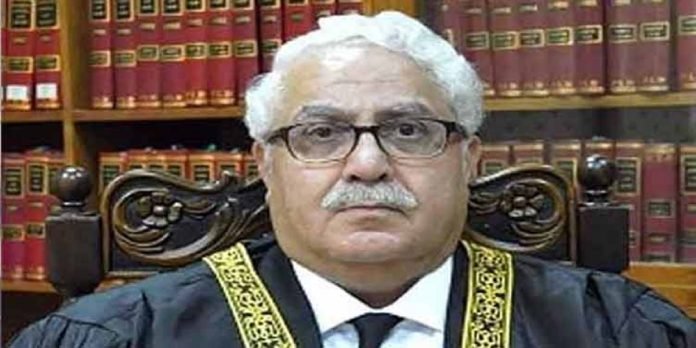
ISLAMABAD: A complaint has been filed in the Supreme Judicial Council (SJC) seeking an investigation against Justice Syed Mazahar All Akbar Naqvi of Supreme Court of Pakistan (SCP) over alleged involvement in malpractices and misuse of authority.
Justice Naqvi came in the spotlight after Interior Minister Rana Sanaullah released an audio of an alleged conversation between the top court’s judge former Punjab chief minister Parvez Elahi. Following the audio leaks, the Pakistan Bar Council announced to file a reference against Justice Naqvi.
The complaint has been lodged by Mian Dawood, a lawyer of the high court, stating that Justice Naqvi had violated “Code of Conduct for Judges of the Supreme Court issued under Clause (8) of Article 209 of the Constitution of the Islamic Republic of Pakistan”.
He claimed the judge and his family members had been found involved in malpractices and misuse of power in a criminal designed pattern during his service.
“He uses his position to facilitate his sons and a daughter studying abroad and getting financial gains from Zahid Rafique (Owner of Future Holdings ). Details are as following:- a. It is learnt from reliable sources that Justice Mazahar Ali Akbar Naqvi has managed to legalize his black income through sale of property. He sold House No. 375 DHA Phase-2 Gujranwala Cantt. in 2021 for Rs 60 million, however, he purchased it for Rs 4.7 million only,” reads the complaint.
Mian Dawood alleged that the judge revised his returns at least three times in 2021 to clean the mess and changed the income statements. Initially, he showed worth of Gullberg 3 plot as Rs 60 million, the complainant said.
“In view of the above mentioned facts and information, it is most respectfully requested that an independent detailed inquiry be initiated against Justice Mazahar Ali Akbar Naqvi in accordance with Sub-clause(b)of Clause (5) of Article 209 of the Constitution of Pakistan,” he said.
He demanded that Justice Naqvi should be removed as the SCP judge after verification of the allegations.
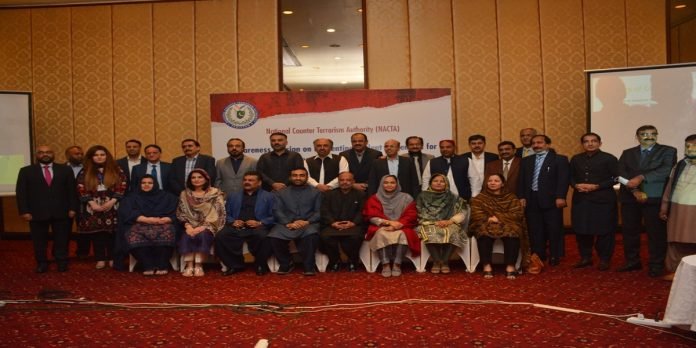
ISLAMABAD: National Coordinator of National Counter Terrorism Authority (NACTA) Muhammad Tahir Rai (Hilal e Shujaat) inaugurated the newly established “Violent Extremism Prevention Unit” at Safe City Islamabad, a police public relations officer said.
He said that, National Coordinator of the NACTA appreciated the efforts of IGP Islamabad for establishing the first of its kind anti-extremism unit in Pakistan.
Tahir Rai had served as IGP Balochistan, DG FIA who played a vital role in revamping of Pakistan CTD and keep a vast experience in Counter Terrorism. He also gave a detailed briefing to upgrade the CTD Islamabad and also inaugurated Modern Digital Hub at safe city.
Afterwards the National Coordinator NACTA was given a tour of various sections of Safe City Islamabad where he was briefed in details regarding the utilization of Safe City Project in maintaining the security of the city and its role during law and order situation.
IGP Islamabad briefed the National Coordinator NACTA regarding the working of this unit and said that, this unit will monitor the political, linguistic, sectarian and religious extremist content on social media and websites and submit its report.
The CTD would have Operations and Intelligence Wings while the newly established “Violent Extremism Prevention Unit” would be supervised by SP.
Besides identifying crimes related to extremism the police and CTD will work together and take prompt action against such elements.
The services of communication experts will be hired for this unit. So that the minds of the young generation can be changed according to the national narrative, recommendations will also be made for legislation in this regard.
IGP Islamabad Dr. Akbar Nasir Khan said that effective measures are being taken for the security of the city following the vision of Prime Minister of Islamic Republic of Pakistan Mian Shahbaz Sharif and special orders and interests of Federal Interior Minister Rana Sanaullah Khan.
He further said that preventing extremism will go a long way in combating terrorism and strengthening the security of the city.
On the occasion National Coordinator NACTA said that the steps being taken by IGP Islamabad in order to maintain law and order in the city and to protect the life and property of the citizens are commendable.
Islamabad Capital Police is a professional police in which the citizens have full faith. In the end, IGP Islamabad presented a shield to the chief guest on the behalf of Islamabad capital police.
ISLAMABAD: Strong tremors were felt in the federal capital on early Thursday morning. An earthquake of magnitude 6.2 on the Richter scale jolted the federal capital Islamabad and surrounding areas.
According to the Seismological Center the earthquake was so severe that people came out of their homes reciting the ‘Kalma-e-Tayyaba’.
The Seismological Center furthered that the epicenter of the earthquake was the border area of Tajikistan and its depth was 60 kilometers. As per initial reports the tremors were also felt in Abbottabad and Malakand areas.
ISLAMABAD: As the deadlock persists between Pakistan and the International Monetary Fund (IMF) over the huge fiscal gap, both sides will strive again on Monday (today) to continue the technical-level talks.
The policy-level talks between both parties, which were to begin today, will kickstart on Tuesday (tomorrow).
As per the Fund’s assessment, Pakistan faced a primary deficit gap of 0.9% of gross domestic product (GDP) equivalent to Rs800-850 billion mainly because of less tax and non-tax revenues and increased expenditures.
However, the Pakistani side did not accept such a fiscal gap, arguing that it was estimated to the tune of 0.5 to 0.6% of GDP in the range of Rs400 to Rs450 billion for the current fiscal year.
The Washington-based lender assessed that the Federal Board of Revenue of Pakistan (FBR) might face a shortfall of Rs130 billion in achieving the desired tax collection target of Rs7,470 billion.
The government and the IMF might agree to abolish the reduced electricity tariff for the export-oriented sector and link it with export proceeds.
The textile sector is selling 40% of its produced items in the domestic market, so it is wrong to get subsidies on power and gas tariffs on the whole production.
“Differences still persist over ascertaining the exact fiscal gap between Pakistan and the visiting IMF review mission during the technical levels talks. Once it’s finalised with the IMF, then the additional taxation measures will be firmed up, which will be unveiled through the upcoming mini-budget. In view this of a lack of reconciliation over the figure of fiscal gap, the technical level talks will continue on Monday and then policy level talks are expected to commence from Tuesday,” sources confirmed while talking to a select group of reporters in the background discussions on Saturday.
Last week, the first round of technical talks between Pakistan and the IMF concluded on Friday and now the global lender is supposed to share nine tables comprising macroeconomic and fiscal framework with Pakistan.
If both parties reach a consensus on prescriptions to fix the economy by February 9, then the two will sign a staff-level agreement.
The ongoing negotiations between the two sides, which started on January 31, have been termed “tough” by Prime Minister Shehbaz Sharif.
The premier, while speaking at a meeting in Peshawar on Friday, said that the IMF is giving “a tough time” to Finance Minister Ishaq Dar and his team, hinting at harsh measures to be taken to revive the stalled loan programme.
The Pakistani side explained the statement given by PM Shehbaz to the visiting IMF review mission, saying that it was meant to make up the minds of the masses for undertaking tough measures as politicians wanted to save their political capital. The IMF team was also told the PM’s statement was not meant to blame the lender for slapping tough conditions on Pakistan.
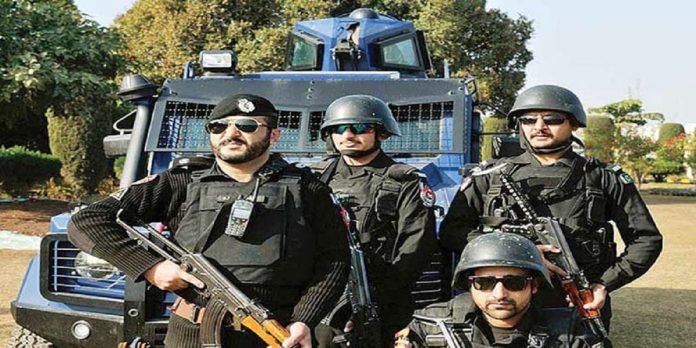
PESHAWAR: The Khyber Pakhtunkhwa (KP) police on Sunday night repulsed an attack on two outposts in remote areas of the province, reports said.
According to the publication, Tank police and residents of the area repulsed a major attack on Pir Tangi police post near Jandola police station late Sunday night.
An official said dozens of militants armed with automatic weapons had attacked the police post.
“The cops, however, were alert and retaliated strongly. A number of locals also came out of their homes to support the police. The attackers managed their escape after an exchange of fire for around 10 minutes,” District Police Officer Tank Waqar Ahmad told The News. He said a few other such attacks have been repulsed by the police in Tank and adjacent districts in recent weeks.
An official said Inspector General of Police, Moazzam Jah Ansari, appreciated the Tank district police for bravely repulsing the attack. The IGP said police across the province are alert and will respond strongly to any kind of attack.
The IGP directed the Regional Police Officer, Dera Ismail Khan, Saleem Marwat, to conduct a search operation in the area to find the attackers killed or wounded in firing by the police. Tank is one of the remotest districts in Khyber Pakhtunkhwa that shares border with Waziristan.
Another police post was attacked in Daraban, Dera Ismail Khan, a couple of hours after the attack in Tank. Police said the attack was repulsed by the cops and army. No casualty was reported.
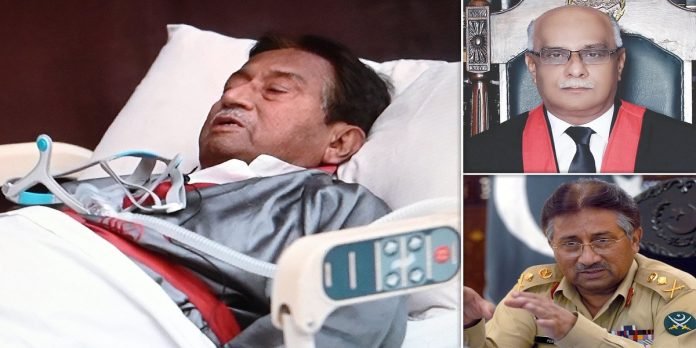
DUBAI: Former military dictator General (retd) Pervez Musharraf’s body will be repatriated to Pakistan today from the United Arab Emirates, where he passed away on Sunday at the age of 79 after a prolonged illness.
The mortal remains of the former army chief will be flown to Pakistan on a special flight at 11:30am Pakistan time.
The Pakistani embassy in the UAE had issued a no objection certificate (NOC) for the repatriation of Musharraf’s body to Pakistan at the request of his family.
Former military dictator’s wife Sehba Musharraf, son Bilal and daughter Ayla will bring the deceased’s body to Pakistan.
The doctors suggested the immediate burial of Musharraf after the body reaches Pakistan.
The former president’s body has been kept in the mortuary of a local hospital as of now.
Musharraf passed away on Sunday in a hospital at the age of 79. He was undergoing treatment for amyloidosis at American Hospital Dubai.
Musharraf’s family had filed an application in the Pakistani consulate in Dubai to shift the former military leader’s body to Pakistan.
The former president will be buried in a Karachi graveyard, confirmed his family sources. The bereaved family formally approached Pakistan’s consulate in Dubai seeking permission to shift the mortal remains of Musharraf to Pakistan.
It is pertinent to mention here that the former president’s mother was buried in Dubai while his father was laid to rest in Karachi. “His [Musharraf] passport has been cancelled,” the diplomatic officials said, adding that the special plane carrying the body of the former army chief will land in Rawalpindi.
Earlier, Foreign Office spokesperson Mumtaz Zahra Baloch confirmed that they were facilitating the transportation of the mortal remains of the former army chief. “Our missions in the UAE are in contact with the family and are facilitating the transportation of the mortal remains,” she added.
As soon as Musharraf’s death was reported, politicians including Prime Minister Shehbaz Sharif as well as chief of army staff offered their condolences over his demise.
Inter-Services Public Relations (ISPR) said that the Chairman Joint Chiefs of Staff Committee (CJCSC) General Sahir Shamshad, and tri-services chiefs expressed heartfelt condolences on Musharraf’s death.
“CJCSC and services chiefs express heartfelt condolences on the sad demise of General Pervez Musharraf, former president, CJCSC and chief of army staff. May Allah bless the departed soul and give strength to the bereaved family,” the military’s media wing said.
ISLAMABAD: Prime Minister Shehbaz Sharif has expressed solidarity with the oppressed people of the Indian illegally occupied Jammu and Kashmir on Kashmir Solidarity Day.
Taking to Twitter, the prime minister said today the whole of Pakistan comes together to express its unflinching solidarity and support to Kashmiri brothers and sisters, who remain undeterred by the oppressive Indian occupation apparatus in the struggle for UN-sanctioned right to self-determination.
He further said the people of IIOJK are waging a relentless struggle of epic proportions to realise their dream of freedom from the Indian yoke. Through their sacrifices, they have kept the torch of freedom burning. “It is my faith that their dreams will soon see the light of day.”
ISLAMABAD: Deadlock persists between Pakistan and the International Monetary Fund (IMF), the international money launder worked out a larger gap of approximately Rs900 billion, equivalent to 1 per cent of the gross domestic product (GDP). It is a major stumbling block in striking a staff-level agreement.
Pakistan have contested such a huge fiscal gap in achieving the primary deficit and asked the IMF for incorporating flow of reduction under the revised Circular Debt Management Plan (CDMP) and reduced amount of required additional subsidy of Rs 605 billion against the earlier target of Rs 687 billion. Therefore, the fiscal gap stood in the range of Rs400 to Rs450 billion.
Officials have completely ruled out any possibility of IMF condition about the signing of Pakistan Tehreek-e-Insaf (PTI) Chairman Imran Khan for reviving the Fund programme and said that no such discussions took place with the review mission.
“Differences still persist over ascertaining the exact fiscal gap between Pakistan and the visiting IMF review mission during the technical levels talks. Once it’s finalised with the IMF, then the additional taxation measures will be firmed up, which will be unveiled through the upcoming mini-budget. In view this of a lack of reconciliation over the figure of fiscal gap, the technical level talks will continue on Monday and then policy level talks are expected to commence from Tuesday,” sources confirmed while talking to a select group of reporters in the background discussions on Saturday.
They said the government agreed in principle with the IMF to abolish electricity and gas tariff subsidies for the export-oriented sector because such kind of dole out was completely unacceptable to the lender. The exporters’ scheme will be revised by bringing major changes to it, said the official. However, the IMF agreed to the Kissan Package and required a power subsidy, 60,000 tube-well subsidies for Balochistan and a subsidy meant for AJK.
The Pakistan authorities conceded that the power sector had so far proved to be a major stumbling block on the way to achieving smooth sailing. Although the circular debt for the gas sector also remained a problematic area, finally they managed to proceed on this issue. The expenditures overrun will breach the overall budget deficit target of 4.9 per cent of GDP, which is likely to touch 6.5 to 7 per cent for the current fiscal year.
When the fiscal gap will be ascertained by both sides, then the IMF will ask about additional taxation measures. The IMF is asking to jack up the GST rate by 1 per cent from 17 to 18 per cent or impose 17 per cent GST on POL products but the government was resisting it tooth and nail.
The government is ready to slap the flood levy on affluent segments as well as on imports, impose a levy at the rate of 41 per cent on windfall profits earned by the banking sector, enhance Federal Excise Duty (FED) rate on cigarettes, sugary drinks from 13 to 17 per cent, enhance withholding tax rates on a property transaction, air travel abroad and others. The IMF assessed that the FBR would face a shortfall of Rs130 billion in achieving the target of Rs7,470 billion.
The Pakistani authorities have prepared three options to convince the IMF to secure a staff-level agreement. These three options basically seek to cut down expenditure and take additional taxation measures with the objective of having less inflationary pressures.
Pakistan has sought a waiver on flood expenditures of Rs470 billion from the IMF and the latter agreed to it. Pakistan and the IMF high-ups held an informal meeting on Saturday in which the IMF shared its initial assessment of the fiscal gap of 1% of GDP, equivalent to Rs884 billion in achieving the primary deficit. It was decided to continue technical-level talks on Monday, so the power and Federal Board of Revenue of Pakistan (FBR) meeting will continue to further exchange the data to reconcile divergent numbers. The IMF is expected to share nine tables of a macroeconomic and fiscal framework on Monday night or Tuesday after which both sides would hold policy-level talks.
It is expected that both sides would strike a staff-level agreement by the conclusion of the talks on February 9. Then the IMF’s Executive Board will consider approval of the next tranche probably in March 2023.
The government seems ready to fill the fiscal gap of Rs400 billion through a combination of rationalisation of expenditures, such as reducing the development budget and other stringent steps and taking additional taxation measures. They conceded that debt servicing had escalated to Rs5.2 trillion against the earlier target of Rs3.952 trillion for the current fiscal year. After taking the NFC share of the provinces, the Centre is left with no resources. The IMF also raised objections over the revenue surplus expected to be generated by the provinces but the Pakistani side assured it that the federating units would help curtail the overall deficit.
The Pakistani side explained the statement of Prime Minister Shehbaz Sharif to the visiting IMF review mission and told it that the premier’s statement was meant to make up the minds of the masses for undertaking tough measures as politicians wanted to save their political capital. The IMF team was also told the PM’s statement was not meant to blame the lender for slapping tough conditions on Pakistan.
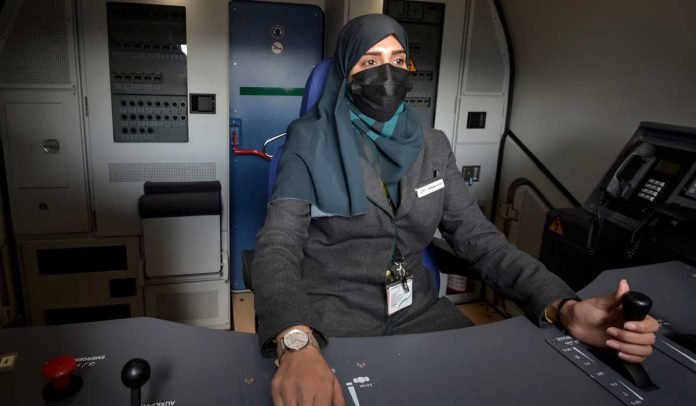
JEDDAH: Driver Tharaa Ali takes her seat at the helm of a high-speed train ferrying pilgrims to Makkah, a beneficiary of Saudi Arabia’s bid to employ its booming female workforce.
Saudi women only gained the right to drive in 2018, and until recently 25-year-old Tharaa Ali’s transportation experience was limited to cruising around her native Jeddah in the family sedan.
But last year she joined some 28,000 applicants vying for just 32 slots for women drivers on the Haramain High Speed Railway, which plies the 450-kilometre route between the holy cities of Makkah and Madina at speeds of up to 300 kilometres per hour.
To her astonishment, the former English teacher was among the lucky few selected, and she completed her first trip last month.
“The first day working here was like a dream for me — entering the train, entering the cabin,” she said.
“When you are in the cabin, you see things heading towards you at a very high speed. A feeling of fear and dread came over me, but thank God, with time and intensive training, I became confident in myself.”
The proportion of Saudi women in the workforce has more than doubled since 2016, from 17% to 37%.
The statistic feeds a narrative of expanding women’s rights under Crown Prince Mohammed bin Salman, making it a reliable applause line at events like the World Economic Forum in Davos.
Yet unemployment among Saudi women is high — 20.5% last year, compared to 4.3% for Saudi men.
That figure, much like the flood of applicants for the driver positions, highlights an urgent task facing Saudi policymakers: creating jobs for all the women newly interested in participating in a changing economy.
“The challenge has shifted,” said Saudi economist Meshal Alkhowaiter, “from encouraging women to join the workforce, to creating a sufficient number of jobs to employ the thousands of Saudi women entering the workforce every quarter”.
Saudi women have traditionally thrived in select fields like education and medicine.
Yet rules introduced in recent years barring workplace gender discrimination and easing dress code restrictions have created new opportunities.
That includes positions as waiters, baristas and hotel receptionists that were previously dominated by foreigners, a boon to the government’s “Saudisation” agenda.
Social mores don’t always keep up with changing regulations, however, something the women train drivers have seen firsthand.
Raneem Azzouz, a recent recruit, said that at the end of one trip to Madina, a woman passenger explained that she didn’t believe women could do the job until she saw it with her own eyes.