ISLAMABAD: Federal Minister for Interior Sheikh Rasheed Ahmad said on Thursday that the final decision regarding suspension of cellular services in Islamabad due to OIC summit would be taken today(Friday).
Taking to Twitter, the interior minister said that consultation with authorities to suspend mobile phone services in the federal capital was still underway, adding that the final decision in this connection would be taken tomorrow.
Earlier, media reports said he mobile services will remain suspended in Islamabad from December 17 to 19 in the wake of the meeting of Council for Foreign Ministers of Organization of Islamic Conference (OIC) on Afghanistan.
Telecommunication Authority (PTA) has been issued directives in this regard. Moreover, sources privy to the matter said that the foreign ministry has proposed a public holiday in the federal capital on December 20 in order to ensure a safe movement and foolproof security of the dignitaries, foreign ministers, from multiple Muslim and other countries.
Shah Mahmood Qureshi, while addressing a press conference, said that the 17th extraordinary session of the OIC Council of Foreign Ministers on the Afghanistan situation will be hosted by Pakistan on December 19. He detailed that the senior officers of OIC member countries will arrive in Pakistan on December 18.
The foreign minister said that a session on the Afghanistan situation is being held after 41 years. He added that a disastrous financial crisis will hit Afghanistan that would be detrimental to the whole region and the neighbouring countries if the frozen assets were not released to cope with the burgeoning needs.
ISLAMABAD: Former US Ambassador Robin Raphel, while elucidating what went wrong in Afghanistan, said that Washington’s desire to modernize the war-torn country led to problems.
Speaking at Margalla Dialogue 2021, organized by the Islamabad Policy Research Institute (IPRI), she said the powerful defence lobby in the US made use of the opportunities in Afghanistan, which exacerbated the crisis.
She acknowledged that Taliban is an indigenous movement, and there is a need to work with the militia for normalizing the situation. Robin said the US still wants to retain a robust diplomatic presence in Afghanistan and work for smoothening affairs because the goal still remains the same, i.e. to help Afghans become a modern state. She said humanitarian crisis is most important issue and it should be addressed.
Agreeing with Foreign Minster Qureshi’s contention, she said the world is becoming pluralistic with US and China being two major competitors.
Earlier in his remarks Pakistan Foreign Minister Shah Mehmood Qureshi, said Pakistan has shifted its focus to geo-economics and it is a strategic change.
Diplomats’ Session, of the Margalla Dialogue 2021, was attended by former US ambassador Cameron Munter, former Pakistan foreign minister Hina Rabbani Khar, Chinese Deputy Ambassador Pang Chunxue, Russian Ambassador Danila Ganich, British High Commissioner Dr Christian Turner and Ambassador Robin Raphel.
Former US ambassador to Pakistan Cameron Munter in his speech said transnational issues are molding the foreign policies of countries worldwide, and said that geopolitics to geo-economics has become a new reality.
He urged the need for redoing the face value of Pakistan, and urged that the entrepreneurs and intellengtsia are the new harbingers. Recalling his days in Islamabad, Munter said the mantra of ‘do more’ was irritating and a bored one. He said the US wants Pakistan as a partner, and there is lot that needs to be done for the region. Munter called for looking from a new prism, and make people as the interacting force in bilateral relations.
Russian Ambassador to Pakistan Danila Ganich said that Moscow appreciates Pakistan’s role in anti-terrorism operations and in Afghanistan. He feared that the world is heading towards an accidental clash, and hoped that it shouldn’t be nuclear. Ganich also called for greater cooperation between the two countries in a new era of collaborations.
The British High Commissioner to Pakistan, Dr. Christain Turner, highlighted the potential of Pakistan’s populace, and said that it is where the momentum of economics resides. He said a population of 380 million by 2050 is the biggest challenge for Pakistan, and added that 1.5 million jobs creation is a must to stay afloat.
He also called for upping regional trade, and remarked that Pakistan could see a 30 percent rise in GDP if regional trade reaches its capacity. China’s Deputy Ambassador Ms. Pang Chunxue observed that it is unfortunate that some states had politicized pandemic, and called for more collaboration in this regard.
She said more than 265 million people are affected by Covid-19 worldwide, and said that more 2 billion vaccines will be provided by China. The Chinese envoy also underscored the need for high quality development in CPEC, adding that a closer and stronger Pakistan was important for China.
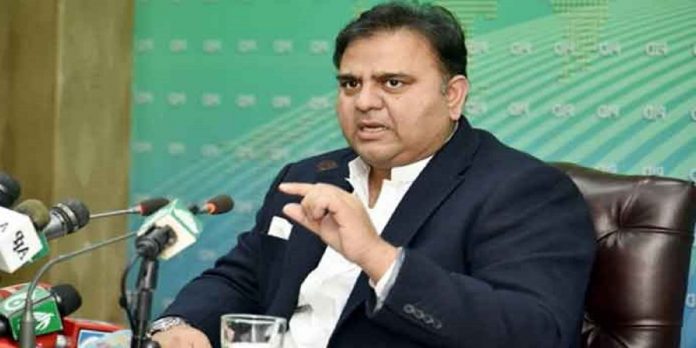
ISLAMABAD: Federal Minister for Information and Broadcasting Chaudhry Fawad Hussain on Tuesday said that rapid advancement and spread of technology has increased the importance of information sector manifold.
Addressing the closing session of the Margalla Dialogue 2021, organized by the Islamabad Policy Research Institute (IPRI), he said that a few years back, it seemed that the information domain was becoming less important, but suddenly with ‘huge outbreak of technology’, it turned out that the information was now driving everything in the world.
While citing example of the Viking—member of the Scandinavian seafaring warriors who used to raid different areas in Europe from the 9th to the 11th century, Fawad Chaudhry said the morality of war in the past was nothing more than attacking and plundering a land. He also gave example of Nadir Shah who invaded India and left it after loot and plunder.
While pointing to substantive changes in war morality after the Treaty of Westphalia and Second World War, he said, the East India Company also came to the sub-continent and then had to return [to the United Kingdom] after the World War II, he said.
The information minister said, after 1950s there has been no annexation in the world except of Kuwait when it was invaded by Iraq, but it also had to leave Kuwait due to change in ‘war morality’ resulted from the international law developed in the backdrop of the World Wars I and II.
He said in traditional sense, the United States conquered Afghanistan in three hours when their Air Force entered Kabul and defeated the Taliban [in 2001], but could not deliver replacement in Afghanistan.
Fawad underlined the need for understanding the principals upon which Pakistan was established. Quaid-e-Azam while laying those fundamentals before the Constituent Assembly August 11, 1947 said that Pakistan was established while keeping political interpretation of Islam in the mind.
He cited Allama Iqbal who said that a politically entity would be created in the North Western India which would comprised of Muslims majority. Allama Iqbal envisioned creation of a political entity in North Western India as he foresaw the situation of Muslims in the United India as it was today under the BJP rule, the minister added.
The information minister said Quaid-e-Azam made Resolution of Pakistan in line with the interpretation of political nation state given by Allama Iqbal.
He said some mistakes including expulsion of foreign correspondents from Dhaka were committed at the time of ‘Fall of Dhaka’. It was assumed that the foreign correspondents would narrate our side of story [to the people] while staying at India, he added.
Fawad said, till 1969, Pakistan was the third largest film-maker country in the world having second number of cinemas in the world. In 2005, the country had faced massive decline in the film industry and not a single film was produced. Likewise, this year up to two films were produced, he added.
How the world would know [our] story when the film industry was in crisis and there would be no TV drama, music and culture, the minister noted.
All the mediums have been damaged, he said underscoring the need to strengthen the institutions to ensure effective presentation of the state narrative.
He said when the Taliban regime came to an end in Afghanistan and Hamid Karzai assumed the office, the TV channels of different countries started operations there, but Pakistan did not sponsor a single channel there.
Pakistan should have developed a soft power in Afghanistan at that time, he said while drawing comparison with India which was providing massive aid to TV channels.
Currently, there has been 143 channels in the country, including 50 foreign ones and thousands of YouTube’s, he said adding despite presence of huge media the false propaganda has been launched against Pakistan that media was not free in the country.
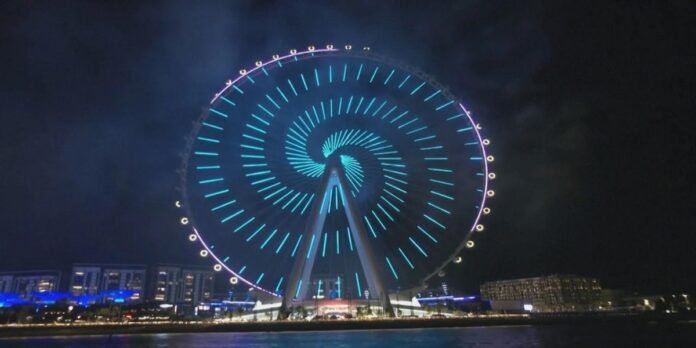
ISLAMABAD: Federal Capital will have another recreational project for the people of Islamabad as country’s largest Ferris wheel with a height of about 180 feet will be installed by the Capital Development Authority (CDA) at Lake View Park.
The CDA is all set to launch this entertainment initiative for the citizens of the capital, said a spokesman of the CDA.
As Phase-II of development plan of the Lake View Park remained suspended for over a decade is now being developed. People of Islamabad will shortly have this entertainment.
The CDA chairman has directed Environment Wing to bring PC-I of the project for approval at the earliest. Furthermore, Pakistan Movement Park is being developed along Islamabad Highway around the flag in sector H-8.
The park along with landscape features will also have gigantic walls with 2-D images showing the different pictorials of the largest migration of history. Work is going on at a speedy pace and the park will be inaugurated on 23 March 2022. Similarly, a new park has been planned near Bhara Kahu in the National Park area.
The park apart from other features will have an exclusive section for ladies and children. Some of the other salient features include a walking track, kids playing gadgets, exercise units, a water sports area, a mini-golf course, and a forest area. The park will be constructed on the land retrieved from the encroachers.
The CDA chairman has been directed to prepare PC-I of all these projects at the earliest and place it in the upcoming CDADWP for consideration.
ISLAMABAD: The Faculty of Management Sciences (FMS) of International Islamic University, Islamabad (IIUI) in collaboration with the Office of Research Innovation and Commercialization (ORIC) is organizing “Entrepreneurial Drive-2021” in connection with 42nd anniversary of the varsity.
The event will be attended by parliamentarians, academicians, civil society representatives and students of the university.
The opening ceremony of “Entrepreneurial Drive-2021” is scheduled to be held on Wednesday, December 15, 2021 at Quaid-e-Azam Auditorium, Faisal Masjid Campus at 11:00 am.
Federal Minister for Planning, Development and Special Initiatives, Asad Umer and Khalid Mansoor, Special Assistant to Prime minister (CPEC) are likely to participate in the opening ceremony of the event.
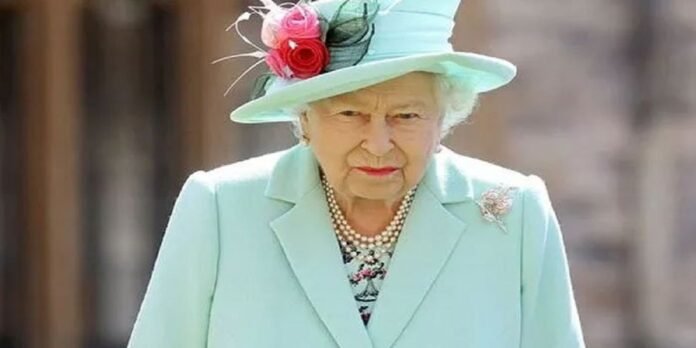
LONDON: British Queen Elizabeth II has approved the award of her gold medal for poetry 2021 to Grace Nichols, a Guyanese poet.
Nichols is a Guyanese poet who moved to Britain at the age of 27 and in 1983 her first poetry collection ‘I is a Long Memoried Woman’ won the Commonwealth Poetry Prize.
This was announced by the Buckingham Palace late on Friday.
The Queen approved the choice recommended by the Poetry Medal Committee, chaired by the poet laureate, Simon Armitage.
Through her career Nichols has published nine poetry collections as well as prose and several books for younger readers.
In 2007, she was elected as Fellow of the Royal Society of Literature.
Dating back to 1933, the medal is awarded annually for excellence in poetry. Ms Nichols is the 52nd recipient of The Queen’s Gold Medal for Poetry.
ISLAMABAD: PTI-led Federal Government is planning to table a mini-budget to meet the conditionalities set by the International Monetary Fund (IMF) for the revival of its $6 billion loan.
Government through a new Finance Bill is expected will seek withdrawal of the General Sales Tax (GST) exemptions and slapping standard rate of 17 per cent on import of mobile phones, computers, silver/ gold, different articles of jewelry, re-meltable scrap, LPG and many other products.
It is not yet clear whether the government will impose a standard GST rate of 17 per cent on POL products or not because if the whole GST rate and petroleum levy were jacked up to Rs30 per litre in phases, the storm of inflationary pressures might touch new heights.
It seems that the government will make last-ditch efforts to protect the POL products from the maximum rate of GST. Currently, it is charging a minimum amount of GST on POL products.
The government has finalized a draft of Tax Laws (Fourth) Amendment Bill 2021 to abolish almost around 100 tax exemptions as a standard rate of 17 per cent GST would become applicable with the approval of Parliament.
The government had agreed with the IMF to abolish GST exemptions of Rs350 billion, but its net impact for the current fiscal year will be on the lower side because the first six months had already passed.
The sales tax on the latest mobile phone sets is under consideration to be imposed. The government has assured the Washington-based lender that they will advance the reforms to the GST system, underpinned by a unified tax base and within the confines of the Constitution.
The government has decided to eliminate all zero-rated goods (Fifth Schedule), except on export and capital machinery goods and move them to the standard sales tax rate; remove reduced rates under the Eighth Schedule and bring all those goods to the standard sales tax rate; eliminate exemptions (Sixth Schedule) excluding a small subset of goods (i.e. basic food, medicines, live animals for human consumption, education and health-related goods) and bring all others to the standard rate; and remove the Ninth Schedule to replace a specific tax rate for mobile phones with the standard rate.
These reforms are expected to yield an estimated 0.7 per cent of the GDP on an annual basis. The Tax Laws (Fourth) Amendment Bill 2021 proposed retaining of a few exemptions under the Sixth Schedule (Exemption) of the Sales Tax Act 1990, such as the import and supply of construction materials, machinery, equipment, and materials to the Gwadar Export Processing Zone’s investors and Export Processing Zone, Gwadar, or other export processing zones.
The tax exemptions available to Chinese companies under CPEC are also proposed to be retained under the draft bill.
Under the Eighth Schedule (Conditional Sales Tax exemption) of the Sales Tax Act 1990, sales tax is proposed to be imposed on LPG; import of re-meltable scrap; silver, in unworked condition; gold, in unworked condition and articles of jewelry, or parts thereof, of precious metal or of metal clad with precious metal; incinerators of disposal of waste management, motorized sweepers and snow-plough; plant and machinery not manufactured locally and having no compatible local substitutes; ingredients of poultry feed, cattle feed; re-importation of foreign origin goods which were temporarily exported out of Pakistan; plant, machinery, and equipment used in the production of bio-diesel; secondhand and worn clothing or footwear; agricultural tractors; tillage and seedbed preparation equipment and post-harvest handling and processing and miscellaneous machinery and some other items specified in the Eighth Schedule of the Sales Tax Act 1990.
The GST is proposed on the import of plant, machinery, and production line equipment used for the manufacturing of mobile phones by the local manufacturers of mobile phones; laptop computers, notebooks whether or not incorporating multimedia kit and personal computers; sunflower and canola hybrid seeds meant for sowing and combined harvesters up to five years old, Geo New reported.
Sales tax could be imposed on the import of live animals and live poultry; meat of bovine animals, sheep, and goat; fish and crustaceans; eggs, including eggs for hatching; live plants including bulbs, roots, and the like; edible vegetables including roots and tubers; pulses; edible fruits; red chillies excluding those sold in retail packing bearing brand names and trademarks; ginger, excluding those sold in retail packing bearing brand names and trademarks; turmeric excluding those sold in retail packing bearing brand names and trademarks; cereals and products of the milling industry; seeds, fruit, and spores of a kind used for sowing; Cinchona bark and sugar cane.
The sales tax zero-rating may be abolished on the goods and the raw materials, packing materials, sub-components, components, sub-assemblies, and assemblies imported or purchased locally for the manufacture of preparations suitable for infants, put up for retail sale.
STOCKHOLM: Armament Industry across the globe has grown despite worst Coronavirus pandemic, even when all other industries have witnessed worst time during the epidemic.
100 top weapons firms saw their profits rise by 1.3 per cent on 2019 to a record $531 billion, despite the global economy contracting by more than three per cent, said a report of the Stockholm International Peace Research Institute (SIPRI).
It stated that the world’s biggest weapons manufacturers largely avoided the economic downturn caused by COVID-19 and recorded a growth in profits last year for the sixth year in a row,
Governments around the world have continued to buy arms during the pandemic and some also passed measures to help their big weapons firms, SIPRI stated in its report.
It added that overall, the 100 top weapons firms saw their profits rise by 1.3 per cent on 2019 to a record $531 billion, despite the global economy contracting by more than three per cent.
“Military manufacturers were largely shielded by sustained government demand for military goods and services,” said SIPRI researcher Alexandra Marksteiner in the institute’s annual assessment of arms companies.
“In much of the world, military spending grew and some governments even accelerated payments to the arms industry in order to mitigate the impact of the Covid-19 crisis.”
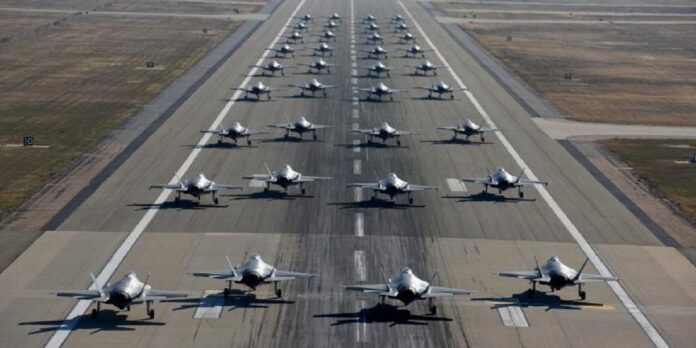
The top five arms firms were all from the United States, Lockheed-Martin — which counts F-35 fighter jets and various types of missiles among its bestsellers — consolidating its first place with sales of $58.2 billion.
Britain’s BAE Systems, in sixth position, was the highest-placed European firm, just ahead of three Chinese groups.
The United States once again hosted the highest number of companies ranked in the Top 100. Together, the arms sales of the 41 US companies amounted to $285 billion—an increase of 1.9 per cent compared with 2019—and accounted for 54 per cent of the Top 100’s total arms sales. Since 2018, the top five companies in the ranking have all been based in the USA.
The US arms industry is undergoing a wave of mergers and acquisitions. To broaden their product portfolios and thus gain a competitive edge when bidding for contracts, many large US arms companies are opting to merge or acquire promising ventures. ‘This trend is particularly pronounced in the space sector,’ said Marksteiner. ‘Northrop Grumman and KBR are among several companies to have acquired high-value firms specialized in space technology in recent years.’
The combined arms sales of the five Chinese companies included in the Top 100 amounted to an estimated $66.8 billion in 2020, 1.5 per cent more than in 2019. Chinese firms accounted for 13 per cent of total Top 100 arms sales in 2020, behind US companies and ahead of companies from the United Kingdom, which made up the third largest share.
‘In recent years, Chinese arms companies have benefited from the country’s military modernization programs and focus on military–civil fusion,’ said Dr Nan Tian, SIPRI Senior Researcher. ‘They have become some of the most advanced military technology producers in the world.’ NORINCO, for example, co-developed the BeiDou military–civil navigation satellite system and deepened its involvement in emerging technologies.
The 26 European arms companies in the Top 100 jointly accounted for 21 per cent of total arms sales, or $109 billion. The seven British companies recorded arms sales of $37.5 billion in 2020, up by 6.2 per cent compared with 2019. Arms sales by BAE Systems – the only European firm in the top 10 – increased by 6.6 per cent to $24.0 billion.
‘Aggregated arms sales by the six French companies in the Top 100 fell by 7.7 per cent,’ said Dr Lucie Béraud-Sudreau, Director of the SIPRI Military Expenditure and Arms Production Programme. ‘This significant drop was largely due to a sharp year-on-year decline in the number of deliveries of Rafale combat aircraft by Dassault. Safran’s arms sales grew, however, driven by increased sales of sighting and navigation systems.’
Arms sales by the four German firms listed in the Top 100 reached $8.9 billion in 2020 – an increase of 1.3 per cent compared with 2019. Together, these firms accounted for 1.7 per cent of the Top 100’s total arms sales. Rheinmetall – the largest German arms manufacturer – recorded an increase in arms sales of 5.2 per cent. Shipbuilder ThyssenKrupp, in contrast, reported a drop of 3.7 per cent.
The combined arms sales of the nine Russian companies ranked in the Top 100 decreased from $28.2 billion in 2019 to $26.4 billion in 2020—a 6.5 per cent decline. This marks a continuation of the downward trend observed since 2017, when arms sales by Russian companies in the Top 100 peaked. Russian firms accounted for 5.0 per cent of total Top 100 arms sales.
Some of the sharpest declines in arms sales among the Top 100 were recorded by Russian firms. This coincided with the end of the State Armament Program 2011–20 and pandemic-related delays in delivery schedules. Almaz-Antey and United Shipbuilding Corporation saw their arms sales fall by 31 per cent and 11 per cent, respectively. Conversely, United Aircraft Corporation increased its arms sales by 16 per cent.
Another key development in the Russian arms industry was the diversification of product lines. Russian companies are currently implementing a government policy to increase their share of civilian sales to 30 per cent of their total sales by 2025 and 50 per cent by 2030.
SIPRI said the firms had benefited from the broad injection of cash into economies, as well as specific measures designed to help arms companies such as accelerated payments or order schedules.
And as military contracts usually span several years, firms were able to make gains before the health crisis took hold.
“However, despite these and other factors, global arms production was not fully immune to the impact of the pandemic,” the report said, pointing to France’s Thales which blamed a 5.8 per cent fall in arms sales on lockdown disruptions.
The report highlighted that the rate of increase in profits had slowed substantially between 2019 and 2020, and noted that measures taken to halt the spread of the virus had disrupted supply chains in the weapons industry just as they had across the wider economy.
RAWALPINDI: A total of 4,439 degrees were awarded to the students of undergraduates, graduates, MPhil and PhD scholars at the 22nd convocation 2020 of the Pir Mehr Ali Shah Arid Agriculture University, Rawalpindi (PMAS AAUR).
In the ceremony held on Wednesday, 37 students received PhD degrees, 1,893 were awarded M.Phil/masters degrees, while 2,509 students got undergraduate degrees in their respective disciplines.
Gold medals were awarded to 38 students on their outstanding performance in their academic record while 22 bagged silver and 18 secured bronze medals in the convocation. Two sponsored Gold medals were also awarded by Bank of Punjab.
Minister for Higher Education (Punjab) Raja Yassir Humanyun Sarfraz was chief guest while President Pakistan Academy of Sciences and Former Vice-Chancellor of PMAS-AAUR, Prof. Dr Khalid Mahmood Khan (SI), was guest of honor of the event.
Minister Raja Yassir Humanyun Sarfraz congratulated all the graduate students, especially those who have got distinctions throughout their course of study and said that the fulfillment of the educated workforce required for economic and social development of the country should be among the explicit objectives of every educational concern.
The Minister said that the contemporary age demands education based on science and technology, but we must add the blend of socio-cultural aspects while imparting knowledge that evokes respect for one’s culture, geography, history and national heritage.
He said that we should provide education inspiring the spirit of nationalism in future generations and the government is working hard to provide quality and skill-based education to all.
Explaining the need for quality education, he said that our Alma Maters should not only be able to deter students intended abroad for quality education, but also develop themselves as destinations of educational excellence to attract foreign students thereby, boosting up the national economy.
He advised the students that they should not end their hard work and effort here but should make it more stable in their life which would not only brighten the name of Pakistan but also make the country prosperous.
Earlier, during his address, Vice-Chancellor Prof. Dr Qamar-uz-Zaman read out a message from the Chancellor for the students to congratulate them for successfully completing & achieving their degrees.
Prof. Dr Qamar-uz-Zaman, in his welcome address said that Arid Agriculture University made substantial efforts to improve academic and research activities along with enhancement of financial resources as the University has been awarded several development projects by provincial and federal governments amounting to Rs. 5 billion.
While highlighting the university’s efforts towards quality education, faculty and students career-building he said that the University successfully organized over a hundred International & National Workshops/Seminars/Conferences and Webinars and HEC allowed admissions to 28 more programs.
The Vice Chancellor stressed on the academia industry relations and said that the strong link between academia and industry is the backbone of any country’s development for which the university has taken exemplary steps by organizing farmer’s fairs etc.
He also congratulated all the staff of the university and students for the successful completion of 25 years of quality education and academic excellence.
PhDs Degree Awardees include:
Muhammad Faisal Khan (Horticulture), Aliya Tariq (Plant Pathology), Saman Chughtai (Horticulture), Umara Qadeer (Agronomy), Adeel Khan (PBG), Zafar Iqbal (Entomology), Muhammad Mazhar Qayyum (Horticulture), Riffat Ayesha (Horticulture), Rafiq Ahmad (PBG), Muhammad Ahsan (Plant Pathology), Rab Nawaz (Horticulture), Sohail (Botany), Muhammad Qayash (Zoology), Muhammad Ejaz (Botany), Bilal Javed (Botany), Roomina Mazhar (Botany), Ruqqya Naz (Zoology), Madiha Khalid (Biochemistry), Faryal Kabir (Biochemistry), Muhammad Asad Anwar (Biochemistry), Abdul Sami (Biochemistry), Muhammad Wahab Yasir (Environmental Sciences), Anwar Ali (F&RM), Tariq Mahmood (F&RM), Naureen Mustafa (Wildlife Management), Hira Fatima (Wildlife Management), Ume Habiba (Wildlife Management), Zafar Iqbal (CS), Sajid Latif (CS), Muhammad Kaleem (FT), Kouser Majeed Malik (Soil Science), Tayyba Kanwal Choudhary (Soil Science), Muhammad Raashid (Economics), Aabida Lateef (Education), Farah Rahman (Education), Saba Wali Lone (Education), Shumaila Khurshid (Education)
ISLAMABAD: Pakistan reported 10 corona virus related deaths while 350 people were tested positive of the deadly disease during last 24 hours.
According to the latest figures displayed on National Coronavirus Dashboard of the National Command and Operation Center (NCOC), 350 new cases across the country taking the overall tally of positive cases to 1,288,053. After the NCOC reported 10 new deaths by the virus, nationwide tally of fatalities has jumped to 28,803 on Thursday morning.
According to overall province-wise situation of the COVID-19 across the country NCOC stated that Punjab remains the worst-hit province in terms of deaths followed by Sindh and Khyber Pakhtunkhwa.
The NCOC has confirmed overall death toll of 28,803 all over country so far out of which 13,046 individuals have lost their lives to the epidemic in Punjab, 7,630 in Sindh 5,874 in Khyber Pakhtunkhwa, 962 in Islamabad, 743 in Azad Kashmir, 362 in Balochistan and 186 in Gilgit-Baltistan.
The overall figure of positive cases was reported as 1,288,053 across Pakistan out of that 477,299 coronavirus cases have been confirmed in Sindh, 443,682 in Punjab 180,514 in Khyber Pakhtunkhwa 108,022 in Islamabad, 34,595 in Azad Kashmir 33,519 in Balochistan and 10,422 in Gilgit-Baltistan.
Pakistan has so far conducted 22,385,347 coronavirus tests and 46,697 in the last 24 hours. 1,249,421 patients have recovered in the country whereas 771 patients are in critical condition.
The COVID-19 positivity ratio was recorded at 0.74 per cent.
So far, 82,693,641 people have received their first dose of coronavirus vaccine including 469,553 in last 24 hours. 53,781,101 citizens have been fully vaccinated while 749,572 received their second dose in last 24 hours.
The number of total administered doses has reached to 128,879,987 with 1,173,459 in the last 24 hours.