LONDON: British Queen Elizabeth II has approved the award of her gold medal for poetry 2021 to Grace Nichols, a Guyanese poet.
Nichols is a Guyanese poet who moved to Britain at the age of 27 and in 1983 her first poetry collection ‘I is a Long Memoried Woman’ won the Commonwealth Poetry Prize.
This was announced by the Buckingham Palace late on Friday.
The Queen approved the choice recommended by the Poetry Medal Committee, chaired by the poet laureate, Simon Armitage.
Through her career Nichols has published nine poetry collections as well as prose and several books for younger readers.
In 2007, she was elected as Fellow of the Royal Society of Literature.
Dating back to 1933, the medal is awarded annually for excellence in poetry. Ms Nichols is the 52nd recipient of The Queen’s Gold Medal for Poetry.
ISLAMABAD: PTI-led Federal Government is planning to table a mini-budget to meet the conditionalities set by the International Monetary Fund (IMF) for the revival of its $6 billion loan.
Government through a new Finance Bill is expected will seek withdrawal of the General Sales Tax (GST) exemptions and slapping standard rate of 17 per cent on import of mobile phones, computers, silver/ gold, different articles of jewelry, re-meltable scrap, LPG and many other products.
It is not yet clear whether the government will impose a standard GST rate of 17 per cent on POL products or not because if the whole GST rate and petroleum levy were jacked up to Rs30 per litre in phases, the storm of inflationary pressures might touch new heights.
It seems that the government will make last-ditch efforts to protect the POL products from the maximum rate of GST. Currently, it is charging a minimum amount of GST on POL products.
The government has finalized a draft of Tax Laws (Fourth) Amendment Bill 2021 to abolish almost around 100 tax exemptions as a standard rate of 17 per cent GST would become applicable with the approval of Parliament.
The government had agreed with the IMF to abolish GST exemptions of Rs350 billion, but its net impact for the current fiscal year will be on the lower side because the first six months had already passed.
The sales tax on the latest mobile phone sets is under consideration to be imposed. The government has assured the Washington-based lender that they will advance the reforms to the GST system, underpinned by a unified tax base and within the confines of the Constitution.
The government has decided to eliminate all zero-rated goods (Fifth Schedule), except on export and capital machinery goods and move them to the standard sales tax rate; remove reduced rates under the Eighth Schedule and bring all those goods to the standard sales tax rate; eliminate exemptions (Sixth Schedule) excluding a small subset of goods (i.e. basic food, medicines, live animals for human consumption, education and health-related goods) and bring all others to the standard rate; and remove the Ninth Schedule to replace a specific tax rate for mobile phones with the standard rate.
These reforms are expected to yield an estimated 0.7 per cent of the GDP on an annual basis. The Tax Laws (Fourth) Amendment Bill 2021 proposed retaining of a few exemptions under the Sixth Schedule (Exemption) of the Sales Tax Act 1990, such as the import and supply of construction materials, machinery, equipment, and materials to the Gwadar Export Processing Zone’s investors and Export Processing Zone, Gwadar, or other export processing zones.
The tax exemptions available to Chinese companies under CPEC are also proposed to be retained under the draft bill.
Under the Eighth Schedule (Conditional Sales Tax exemption) of the Sales Tax Act 1990, sales tax is proposed to be imposed on LPG; import of re-meltable scrap; silver, in unworked condition; gold, in unworked condition and articles of jewelry, or parts thereof, of precious metal or of metal clad with precious metal; incinerators of disposal of waste management, motorized sweepers and snow-plough; plant and machinery not manufactured locally and having no compatible local substitutes; ingredients of poultry feed, cattle feed; re-importation of foreign origin goods which were temporarily exported out of Pakistan; plant, machinery, and equipment used in the production of bio-diesel; secondhand and worn clothing or footwear; agricultural tractors; tillage and seedbed preparation equipment and post-harvest handling and processing and miscellaneous machinery and some other items specified in the Eighth Schedule of the Sales Tax Act 1990.
The GST is proposed on the import of plant, machinery, and production line equipment used for the manufacturing of mobile phones by the local manufacturers of mobile phones; laptop computers, notebooks whether or not incorporating multimedia kit and personal computers; sunflower and canola hybrid seeds meant for sowing and combined harvesters up to five years old, Geo New reported.
Sales tax could be imposed on the import of live animals and live poultry; meat of bovine animals, sheep, and goat; fish and crustaceans; eggs, including eggs for hatching; live plants including bulbs, roots, and the like; edible vegetables including roots and tubers; pulses; edible fruits; red chillies excluding those sold in retail packing bearing brand names and trademarks; ginger, excluding those sold in retail packing bearing brand names and trademarks; turmeric excluding those sold in retail packing bearing brand names and trademarks; cereals and products of the milling industry; seeds, fruit, and spores of a kind used for sowing; Cinchona bark and sugar cane.
The sales tax zero-rating may be abolished on the goods and the raw materials, packing materials, sub-components, components, sub-assemblies, and assemblies imported or purchased locally for the manufacture of preparations suitable for infants, put up for retail sale.
STOCKHOLM: Armament Industry across the globe has grown despite worst Coronavirus pandemic, even when all other industries have witnessed worst time during the epidemic.
100 top weapons firms saw their profits rise by 1.3 per cent on 2019 to a record $531 billion, despite the global economy contracting by more than three per cent, said a report of the Stockholm International Peace Research Institute (SIPRI).
It stated that the world’s biggest weapons manufacturers largely avoided the economic downturn caused by COVID-19 and recorded a growth in profits last year for the sixth year in a row,
Governments around the world have continued to buy arms during the pandemic and some also passed measures to help their big weapons firms, SIPRI stated in its report.
It added that overall, the 100 top weapons firms saw their profits rise by 1.3 per cent on 2019 to a record $531 billion, despite the global economy contracting by more than three per cent.
“Military manufacturers were largely shielded by sustained government demand for military goods and services,” said SIPRI researcher Alexandra Marksteiner in the institute’s annual assessment of arms companies.
“In much of the world, military spending grew and some governments even accelerated payments to the arms industry in order to mitigate the impact of the Covid-19 crisis.”
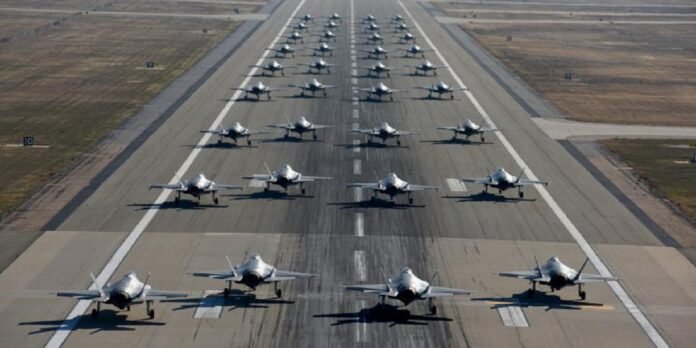
The top five arms firms were all from the United States, Lockheed-Martin — which counts F-35 fighter jets and various types of missiles among its bestsellers — consolidating its first place with sales of $58.2 billion.
Britain’s BAE Systems, in sixth position, was the highest-placed European firm, just ahead of three Chinese groups.
The United States once again hosted the highest number of companies ranked in the Top 100. Together, the arms sales of the 41 US companies amounted to $285 billion—an increase of 1.9 per cent compared with 2019—and accounted for 54 per cent of the Top 100’s total arms sales. Since 2018, the top five companies in the ranking have all been based in the USA.
The US arms industry is undergoing a wave of mergers and acquisitions. To broaden their product portfolios and thus gain a competitive edge when bidding for contracts, many large US arms companies are opting to merge or acquire promising ventures. ‘This trend is particularly pronounced in the space sector,’ said Marksteiner. ‘Northrop Grumman and KBR are among several companies to have acquired high-value firms specialized in space technology in recent years.’
The combined arms sales of the five Chinese companies included in the Top 100 amounted to an estimated $66.8 billion in 2020, 1.5 per cent more than in 2019. Chinese firms accounted for 13 per cent of total Top 100 arms sales in 2020, behind US companies and ahead of companies from the United Kingdom, which made up the third largest share.
‘In recent years, Chinese arms companies have benefited from the country’s military modernization programs and focus on military–civil fusion,’ said Dr Nan Tian, SIPRI Senior Researcher. ‘They have become some of the most advanced military technology producers in the world.’ NORINCO, for example, co-developed the BeiDou military–civil navigation satellite system and deepened its involvement in emerging technologies.
The 26 European arms companies in the Top 100 jointly accounted for 21 per cent of total arms sales, or $109 billion. The seven British companies recorded arms sales of $37.5 billion in 2020, up by 6.2 per cent compared with 2019. Arms sales by BAE Systems – the only European firm in the top 10 – increased by 6.6 per cent to $24.0 billion.
‘Aggregated arms sales by the six French companies in the Top 100 fell by 7.7 per cent,’ said Dr Lucie Béraud-Sudreau, Director of the SIPRI Military Expenditure and Arms Production Programme. ‘This significant drop was largely due to a sharp year-on-year decline in the number of deliveries of Rafale combat aircraft by Dassault. Safran’s arms sales grew, however, driven by increased sales of sighting and navigation systems.’
Arms sales by the four German firms listed in the Top 100 reached $8.9 billion in 2020 – an increase of 1.3 per cent compared with 2019. Together, these firms accounted for 1.7 per cent of the Top 100’s total arms sales. Rheinmetall – the largest German arms manufacturer – recorded an increase in arms sales of 5.2 per cent. Shipbuilder ThyssenKrupp, in contrast, reported a drop of 3.7 per cent.
The combined arms sales of the nine Russian companies ranked in the Top 100 decreased from $28.2 billion in 2019 to $26.4 billion in 2020—a 6.5 per cent decline. This marks a continuation of the downward trend observed since 2017, when arms sales by Russian companies in the Top 100 peaked. Russian firms accounted for 5.0 per cent of total Top 100 arms sales.
Some of the sharpest declines in arms sales among the Top 100 were recorded by Russian firms. This coincided with the end of the State Armament Program 2011–20 and pandemic-related delays in delivery schedules. Almaz-Antey and United Shipbuilding Corporation saw their arms sales fall by 31 per cent and 11 per cent, respectively. Conversely, United Aircraft Corporation increased its arms sales by 16 per cent.
Another key development in the Russian arms industry was the diversification of product lines. Russian companies are currently implementing a government policy to increase their share of civilian sales to 30 per cent of their total sales by 2025 and 50 per cent by 2030.
SIPRI said the firms had benefited from the broad injection of cash into economies, as well as specific measures designed to help arms companies such as accelerated payments or order schedules.
And as military contracts usually span several years, firms were able to make gains before the health crisis took hold.
“However, despite these and other factors, global arms production was not fully immune to the impact of the pandemic,” the report said, pointing to France’s Thales which blamed a 5.8 per cent fall in arms sales on lockdown disruptions.
The report highlighted that the rate of increase in profits had slowed substantially between 2019 and 2020, and noted that measures taken to halt the spread of the virus had disrupted supply chains in the weapons industry just as they had across the wider economy.
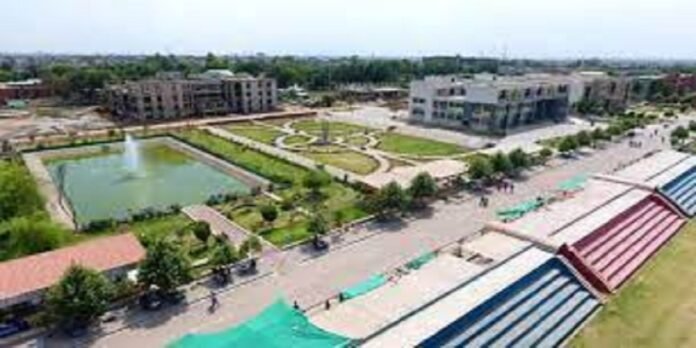
RAWALPINDI: A total of 4,439 degrees were awarded to the students of undergraduates, graduates, MPhil and PhD scholars at the 22nd convocation 2020 of the Pir Mehr Ali Shah Arid Agriculture University, Rawalpindi (PMAS AAUR).
In the ceremony held on Wednesday, 37 students received PhD degrees, 1,893 were awarded M.Phil/masters degrees, while 2,509 students got undergraduate degrees in their respective disciplines.
Gold medals were awarded to 38 students on their outstanding performance in their academic record while 22 bagged silver and 18 secured bronze medals in the convocation. Two sponsored Gold medals were also awarded by Bank of Punjab.
Minister for Higher Education (Punjab) Raja Yassir Humanyun Sarfraz was chief guest while President Pakistan Academy of Sciences and Former Vice-Chancellor of PMAS-AAUR, Prof. Dr Khalid Mahmood Khan (SI), was guest of honor of the event.
Minister Raja Yassir Humanyun Sarfraz congratulated all the graduate students, especially those who have got distinctions throughout their course of study and said that the fulfillment of the educated workforce required for economic and social development of the country should be among the explicit objectives of every educational concern.
The Minister said that the contemporary age demands education based on science and technology, but we must add the blend of socio-cultural aspects while imparting knowledge that evokes respect for one’s culture, geography, history and national heritage.
He said that we should provide education inspiring the spirit of nationalism in future generations and the government is working hard to provide quality and skill-based education to all.
Explaining the need for quality education, he said that our Alma Maters should not only be able to deter students intended abroad for quality education, but also develop themselves as destinations of educational excellence to attract foreign students thereby, boosting up the national economy.
He advised the students that they should not end their hard work and effort here but should make it more stable in their life which would not only brighten the name of Pakistan but also make the country prosperous.
Earlier, during his address, Vice-Chancellor Prof. Dr Qamar-uz-Zaman read out a message from the Chancellor for the students to congratulate them for successfully completing & achieving their degrees.
Prof. Dr Qamar-uz-Zaman, in his welcome address said that Arid Agriculture University made substantial efforts to improve academic and research activities along with enhancement of financial resources as the University has been awarded several development projects by provincial and federal governments amounting to Rs. 5 billion.
While highlighting the university’s efforts towards quality education, faculty and students career-building he said that the University successfully organized over a hundred International & National Workshops/Seminars/Conferences and Webinars and HEC allowed admissions to 28 more programs.
The Vice Chancellor stressed on the academia industry relations and said that the strong link between academia and industry is the backbone of any country’s development for which the university has taken exemplary steps by organizing farmer’s fairs etc.
He also congratulated all the staff of the university and students for the successful completion of 25 years of quality education and academic excellence.
PhDs Degree Awardees include:
Muhammad Faisal Khan (Horticulture), Aliya Tariq (Plant Pathology), Saman Chughtai (Horticulture), Umara Qadeer (Agronomy), Adeel Khan (PBG), Zafar Iqbal (Entomology), Muhammad Mazhar Qayyum (Horticulture), Riffat Ayesha (Horticulture), Rafiq Ahmad (PBG), Muhammad Ahsan (Plant Pathology), Rab Nawaz (Horticulture), Sohail (Botany), Muhammad Qayash (Zoology), Muhammad Ejaz (Botany), Bilal Javed (Botany), Roomina Mazhar (Botany), Ruqqya Naz (Zoology), Madiha Khalid (Biochemistry), Faryal Kabir (Biochemistry), Muhammad Asad Anwar (Biochemistry), Abdul Sami (Biochemistry), Muhammad Wahab Yasir (Environmental Sciences), Anwar Ali (F&RM), Tariq Mahmood (F&RM), Naureen Mustafa (Wildlife Management), Hira Fatima (Wildlife Management), Ume Habiba (Wildlife Management), Zafar Iqbal (CS), Sajid Latif (CS), Muhammad Kaleem (FT), Kouser Majeed Malik (Soil Science), Tayyba Kanwal Choudhary (Soil Science), Muhammad Raashid (Economics), Aabida Lateef (Education), Farah Rahman (Education), Saba Wali Lone (Education), Shumaila Khurshid (Education)
ISLAMABAD: Pakistan reported 10 corona virus related deaths while 350 people were tested positive of the deadly disease during last 24 hours.
According to the latest figures displayed on National Coronavirus Dashboard of the National Command and Operation Center (NCOC), 350 new cases across the country taking the overall tally of positive cases to 1,288,053. After the NCOC reported 10 new deaths by the virus, nationwide tally of fatalities has jumped to 28,803 on Thursday morning.
According to overall province-wise situation of the COVID-19 across the country NCOC stated that Punjab remains the worst-hit province in terms of deaths followed by Sindh and Khyber Pakhtunkhwa.
The NCOC has confirmed overall death toll of 28,803 all over country so far out of which 13,046 individuals have lost their lives to the epidemic in Punjab, 7,630 in Sindh 5,874 in Khyber Pakhtunkhwa, 962 in Islamabad, 743 in Azad Kashmir, 362 in Balochistan and 186 in Gilgit-Baltistan.
The overall figure of positive cases was reported as 1,288,053 across Pakistan out of that 477,299 coronavirus cases have been confirmed in Sindh, 443,682 in Punjab 180,514 in Khyber Pakhtunkhwa 108,022 in Islamabad, 34,595 in Azad Kashmir 33,519 in Balochistan and 10,422 in Gilgit-Baltistan.
Pakistan has so far conducted 22,385,347 coronavirus tests and 46,697 in the last 24 hours. 1,249,421 patients have recovered in the country whereas 771 patients are in critical condition.
The COVID-19 positivity ratio was recorded at 0.74 per cent.
So far, 82,693,641 people have received their first dose of coronavirus vaccine including 469,553 in last 24 hours. 53,781,101 citizens have been fully vaccinated while 749,572 received their second dose in last 24 hours.
The number of total administered doses has reached to 128,879,987 with 1,173,459 in the last 24 hours.
KARACHI: An earthquake tremor measured 4.1 magnitude on richter scale struck parts of Karachi on late Wednesday, caused panic among people.
Tremors were felt in Gulshan-i-Iqbal, Gulistan-i-Jauhar, Gulshan-i-Hadeed, Malir Cantt and Scheme-33, I.I. Chundrigarh Road, Gadap Town, North Nazimabad, Keamari, Federal B Area, Dhabeji and Gharo of Thatta district of Sindh.
According to the National Seismic Monitoring Centre, the earthquake’s epicenter was 15 km North of DHA Karachi and had a depth of 15km. It added that the quake occurred at 17:16:04 UTC and had a longitude of 67.29 East and latitude of 25.17 North.
The tremors spread panic among locals, as evident from social media posts. However, no casualties or damages have so far been reported.
People came out of their houses in the parts with fear. “The population in Karachi is huge and in many areas the houses are not built with quality materials,” said an eye witness talking about the shivers caused among people of the area.
In October, at least 15 people were killed while more than 150 were injured after a 5.9 magnitude earthquake struck parts of Balochistan.
The worst-affected area was the remote mountainous district of Harnai, where landslides blocked some roads, hampering rescue efforts. Harnai district, 95km northeast of Quetta, bore the brunt of the quake where casualties occurred and hundreds of mud-houses collapsed or were damaged, rendering thousands of people homeless.
The tremor struck at a shallow depth of around 20km, its epicentre was located near Harnai town and it was also felt in Chaman, Pishin, Ziarat, Mastung, Sibi, Sanjavi, Qila Saifullah, Muslim Bagh, Zhob and Duki.
KARACHI: Pakistan reported first case of Omicron, coronavirus variant when a woman came from abroad was tested positive for the variant.
Health officials of Sindh have disclosed that the patient who tested positive for Omicron in a private hospital was a woman who travelled to Pakistan from another country.
Health Department said that contacts of the woman will be traced and tested for the virus.
On the other hand, World Health Organization (WHO) has said that early data indicates the COVID variant may more easily reinfect people who have already had the virus or been vaccinated than previous variants, but could also cause milder disease.
“Emerging data from South Africa suggests increased risk of reinfection with Omicron,” World Health Organization chief Tedros Adhanom Ghebreyesus told reporters, adding that “there is also some evidence that Omicron causes milder disease than Delta”.
But he stressed that more data was needed before drawing firm conclusions, and urged countries everywhere to boost their surveillance to help provide a clearer picture of how Omicron is behaving.
The hopeful assessments came as global concern grew over the heavily mutated variant, which has forced dozens of nations to re-impose border restrictions and raised the possibility of a return to economically punishing lockdowns.
Even if it does turn out that Omicron causes less severe disease, Tedros warned against slacking off vigilance against the virus. “Any complacency now will cost lives,” he warned.
WHO emergencies director Michael Ryan agreed, pointing out that so far the data indicates the variant is “efficiently transmitting, and probably more efficiently transmitting even than the Delta variant.” “That does not mean that the virus is unstoppable,” he said.
“But it means the virus is more efficient at transmitting between human beings. And therefore we have to redouble our efforts to break those chains of transmission to protect ourselves to protect others.”
Even if the new variant turns out to be less dangerous than previous variants, if it transmits more rapidly, it could still sicken more people, overburden health systems, “and more people die,” he said.
The WHO experts stressed the importance of vaccination, highlighting that even if vaccines prove less effective against Omicron, as some data indicates, they are still expected to provide significant protection against severe disease.
Chief WHO scientist Soumya Swaminathan cautioned against knee-jerk reactions to early studies hinting that the Pfizer-BioNTech vaccine may have reduced efficacy against the new variant.
She pointed out that the studies done so far were small and that the reduction in the “neutralising activity” varied dramatically between different studies, from four to five fold in some experiments to up to 40-fold in others.
They also only looked at the neutralisation of antibodies, when “we know the immune system is much more complex than that,” she said.
“So I think it’s premature to conclude that this reduction neutralising activity would result in a significant reduction in vaccine effectiveness,” she said. “We do not know that.”
LAHORE: The public-private partnership policy & monitoring board has given in-principle approval to technical and financial bids for the O&M project, and procurement and installation of water meters in Lahore.
Punjab Chief Minister Sardar Usman Buzdar while chairing the 9th meeting of the public-private partnership policy & monitoring board meeting held here on Wednesday directed to take steps to proceed further adding that other PPP mode projects should be given final shape without delay.
The meeting also endorsed the decisions made in the 7th and 8th meetings.
Provincial ministers Hashim Jawan Bakht and Asad Khokhar, MPAs Mian Shafi Muhammad and Khadija Umar, Chief Secretary, Chairman P&D, Housing Secretary, former SCCI president, CEO Punjab Public Private Partnership authority and others attended the meeting.
ISLAMABAD: The premiere of the first-ever European Film Festival (EUFF) was held at Pakistan National Council of Arts (PNCA) Islamabad on Wednesday.
The Festival will showcase a range of European films and culture to a broad Pakistani audience – and act as a means to build cultural dialogue, mutual understanding, respect and understanding of cross-cultural issues.
The film festival is held annually across the world to celebrate the diversity and creativity of European cinema, heritage, and culture. This is the first time it has been organized in Pakistan.
The event brought together Government officials, Diplomatic Missions, Civil Society, Actors, Filmmakers and Media representatives.
The Chief Guest was Minister of Information and Broadcasting Chaudhry Fawad Hussain.
The first film to be screened was My Brother Chases Dinosaurs (feature film), second film is Hungry Seagull (Short film) & third film screening out struggle on the end panel discussion
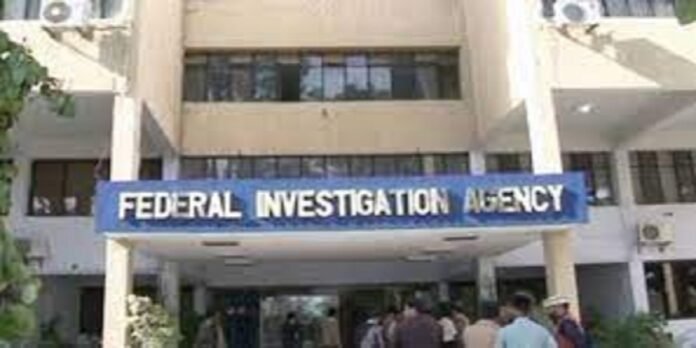
PESHAWAR: The Federal Investigation Agency (FIA) arrested three after recovery of foreign and local currency worth millions of rupees during separate actions in Timergara.
In line with directives of DG FIA Dr. Sanaullah Abbasi and Director Khyber Pakhtunkhwa (KP) Nasir Mehmood Satti, the Commercial Banking Circle (CBC) conducted operation against accused of hundi and hawala business in Peshawar and Malakand Division.
Deputy Director FIA CBC Peshawar Muhammad Afzal Khan, the special team during operations in Timergara arrested three culprit Muzaffar Khan s/o Aslam Khan with one lakh Saudi Riyal and Rs1.7 million.
In another action in Timergara, accused Fataullah s/o Siraj Din was arrested with 1150 Saudi Riyals, 105 Dirham and 1.7 million in Pakistan currency.
DD CBC Afzl Khan Niazi said that accused Shahid Iqbal s/o Gul Akbar Khan was arrested after recovery of 3100 Saudi Riyals, 240 Dirham and 1,10500 in Pakistan currency.
Cases were registered against the detainees under Anti-Money Laundering Act and they were being investigation.