ISLAMABAD: An anti-dengue campaign has been launched in Islamabad in response to alarmingly high levels of dengue virus cases being reported in the capital.
To prevent a full-blown dengue outbreak in the metropolis, the Chief Commissioner of Islamabad called upon all stakeholders to launch an anti-dengue drive in the city.
According to a statement by Additional Deputy Commissioner (East) Babar Sahib Din, over the course of the next 4-5 days, every street, in both rural and urban areas, will be fumigated.
“Today, major market areas in F-6, F-7, F-8, G-6, G-7, G-8, as well as residential areas in G-10, G-14, I-8, I-10, Rawal Town and F-11, F-8, F-5 were fumigated,” he said.
In rural areas, Shah Allah Ditta, Turnol, Jangi Sayedan, Saidpur, Meharabad were among the localities targeted.
The ADC said 20 teams have been constituted to lead the activity, which include people from the Capital Development Authority (CDA), Municipal Coroporation of Islamabad (MCI) and other departments.
Of these, one special team is focusing on bus depots and another on mosques, where daily fumigation is ensured.
“All housing societies have also been told to increase their fumigation activities,” said the ADC.
“A team is also tasked with rapid response for areas where dengue cases surface,” he added.
According to the ADC, the ICTA administration has also imposed Section 144. Legal action will be taken against anyone found letting water accumulate outside their homes.
He said that assistant commissioners have imposed 30,000 fines, seven people were arrested, 2 FIRs were registered, and seven premises were sealed.
A large number of junkyards, under construction sites, service stations, tyre shops were also inspected, Din said.
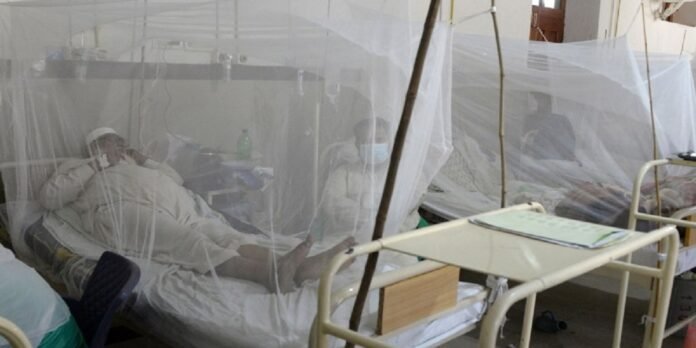
In the last 24 hours, 98 new cases of dengue were reported in Islamabad, according to the district health officer, of which 73 were found in rural areas and 25 in urban areas.
The new cases brought the total number of patients to 1,030.
The DHO said that Islamabad’s suburbs have begun to report a rising number of cases.
In rural areas, 698 people have been infected with the dengue virus, whereas in urban areas, 332 cases have been recorded.
ISLAMABAD: Additional Deputy Commissioner (ADC) Islamabad Babar Sahib Din has said that 84 dengue cases have been reported in the Federal capital during last 24 hours.
ICT Administration has launched a joint campaign involving Assistant Commissioners, DHO Office, MCI Health, CDA and various other departments focusing on surveillance, fumigation, sprays, larvicidal activities and awareness.
ADC said that Section 144 has also been imposed by Deputy Commissioner (DC) Islamabad against any action leading to dengue spread such as storage of water in open spaces etc, said a press release.
He said 5 persons have been arrested and multiple dengue hotspots have been sealed by ACs and magistrates in the Islamabad Capital Territory. Babar said that as many as 3 dengue magistrates have been notified separately to take strict action.
DC Islamabad and ADC Islamabad have been visited multiple sites in this regard as well.
ISLAMABAD: Raising alarm over India’s hegemonic designs and its colonial policies towards Kashmir speakers at a webinar, termed Indian setter colonialism as the biggest threat Kashmiris have faced ever since India took control of the territory illegally way back in 1947.
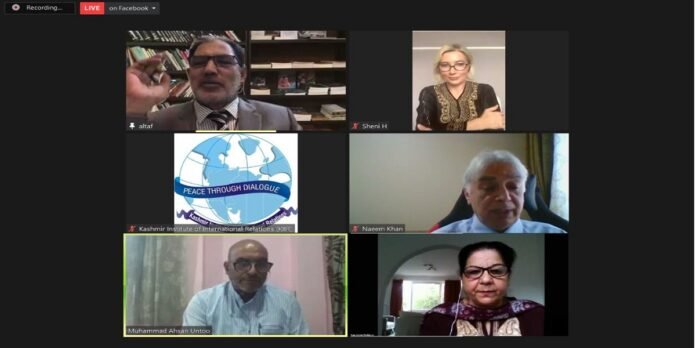
The webinar titled “The Impacts of Settler Colonialism in Indian Occupied Jammu Kashmir’’ was organised by the World Muslim Congress (WMC) in collaboration with Kashmir Institute of International Relations (KIIR) on the sidelines of 48th session of UNHRC.
The webinar was attended and addressed by noted human rights activists, international law experts, social activists and academicians including Shahani Hamid, Nayeem Ahmed Khan, rights activist M Ahsan Untoo and others whereas the event was moderated by the KIIR chairman and WMC permanent representative Altaf Hussain Wani.
The speakers while highlighting the dangerous dimensions of the Indian setter colonialism said that abrogation of Kashmir’s special status was further evidence that Kashmir has moved from Wolfe’s first to the second model of colonialism.
Pertinently, on 5 August 2019, the Indian government revoked the limited autonomy provided to Kashmir through Article 370 of the Constitution.
The panelists observed that the change in the constitutional status of the state was purposely made to grant the Indian government the much needed political and legal leverage to bring material change in the region through the wholesale extermination of the indigenous populations.
Referring to the changes made to article 35 A and Kashmir’s age-old domicile law, they said, “Abrogation of these constitutional provisions have been top priority of the BJP government because the racist regime knew that these provisions were the only legal hindrances in its way to establish hegemonic control over Kashmir.
Drawing parallels between Indian apartheid regime’s imperialistic policies on Kashmir and Wolfe’s first model of colonization to the second model, the speakers said that marginalization of majority population in Kashmir, policies of landgrab, wholesale extermination of the locals, exploitation of natural resources, rampant aggression, killings, arbitrary arrests, extra-judicial killings, forced disappearances and systematic genocide of Kashmiri youth by the Indian forces were obvious manifestations of the racist regime’s apocalyptic vision and attitude towards Kashmir and Kashmiris.
Underlining the Modi government’s communal policies, the panelists regrettably noted that the current dispensation in India viewed settler colonialism as a final solution to the Kashmir dispute.
They said that the successive Indian governments have always treated Kashmir as a colony and exploited its natural resources, Killed and maimed its population through heavy militarization, with full impunity.
“But the new set of rules that can be termed as constitutional terrorism have hazardous impacts including demographic changes that will fundamentally change the nature of the freedom movement, its political and religious landscape, culture, language, and identity in Kashmir”, they said adding that all these manipulations and constitutional amendments were in contravention of UNSC resolutions on Jammu Kashmir, International human rights and humanitarian law and 4th Geneva Conventions, and India’s International obligations.
Terming Indian hegemonic designs as a biggest threat to regional peace, the speakers said that it was high time that the international community and UN Human rights bodies must play their part to hold India accountable and put a halt to the current machinations of India, which pose a serious existential threat to Kashmiris.
ISLAMABAD: In the last three weeks, at least four people have succumbed to dengue fever in Islamabad, the district administration reported Wednesday morning.
In the last 24 hours, 62 people were diagnosed with dengue fever in the capital city taking the total number of cases to 719. Of these, 486 cases were recorded in rural areas.
Thirty-five new cases were, on the other hand, recorded in Rawalpindi on Tuesday. Over 30 people are in critical care.
In Lahore, dengue larvae were collected from 1,441 spots. The highest number of dengue fever cases were recorded in Defence. According to the health department, Lahore is one of the most affected cities by dengue.
On Tuesday, a disinfection campaign was launched in five districts of Karachi i.e. East, West, South, Malir, and Keamari.
Last week, the Pakistan Meteorological Department issued a dengue warning outbreak for eight big cities across the country. These included Lahore, Karachi, Islamabad, Rawalpindi, Multan, Peshawar, and Faisalabad.
According to experts, the active period for dengue attacks is two hours after sunrise and two hours before sunset. The breeding stops once the temperature falls below 16 degrees Celsius.
The WHO says these are the symptoms of dengue. They usually last between two to seven days.
Severe headache
Pain behind the eyes
Muscle and joint pains
Nausea
Vomiting
Swollen glands
Rash
There is no specific treatment for dengue fever. Fever reducers and pain killers can be taken to control the symptoms of muscle ache and pain, and fever.
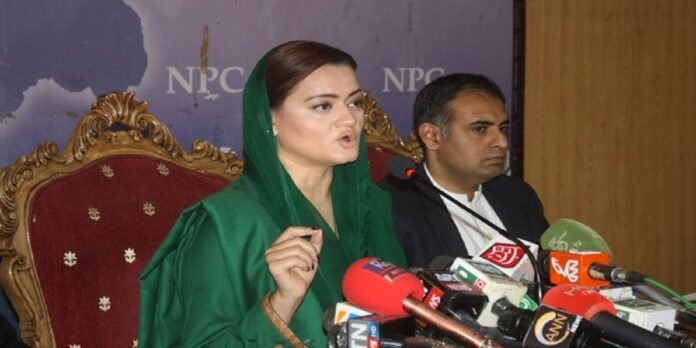
LAHORE: Marriyum Aurangzeb, spokesperson of Pakistan Muslim League Nawaz (PML-N) has slammed Federal Minister for Information and Broadcasting Fawad Chaudhry for suggesting that the Opposition should start searching for a new leader.
In a statement, the PML-N spokesperson said: “Fawad Chaudhry should keep his suggestions to himself.”
Aurangzeb reminded the federal minister that the “procedure of appointing the chairman of [National Accountability Bureau] is mentioned in the Constitution”.
“This is not a matter of extending the tenure of the NAB chairman but a way for thieves of flour, sugar, electricity, gas, and medicines to seek a National Reconciliation Ordinance (NRO) from Imran Khan,” she said.
The PML-N spokesperson went on to say that the decision to extend the tenure of the NAB chairman is a “way to protect thief Imran Khan and his mafia”.
“Through this decision, Imran Khan will be able to safeguard his projects, including the billion-tree tsunami, the helicopter case, and the Peshawar BRT (bus rapid transit),” she said.
The spokesperson added that the PTI-led government, through the decision to extend the tenure of the NAB chairman, has violated the country’s Constitution.
Aurengzeb reminded the government that as per the Constitution of Pakistan, it was a mandatory requirement for it to consult the Opposition before taking such a decision.
“Extending the tenure of the NAB chairman without taking the Opposition on board is unconstitutional and illegal,” she said, adding that Imran Khan and his stooges should keep their statements regarding the matter to themselves.
Government to bring ordinance for NAB chairman’s appointment sans consultation with Opposition
Earlier in the day, Fawad Chaudhry had said the government has finalized the draft for the NAB chairman’s appointment, which will remove the “legal laguna” of consulting with the Opposition on picking a new chief or extending the incumbent’s tenure.
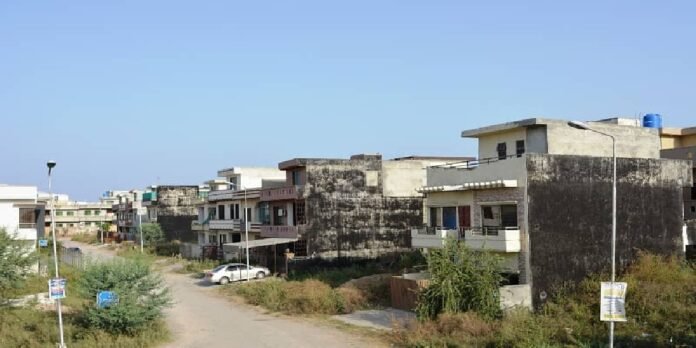
ISLAMABAD: The allottees of sector G-14 have requested the intervention of Chief Justice of Pakistan Gulzar Ahmad, Prime Minister Imran Khan and Chairman National Accountability Bureau (NAB) Justice ® Javed Iqbal against the land mafia in the sector G-14 of Islamabad that has allegedly deprived thousands of retired government officials of their plots.
Addressing a press conference at National Press Club (NPC) in Islamabad on Tuesday, President G-14 Allottees Association Sardar Irshad Shaheen said, around 4,000 retired federal government officials were allotted plots by the Federal Government Employees Housing Foundation, now known as Federal Government Employees Housing Authority (FGEHA), in 2004, in sector G-14, Islamabad, against the payment of prescribed price.
The FGEHA had acquired land and paid compensation to the owners of land, he said, “Despite our constant efforts for the last 17 years, no significant progress has been made by the FGEHA management. During this period, around 1,200 officials died without getting plot for house. The rest of the retired officials have to reside in costly rented houses in their old age,” he added.
The president G-14 Allottees Association said, Islamabad High Court (IHC), in its decision in 2014, had clearly defined legal and illegal owners of land on the basis of Google Map 2005.
“But qabza mafia filed writ petitions on different pretexts, which were turned down by the honourable court, and, in latest decision, the court directed the director general FGEHA to submit report. But, management of the Authority has not submitted its report.
There is now no legal bar on the Authority to get the land vacated from the illegal encroachments. But there is no progress in sector G-14. Instead, the qabza mafia is being helped by the management of the Authority and local MNA/Minister Asad Umar to build illegal streets and infrastructure for the illegal occupants of the land in the name of voters of PTI, which is gross violation of law and against the aim of the prime minister to fight against qabza mafia and provide houses to legal owners of plots,” he added.
Shaheen said previous DG FGEHA was doing good job in taking successful steps against the illegal occupants but he has been transferred along with his team one year before the end of his appointed time/tenure due to political pressure to accommodate qabza mafia.
“The new DG and his team have not done anything after his appointment for the last more than four months and he held no meaningful meeting with Allottees Association who are real stakeholders. It is the money paid by the Allottees which is spent for all expenses of the FGEHA including salaries. The salary of each employee and officer of the Authority is double than the amount of salary paid to other government departments. The government does not pay any grant to the Authority. Indeed, the FGEHA has charged substantial additional charges twice from the allottees. At present, there is no significant work except illegal development in the area of encroachments which will be a fit case for NAB inquiry,” he said.
The president G-14 Allottees Association requested the intervention of CJP, PM and chairman NAB into the matter.
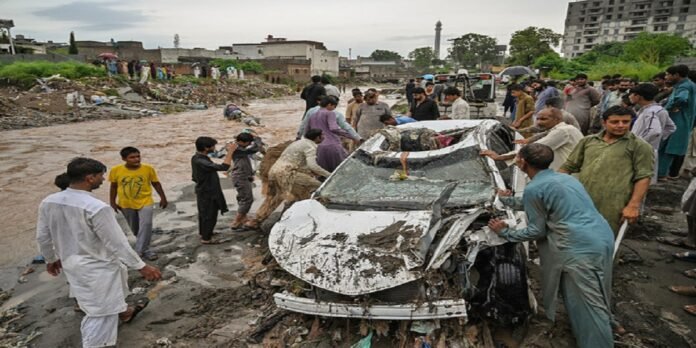
ISLAMABAD: Seven people including three women and an equal number of girls lost their lives in a road accident in Islamabad.
According to reports a car carrying wedding party guests fell into a drain, with police suspecting the heavy rain may have caused the roads to be slippery.
The accident took place in Bhara Kahu area in outskirts of Islamabad, where the car was returning from after attending a wedding ceremony.
In the morning, the police were informed, but by then it was too late, and all the seven people, including women and children, had expired.
Police said the deceased included three women and three girls. The bodies were shifted to a nearby hospital. All the deceased belonged to Bhara Kahu, Ahmed Town.
They were identified as Raja Hamza, Rabia Bibi, Tahira Bibi, Shamalia Bibi, Manahil, Ramsha and Nazia. Police have initiated inquiry into the accident.
Saleema Rehman; Afghan refugee doctor dares women and girls to dream
Marie-Claude Poirier in Attock
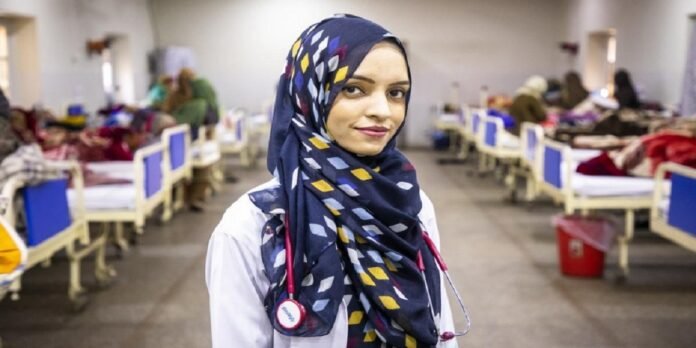
Doctor Saleema Rehman is the regional winner for Asia for UNHCR’s annual Nansen Refugee Award for her dedication to promoting girls’ education in her community and for her contribution to Pakistan’s COVID-19 response.
Two decades ago, Seleema Rehman was one of only a handful of refugee girls attending classes at the Barakat Primary School in the city of Attock, west of Pakistan’s capital, Islamabad. Now, at the age of 29, she is standing before a class of about 30 young refugee girls at her old school, dressed in a white doctor’s coat.
“Which one of you wants to be a doctor?” she asks with a smile.
Dozens of hands shoot into the air. “It is great that you want to become doctors. Study harder, and never give up,” she tells them.
Saleema has been following her own advice since she was a small child and her family began calling her “Doctor Saleema”.
The nickname was a reference to her difficult birth in a refugee camp in Swabi in Pakistan’s Khyber Pakhtunkhwa province. Saleema’s mother struggled to get medical assistance, and Saleema was not expected to survive.
Her father, Abdul, swore to himself that if the infant lived, he would make sure that he or she received an education and became a doctor.
He stayed true to that promise and supported his daughter through years of schooling, despite facing criticism from his own community.
Many among them frowned upon the idea of a girl having aspirations outside the home and marriage.
“In the early days, I was often the only girl on school benches,” recalls Saleema. “I remember how my community disapproved of my father’s decision to send a girl to school. That’s when I began to understand how important it was to make something of myself, set an example and dare young girls in my community to dream.”
Saleema fulfilled her own lifelong dream earlier this year when she opened a private clinic in Attock in order to serve refugee and local women who struggle to access affordable health care.
It was the culmination of years of studying and dedication that involved more than just overcoming cultural norms. Her status as a refugee also threw up obstacles.
“As a child, I was not aware of my refugee status,” she says. “But I came to know about it when my classmates were getting admitted to colleges of higher education, and I was not because I’m a refugee.”
Saleema kept applying for two years until she obtained the only seat reserved annually for a refugee to study medicine in Pakistan’s Punjab province.
She later specialized in gynaecology after being selected for a residency at Rawalpindi’s Holy Family Hospital, also in Punjab.
In 2020, the last year of Saleema’s training as a gynecologist, Holy Family Hospital was declared a COVID-19 response hospital, and she found herself on the frontlines of the pandemic, treating women with the virus who were giving birth.
Many of her patients were refugees and locals who had contracted the virus because they relied on daily wage work outside the home and could not afford to isolate.
Saleema’s dream of opening a private practice so she could offer free care to those most in need in her community again came up against her status as a refugee. Since obtaining her first degree in medicine in early 2015, she had not been able to obtain a medical license, but her determination eventually paid off.
“I applied again and again to get the license,” she says. “I got [it] in January 2021 after years of my medical education and training to become a specialized doctor. It was like a turning point in my life.”
She opened the clinic in Attock in June of this year, and she now sees many refugee patients who would otherwise have had to travel long distances to the nearest hospital and be accompanied by someone who could interpret for them.
“The opening of this clinic was a very happy event for us,” exclaims Anila, one of Saleema’s Afghan refugee patients. “Many Afghans cannot afford expensive clinics, but Doctor Salееma is helping us. It would be good if more of our girls would study and become doctors.”
At her clinic, Saleema is also promoting hygiene practices and dispelling myths about the COVID-19 vaccine.
This year, she welcomed the Government of Pakistan’s efforts to include refugees in its COVID-19 vaccination campaign as she believes no one is safe from the virus until everyone is safe. “I want to prove that a girl can be anything.”
Today, Saleema’s story and work are bringing change. Some of the staunchest opponents of girls’ education in her community call Saleema to seek health advice for their wives, sisters and daughters. Many now send their daughters to school in the hope that they might follow in her footsteps.
“She’s a trailblazer. She’s beaten the odds by becoming the first female doctor in her community.
By achieving her dream of offering health care to the most vulnerable – refugees and Pakistanis alike – Saleema is a living testament to how women can contribute to the socio-economic development of their communities,” said Noriko Yoshida, UNHCR’s Representative in Pakistan.
For her outstanding service and commitment towards her community and some of the poorest people in Pakistan, Saleema has been chosen as the regional winner for Asia for UNHCR’s Nansen Refugee Award, a prestigious annual prize that honours those who have gone to extraordinary lengths to help forcibly displaced or stateless people.
The Award recognizes the powerful example Saleema has set for other women and girls and her dedication towards her patients, including during the COVID-19 pandemic.
“I want to prove that a girl can be anything if provided with opportunities,” says Saleema.
“Whether I am in Pakistan or anywhere else, I want to serve humanity with my whole heart.”
ISLAMABAD: International Tennis star Sania Mirza has said that her loved ones always gave her a space to grow and be herself.
In an interview of WhatsApp-sponsored show “The Inner Circle,” Sania said that at a time when she started playing tennis, not many people could dream of playing the sport. “Therefore, it captured everyone’s imagination.”
The tennis ace took to Instagram and shared a clip from the interview, which was aired last week, in which she said that she is very proud of being a sportswoman as she has inspired a lot of girls to opt for sport as a full-time profession.
Speaking about a support system, she said that for years, whenever she won or lost a match, she always messaged her mother and her sister, Anam Mirza, who was also invited to the show.
“It wouldn’t be a long message [but I always contacted them after a match]” said Sania. “I have been very, very fortunate that I have a family that has supported me through everything — through every decision of mine on and off the court.”
She said that knowing that her family, including her mother, sister, father, and her husband, are there for her always gave her a sense of comfort before she stepped onto the court.
Sania also spoke about motherhood and said that it was because of her son, Izhaan Mirza-Malik, that she decided to play tennis again.
“I wanted him to be proud when he understands that his mother didn’t give up on her dreams after she had a baby,” she said. “Also, many people told me I can’t do it, so I had to [show them I can].
ISLAMABAD: Islamabad Police will leave no stone unturned to resolve the public complaints on priority and inculcate friendly police ecology through enhanced cooperation with people, said Inspector General of Police (IGP) Islamabad Qazi Jamil ur Rehman.
The IGP Islamabad was speaking to citizen during ‘Open Kutchery’ held at Islamabad Traffic Police FM Radio 92.4.
The IGP listened to the complaints of the citizens and issued directions to immediately resolve them.
This live interaction of Islamabad police chief with people continued for an hour and large a number of citizens participated in it through phone calls and social media.
SSP (Traffic), and other senior police officials remained also present during this interaction.
The citizens informed IGP about traffic issues, law and order situation in their respective areas, land mafia and drug pushers activities, delay in registration of cases and police attitude with them.
As per the vision of the prime minister, the IGP said that police would leave no stone unturned to provide relief to people and issued directions to immediately resolve public complaints.
Islamabad police chief said that officials and jawans of Islamabad police are performing duties around 16 hours with the commitment to ensure protection to the lives and property of the citizens.
He said policemen have also sacrificed their lives in the line of duty and protected the future of the generation.
He said, there are few policemen against whom complaints are received and disciplinary action is underway against them.
An internal accountability system has been introduced in the police department and the helpline (1715) is active for this purpose.
Islamabad Police chief sought the cooperation of citizens with policemen serving for their welfare and also urged them to follow traffic laws for safety.
The IGP said that campaign has been launched in Islamabad against those possessing illegal weapons.
He said that gender protection unit has been established and the all out efforts are being made to ensure protection of women rights.