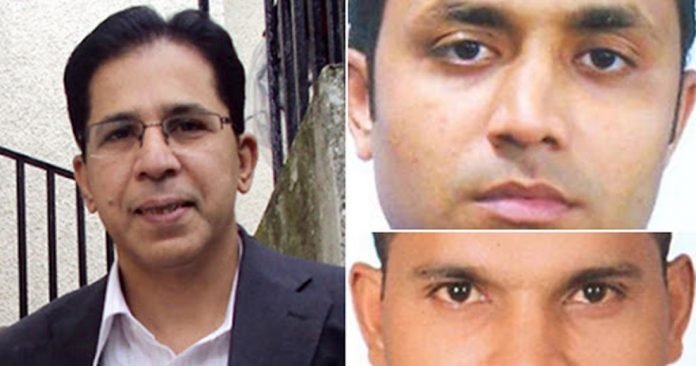
ISLAMABAD: Federal Investigation Agency (FIA) in a cross-country crackdown on Saturday arrested four suspects on charges of working for an international child pornography ring.
The FIA said that global anti-crime agency Interpol had shared relevant information regarding the suspects with Islamabad, following which the law enforcement agency had moved to make the arrests. The ring was being operated from the United States, the FIA said.
A suspect, identified as Arsalan, was arrested from Sialkot today. He was in contact with the group, said the agency.
According to the FIA, the ring sold pornographic material featuring minors. Officials confiscated 225GB of data from Arsalan alone.
The agency said it is investigating the matter further to uncover more illegal activity and will take appropriate action.
The FIA, using the input from Interpol, also cracked down suspects in various other cities.
Three suspects allegedly involved in child pornography were arrested from Karachi, Faisalabad and Gujranwala.
The FIA said it seized illegal content from the possession of the suspects, adding that further investigation is underway.
Criminalisation of child pornography
In 2016, Pakistan had criminalised child pornography in a historic first, making the offense punishable with seven years in prison and a fine of Rs0.7 million.
The new amendment, titled Criminal Law (Amendment) Bill 2015, also criminalised child trafficking within the country.
The initiative came after the country was rocked by a major pedophilia scandal in August 2015, when it was revealed that hundreds of pornographic videos of children from Hussain Khanwala village in the Punjab province had been made and were being circulated online.
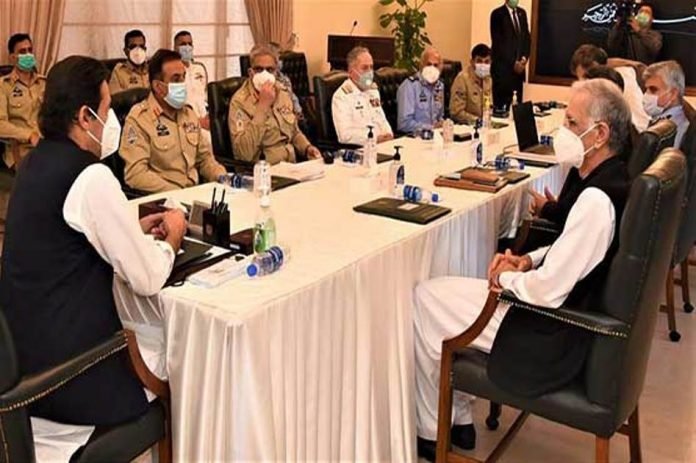
ISLAMABAD: Prime Minister Imran Khan on Friday presided over a high-level meeting to review the internal and external security situation in Islamabad.
Chairman Joint Chiefs of Staff Committee (CJCSC) General Nadeem Raza, Chief of Army Staff (COAS) General Qamar Javed Bajwa, Chief of Naval Staff Admiral Zafar Mahmood Abbasi, Chief of Air Staff Air Chief Marshal Mujahid Anwar Khan, Director-General Inter-Services Intelligence (ISI) Lt General Faiz Hamid and Minister for Defence Pervez Khattak attended the meeting.
The meeting reviewed internal and external security situation and resolved that sovereignty of Pakistan will be protected at all costs.
The national leadership said that Pakistan believes in peaceful co-existence and wants peace with its neighbors but we have both the will and the capacity to defend our people and territorial integrity.
The meeting voiced serious concern over the continued human rights violation by Indian forces in the Indian Occupied Jammu and Kashmir and urged the international community to take notice.
The meeting also paid glowing tributes to the bravery and coordinated efforts of Law Enforcement Agencies that successfully thwarted the recent attack on Pakistan Stock Exchange.
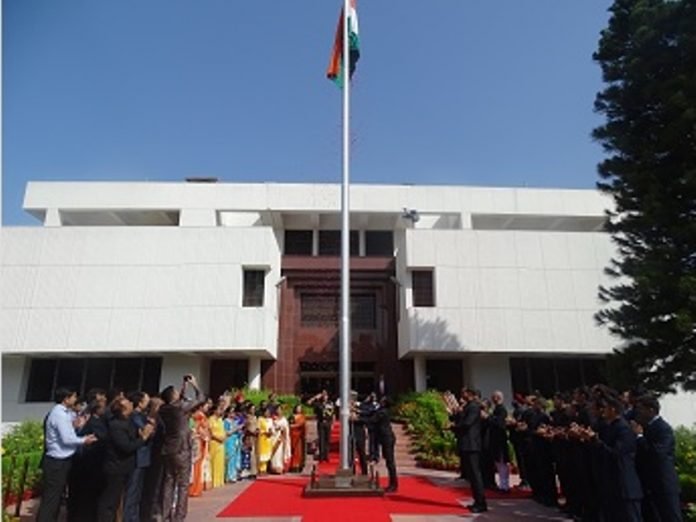
ISLAMABAD: Around 38 officials of the Indian High Commission in Pakistan left for India on Wednesday, in a recent blow to the deteriorating diplomatic ties between the two neighbouring countries.
Indian High Commission officials went back to India via the Wagah-Attari border today (Wednesday), sources said.
The relations between the two countries recently became more strained after two Indian diplomats were caught trying to escape from a hit-and-run incident in Islamabad last month. After the incident, reports emerged of Indian authorities harassing Pakistani diplomats in New Delhi.
Foreign Minister Shah Mahmood Qureshi had said earlier that India will be repaid in the same coin and also asked to reduce its diplomatic staff in Islamabad.
On June 23, Pakistan “completely dismissed” allegations made by the Indian Ministry of External Affairs that its staff in New Delhi had violated any diplomatic conventions, saying they were used as “a pretext to seek 50% reduction in the staff strength” at the embassy.
“Pakistan categorically rejects and strongly condemns the baseless allegations made by the Indian Ministry of External Affairs as a pretext to seek 50% reduction in the staff strength of the High Commission for Pakistan in New Delhi,” read a statement by the Foreign Office.
The Foreign Office said it reiterates that the staff “always function within the parametres of international law and diplomatic norms”.
It also rejected insinuations that Indian High Commission officials in Islamabad were “intimidated”.
In June, tensions between India and Pakistan continued to rise after reports emerged of Pakistani diplomats being harassed in New Delhi.
A heavy contingent of police officials surrounded the Pakistani High Commission in New Delhi in an apparent attempt to harass the Pakistani diplomats.
The development came in the wake of Islamabad Police arresting two employees of the Indian High Commission on Monday for attempting to flee after running over a man and critically injuring him.
Islamabad police said both Indian High Commission officials were released due to their diplomatic immunity and had been handed over in the presence of Pakistani ministry’s officials.
A case had earlier been filed against the two Indian officers for running over and critically injuring a man before allegedly trying to flee from the site of the accident. Both were taken into custody and a first information report (FIR) was registered against them in the Secretariat Police Station, with charges of negligence, reckless driving, and overspeeding.
Last month, India declared two officials of the Pakistan High Commission in New Delhi “persona non grata requiring them to leave India within 24 hours”, alleging that they had been found guilty of espionage, Geo News report.
Pakistan had condemned the Indian government’s decision to expel the staff members as part of a “persistent anti-Pakistan propaganda”.
Islamabad had said that the two staff members of the Pakistan High Commission in New Delhi were “lifted by the Indian authorities today (31 May 2020) on false and unsubstantiated charges”.
They were subsequently released after the Pakistan High Commission intervened. “We condemn the detention and torture as well as threatening and pressuring of the diplomatic officials to accept false charges,” the Foreign Office had said.
ISLAMABAD: Prime Minister Imran Khan says Pakistan has no doubt that India is behind yesterday’s terrorist attack on Pakistan Stock Exchange.
Speaking in the National Assembly today (Tuesday), he said our security forces averted a big tragedy as the terrorists were carrying heavy arms and ammunition to take the people hostage in the Stock Exchange and kill them to create an environment of fear and uncertainty.
The Prime Minister said our neighboring country has a major plan to destabilize Pakistan.
He said our intelligence agencies were on high alert and it was because of their efforts that four of the terrorist attacks including two in the surroundings of Islamabad were preempted.
The Prime Minister said that there is no threat to the PTI government as long as its stick to its ideology
Rejecting the criticism of the opposition, he said the government has just completed twenty months in office. He said the opposition is making hue and cry on the performance of the government as more details of their corruption are surfacing and they want to get away with it.
Imran Khan said that Pakistan is currently passing through difficult times but expressed the confidence that it will become an example for the whole developing countries after getting out of the challenge posed by Covid-19.
The Prime Minister said special focus is being given to the construction sector and he is personally monitoring it as it will provide job opportunities to the youth.
He said the agriculture and small and medium enterprises are other sectors that will be extended full support.
Imran Khan said that Covid-19 has inflicted a major blow to the economies around the world including Pakistan. He said that Pakistan witnessed a shortfall of one trillion rupees in the revenue collection due to the breakout of the pandemic.
He said the only way to control coronavirus is smart lockdown and the world is also accepting this reality. He said there has been no confusion in our policy to tackle the situation arising out of the Covid-19.
He pointed out that cash assistance was given to the deserving families in the most transparent manner. He also hailed the services of Doctors and paramedical staff saying they are waging Jihaad in hospitals.
He said a program has been prepared to bring reforms in the institutions including PIA and Pakistan Steel Mills.
He pointed out that Pakistan Steel Mills was running in profit back in 2008 and now its liabilities stands at 250 billion rupees.
The Prime Minister made it clear that it is our mission to go after the cartels and Mafias who are exploiting the people. He regretted that these mafias had the patronage of the previous governments.
Referring to the inquiry into Sugar Scam, he said the regulators including FBR, Competition Commission were hand in glove with the mafias.
He said that sugar mills were given subsidy of 29 billion rupees but in return they only paid nine billion rupees in taxes. He assured that these mafias will be brought under the law.
The Prime Minister reaffirmed the commitment to build Pakistan on the golden principles of State of Madina.
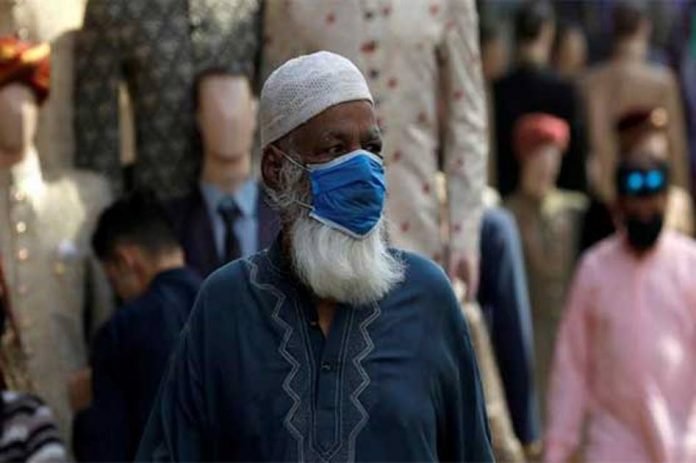
LAHORE: Pakistan has confirmed 49 deaths in a single day by novel coronavirus as the number of positive cases has surged to 206,512.
The nationwide tally of fatalities has jumped to 4,167 on Monday. According to the latest figures by the National Command and Operation Center (NCOC), 3,557 persons have been tested positive for COVID-19 in 24 hours.
Sindh has become the worst-hit province by the pandemic in terms of cases followed by Punjab, Khyber Pakhtunkhwa and Balochistan
Till now 80,446 coronavirus cases have been confirmed in Sindh, 74,778 in Punjab, 25,778 in Khyber Pakhtunkhwa, 10,376 in Balochistan, 12,643 in Islamabad, 1,442 in Gilgit-Baltistan and 1,049 in Azad Kashmir.
Furthermore, 1,681 individuals have lost their lives to the epidemic in Punjab, 1,269 in Sindh, 922 in KP, 116 in Balochistan, 127 in Islamabad, 24 in GB and 28 in Azad Kashmir.
Patients are under treatment at quarantine centers of 462 hospitals where 7,295 beds are available.
Pakistan has so far conducted 1,262,162 coronavirus tests and 23,009 in last 24 hours. 95,407 coronavirus patients have recovered in the country whereas 2,437 patients are in critical condition.
ISLAMABAD: Minister for National Food Security Syed Fakhar Imam on Friday said that July will bring with it a new threat of locust swarms, with more of the pests entering Pakistan from Africa, Iran, Oman, Afghanistan and India.
He said locusts have now taken a new route to enter Dera Ismail Khan and Waziristan through Afghanistan.
Addressing a press conference in Islamabad, the minister said that National Disaster Management Authority (NDMA) has ordered 11 planes to carry out anti-locust spraying, whereas five helicopters of Pakistan Army are also being used in this regard.
“The locust attacks have affected various parts of the country and an anti-locust attack survey should be conducted to tackle the problem,” he added.
Hailing the joint efforts of institutions in eradicating the national conundrum, the minister said that it is because of National Logistics Cell (NLC) that collective efforts are being made to come to grips with the problem that has taken the nation by storm.
He said that the ministry is also recruiting 100 entomologists in order to find effective and practical solutions to the locust problem.
Imam said that China has played an integral role in assisting Pakistan to combat the locust attacks, and that the ministry is also in touch with other international organisations.
“[In this regard] the UK and Food and Agriculture Organisation (FAO) has provided 20 micron sprays to combat locusts,” the minister said.
The country is currently trying to ward off the worst locust attack that it has seen for the past three decades, reported foreign media.
In Pakistan, the desert locusts have reportedly entered from Iran, and have already devoured considerable quantities of crops in over 60 districts in all provinces, including Balochistan in the southwest.
Pakistan is intensifying efforts to combat the plague with pest control systems which include aerial spraying.
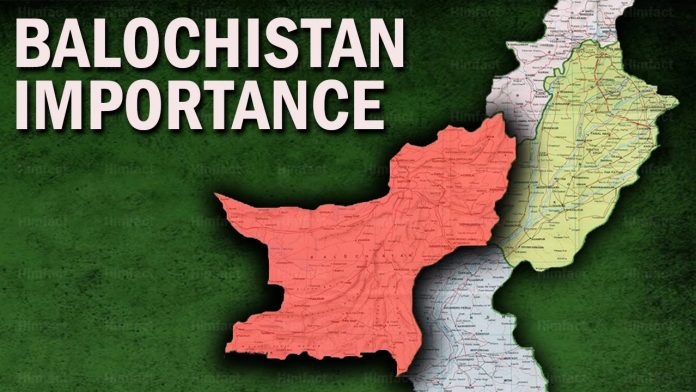
ISLAMABAD: Speakers at a webinar called for people centric policies to win hearts and minds of the people to bring real improvement in Balochistan situation.
The Islamabad Policy Research Institute on Thursday organized a special webinar under its National Dialogue Series on “Security and Development in Balochistan: Existing Dynamics and Way Ahead”.
Eminent speakers included Lt. General (R) Nasser Khan Janjua, Former National Security Advisor and Southern Command Commander, Jan Jamali, Former Chief Minister Balochistan, Rafiullah Kakar, a development and policy expert from Balochistan and Dr Farhan Hanif Siddiqi, Director at School of Politics and International Relations, Quaid-i-Azam University, Islamabad.
In his opening remarks acting president IPRI, Brigadier (R) Raashid Wali Janjua flagged the attention of panelists towards multidimensional nature of Baloch grievances, focusing on human security imperatives and their linkage with overall security and development of the province.
Without a healthy symbiosis between state’s security efforts and province’s development needs with a people-centric focus, peace and development would remain an elusive goal, he said.
In his keynote presentation titled “Reflections on Balochistan Issue”, Lt. General (R) Nasser Khan Janjua the Former National Security Advisor, highlighted that Balochistan is gifted in terms of its geostrategic location as well as being a well-spring of natural resources which if fully utilized could be a catalyst for the entire region.
He lamented that since the inception of the state of Pakistan, these unique attributes have made Balochistan a target for Pakistan’s adversaries, being aggressively used as a front by both internal as well as external rogue elements to destabilize the country.
He stressed that visible and real improvement in the Balochistan situation can only come about not by exereting force, but by ruling the hearts and minds of the people through love and accommodation.
He acknowledged that the initial fault lay in failure to integrate Balochistan. However, he asserted that it was not only the state’s failure to integrate Balochistan, but also the failure of sections in Balochistan to get integrated. The root cause of insurgency, he said, was sub-nationalism.
He highlighted that to control insurgency, “a people-centric civil-military strategy was formulated which helped Balochistan transition from flag burning to flag raising.”
Balochistan, Lt. Gen. Janjua said, has the greatest potential in fisheries, agriculture, wind & solar energy, and vast mineral wealth. It has close to USD 50 trillion worth of resources.
Balochistan has the potential to become a massive trading hub of Asia. Asia was becoming an economic giant and Balochistan has a pivotal role to play amid this scenario, he said. “Balochistan needs special focus of think tanks and academia since the province needs all the support it can get,” he urged.
Jan Jamali, Member Provincial Assembly of Balochistan, Chief Organizer Balochistan Awami Party, and former Chief Minister Balochistan spoke about the external threats facing Balochistan. He opined that Balochistan is stuck in the Great Game of the 21st Century with India and the United States having their interests in the region which do not coincide with the interests of the people of Balochistan.
He advised that we not only need to play this Great Game but also win it. He added that the Baloch people need to be given respect and their just and equitable rights.
Jamali stressed that Islamabad needs to understand the Baloch way of life and their culture and traditions. “There is a need to build trust and to develop and enhance the capacity of the Baloch people so that they can be responsible for managing their own resources. It is essential to create opportunities for the young generation.”
Providing a “Review of CPEC: Impact on Balochistan”, Rafiullah Kakar, a development and policy expert from Balochistan, shared that the China Pakistan Economic Corridor (CPEC) can be game changer for Pakistan and Balochistan. But outlined that Baloch people have grievances regarding CPEC given the minuscule share of the province in terms of CPEC projects and funding outlay.
He said Baloch people continue to have concerns about the project since several infrastructure projects that were part of CPEC remained unfinished.
Kakar asserted that despite partial successes, sectarian and militant groups continue to launch brutal attacks every now and then. Similarly, a low-level Baloch insurgency lingers on. He recommended that restoration of durable peace in the province requires a holistic but differentiated strategy, and called for a constitutional amendment to be introduced to enhance the powers of Senate and replace the current method of indirect election with direct elections.
Pakistan’s current majoritarian federal design makes Balochistan the least rewarding political constituency for political parties seeking to come to power at the federal level. It offers little or no incentive to these parties to care about the province, he added.
A directly elected and powerful Senate is likely to incentivise state-wide parties to take a serious interest in Balochistan. This will, in turn, induce more political competition and bring technical expertise and experience to the province. Besides, enhanced powers will give provinces like Balochistan more say in decision-making at the federal level,” he recommended.
Sanaullah Baloch, Member Provincial Assembly of Balochistan and Member Central Committee of Balochistan National Party-Mengal (BNP-M) discussed how Balochistan’s development landscape is worsening day by day, leading to more despair and distress.
A province that suffers from multiple crises is no way politically and economically equipped for a positive takeoff. He warned that Balochistan might see a relapse into violence due to feelings deprivation amongst a large cohort of young educated population. The feeling can be assuaged if the people are provided health and education opportunities on the same lines as the other provinces.
Regarding CPEC, he said that the potential of this mega project ought to be realized as a way to win the hearts and minds of the common Baloch as this might be the last chance to straighten things out in the right direction.
Baloch also stressed the need for non-interference in the province’s political representation process and the formulation of a long-term development strategy based on long-term allocation of commensurate funding to reduce the development gap between Balochistan and the rest of Pakistan.
Dr Farhan Hanif Siddiqi, Director and Associate Professor, School of Politics and International Relations, Quaid-i-Azam University, in his talk on “Governance Reforms: Political Empowerment of People,” highlighted that it is unfortunate that good governance has always eluded Balochistan.
Governments have not only failed to make good on their promises, but also weren’t able to restore confidence in protecting the lives of the inhabitants of the province. The politics of this area has always been dominated by tribal lords, local chiefs who have always used the funds from the federation to consolidate their power and wealth.
With no real devolution of power and efficient local government structure, the Baloch are yet to taste the true meaning of democracy – having actual representatives from their community or stratum. History is replete with instances where these powerful chiefs blackmailed the government in the centre to become part of coalitions in exchange for hefty incentives and powerful positions in both the federal and provincial cabinets.
These political goliaths of the governmental edifice were never concerned about the large underprivileged Baloch populace – several of these “respectable” tribal chiefs have been involved themselves in criminal activities in the province and still members of the Balochistan Assembly highlighting the blatant irony here.
In his Closing Address, Brig. (R) Raashid Wali Janjua, Acting President, IPRI, shared that Balochistan was the largest province of Pakistan with tremendous strategic and resource potential. A largely unexplored mineral rich province with a large coastal belt holds tremendous promise for national development as well as strategic connectivity, with regional countries through land and sea routes.
The province, however, has seen a recrudescence of violence in the recent past beside some political undercurrents of dissatisfaction due to varying reasons. The external factors in fermenting unrest in the province and shifting focus away from development activities and human security has been discussed and highlighted at different fora.
He explained that the webinar is an attempt to analyse the reasons behind the recent acts of violence and factors inhibiting the national efforts to actualize the full development potential of the province. Brig. Janjua highlighted that there has been less focus on human security while framing the parameters of security debate on the Balochistan issue in the past.
The human security concept that espouses the safety of humans from hunger, disease, joblessness and poverty should form the basis of any political discourse on Balochistan’s current talks. “The uncertain security situation has significantly diminished prospects of foreign investment and resource exploration of our mineral and energy rich province.
There is no doubt that due to the remoteness of geography and low population the cost of service delivery is very high in Balochistan. But the will to deliver can certainly overcome all the barriers. People-centric, equitable development and inclusive polity is, therefore, the scarlet thread that would bind the state in human security into a symbiotic relationship of the welfare and prosperity of Balochistan as well as the federation, he concluded.
ISLAMABAD: Ameer, Jamiat Ulema-e-Islam-Fazl (JUI-F) Maulana Fazl ur Rehman has said that if any attempt is made to change the 18th Amendment or NFC Award, it will face resistance at all levels. He also said that the option of having a vote of no confidence against PM Imran Khan is still on the table.
Holding a press conference with Balochistan National Party (BNP) leader Sardar Akhtar Mengal in Islamabad, the JUI-F chief said that only a truly elected parliament and National Assembly can take the country out of this crisis.
Reacting to the cut in NFC award by the federal government, he said that the share of provinces is fixed and any cuts would not be accepted. Attempts to make changes in the 18th Amendment or NFC Award will be resisted at all levels, he added.
Regarding the coronavirus, Fazal ur Rehman said that it is a global pandemic and urgent measures are needed to control it but facilities in the country’s hospitals are next to none.
The JUI Chief said that work on all important projects included in the Pak-China Economic Corridor (CPEC) should be continued. He said that Balochistan had been ignored in the CPEC initiative, the APC demands giving Balochistan its due share in the project and condemns the government’s negligence in stopping locust attacks in the province.
He demanded that fake domiciles of Balochistan should be revoked after due verification and the powers of the Senate should be increased. He also remarked that he considers PTI and Balochistan Awami Party(BAP) to be the same entity.
In reply to a question regarding no confidence motion against the PM, he said that it was still an option and could be used if the circumstances demand it.
On this occasion, Sardar Akhtar Mengal said that if the PTI government manages to solve the problems of Balochistan, the entire province will join PTI, let alone BNP.
He said that we are going to sit on the independent benches and will continue to express our concerns to the government. He quashed the notion of rejoining the government and said that there was no turning back.
The Balochistan National Party chief said that secession from the government was a decision of the party’s central executive committee, not of an individual.
ISLAMABAD: Another ‘Ring of Fire’ a solar eclipse is set to occur on June 21, 2020, and would be visible in some cities across the country, the Pakistan Meteorological Department’s (PMD) Climate Data Processing Centre has said in a statement.
According to the centre, “an annular solar eclipse happens when the Moon covers the Sun’s center, leaving the Sun’s visible outer edges to form a ‘ring of fire’ or annulus around the Moon.”
“The partial eclipse begins at 08:46 PST [8:46am] and partial eclipse ends at 14:34 PST [2:34pm] with greatest eclipse will occur at 11:40 PST [11:40am],” it added.
Information provided in the statement indicated that people living in Islamabad, Lahore, Karachi, Peshawar, Quetta, Gilgit, Muzaffarabad, Sukkur, and Gwadar could witness the eclipse at various partial levels, with only those in Sukkur to see the annular eclipse in almost its entirety — at the Sun’s coverage of 98.78%.
Gilgit would have the least Sun’s coverage in the eclipse, at 74.88%, the Climate Data Processing Centre added.
The PMD noted that apart from Pakistan, the solar eclipse would also be visible in parts of Africa — including the Central African Republic, Democratic Republic of the Congo (DRC), and Ethiopia — as well as India and China.
ISLAMABAD: Anti-Terrorism Court (ATC) in Islamabad after finding them guilty, handed life imprisonment to three accused in the Imran Farooq murder case.
The judgment was read by ATC Judge Shahrukh Arjumand as the accused appeared before the court through a video link to attend the hearing.
“The prosecution has succeeded in proving the case against all three of you,” remarked the judge during today’s hearing.
The accused, Khalid Shamim, Mohsin Ali Syed and Moazzam Ali had been in Adiala jail ever since they were arrested. Their sentences will run concurrently and their time already spent in jail will count towards their sentence, according to the detailed verdict issued.
The court ordered the sentenced individuals to pay Rs1 million each to the heirs of the murdered MQM leader.
It also issued perpetual arrest warrants for MQM founder Altaf Hussain, Iftikhar Hussain, Muhammad Anwar and Muhammad Kashif Khan Kamran.
Following the announcement of the verdict, the slain MQM leader’s wife, Shumaila Farooq said that she won’t even wish for her enemies to go through such tough times as she had.
She said that “strength” and “patience” are two important virtues to live by and she accepts the court’s decision.
The court in its detailed order stated that it had been proved that the “MQM founder gave the orders” to murder Farooq.
“Two senior leaders of MQM-London conveyed the orders to Pakistan,“ said the court in its 39-page order. It added that Moazzam Ali selected the boys to carry out the murder from the then MQM headquarter, Nine-Zero.
“Mohsin Ali and Kashif Khan Kamran were selected for murdering Imran Farooq,” said the order, adding that both were taken to London and were provided support to carry out the crime.
According to the judgment, the sole purpose of the murder ordered by the MQM founder was to remove the resistance being faced by him from within the party ranks. It adds that the statement provided by the convicts to the magistrate and the evidence presented had a clear link.
“The aim of the murder was to ensure that no one raises their voice against the party founder,” said the order.
The order said that those who murder innocent people under an elaborate plot are deserving of exemplary punishment. Under the Pakistan Penal Code, the death sentence is applicable for such a crime but an amendment in the Code does not allow death sentence to be given in a case where the evidence has been gathered in a different country — Britain in this case.
The ATC announced the reserved judgment today (Thursday) in the murder case of the MQM leader Dr Imran Farooq, who was killed nine years ago in London, Geo News reported.
The judgment was reserved on May 21 after the completion of the trial. During the hearings, 29 witnesses recorded their statements in the case.
In February, a team of Scotland Yard officers had arrived in Islamabad for a week to facilitate the trial taking place in both London and Pakistan after the UK and Pakistan decided to cooperate. Subsequently, Britain sent the entire murder case file to Pakistan for the trial.
Last year, Pakistan’s lawyer in the UK for the murder case, Toby Cadman, said Britain handed “compelling evidence” to Islamabad.
The MQM leader’s wife, Shumaila Farooq, was also interviewed from London during the lengthy trial. She read out her statement on what happened on September 16, 2010, when her husband was stabbed to death outside his home in Edgware.