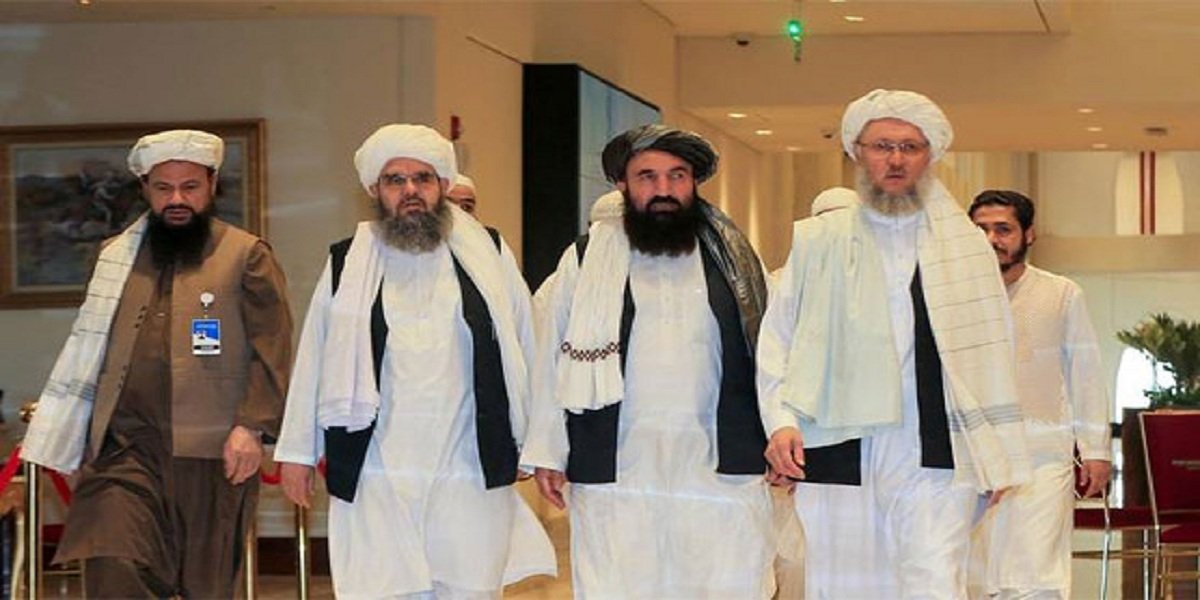
KABUL: The Taliban are about to form government within days despite fighting in Panjshir Valley of Afghanistan, where ‘resistance’ forces battling the hardline Islamists say they are enduring “heavy” assaults.
The Islamists face the enormous challenge of shifting gears from insurgent group to governing power, days after the United States fully withdrew its troops and ended two decades of war.
But they are still battling to extinguish the last flame of resistance in the Panjshir Valley, which held out for a decade against the Soviet Union s occupation and also the Taliban s first rule from 1996-2001.
Late Friday, celebratory gunfire rang out across Kabul as rumours spread the valley had fallen, but the Taliban made no official claim.
Fighters from the National Resistance Front — made up of anti-Taliban militia and former Afghan security forces — are understood to have significant weapon stockpiles in the valley, which lies around 80 kilometres (50 miles) north of Kabul.
Ali Maisam Nazary, a spokesman for the Panjshir resistance, who is understood to be outside the valley but in close contact with key leader Ahmad Massoud, said the fighting was “heavy” and that Massoud was “busy defending the valley”.
Pro-Taliban Twitter accounts aired video clips purporting to show the new regime s fighters had captured tanks and other heavy military equipment inside the valley.
Taliban and resistance tweets suggested the key district of Paryan had been taken and lost again, but that could also not be independently verified.
While the West has adopted a wait-and-see approach to the group, there were some signs of engagement with the new leaders gathering pace.
Even before the Taliban s lightning offensive, Afghanistan was heavily aid-dependent — with 40 percent of the country’s GDP drawn from foreign funding.
The UN has warned 18 million people are facing a humanitarian disaster, and another 18 million could quickly join them.
The new rulers have pledged to be more accommodating than during their first stint in power, which also came after years of conflict — first the Soviet invasion of 1979, and then a bloody civil war.
They have promised a more “inclusive” government that represents Afghanistan s complex ethnic makeup — though women are unlikely to be included at the top levels.
In Kabul, some 30 women took to the streets to demand the right to work and inclusion in the government — a day after several dozen women held a similar protest in the western city of Herat.
Residents also voiced worry over the country’s long-running economic difficulties, now seriously compounded by the hardline movement s takeover.
Read more: Taliban co-founder Baradar to lead new Afghanistan govt