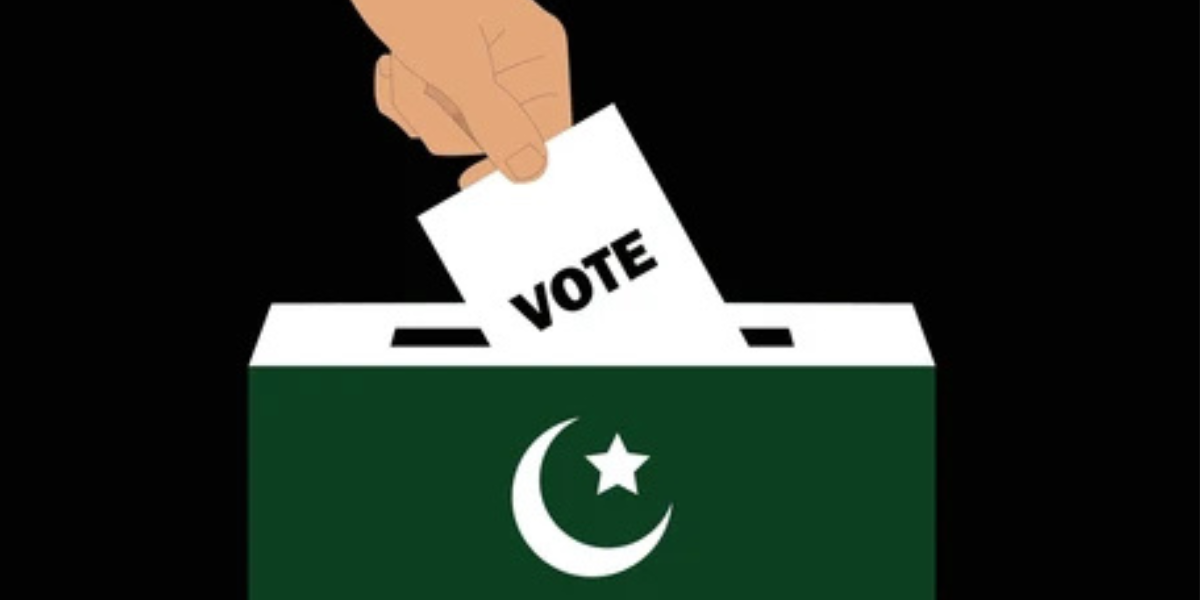
Once upon a very recent February, in the bustling democracy of Pakistan, something quite magical happened — an election was held. Ballots flew, forms shuffled, symbols vanished, and political parties played hide-and-seek with electoral laws.
Our story begins with a noble quest: 128 million registered voters were summoned to choose their champions. The stage was set. The banners were hung. And then… the cellular networks were turned off.
Welcome to the 2024 Elections — unplugged edition.
The Mysterious Case of the Missing Bat
In a surprising twist, the country’s most acrobatic political party — let’s call it the Flying Cricketers (FC) — found itself in a dilemma.
Their iconic bat symbol — used for years to help even the most sleep-deprived voter recognize them — had been confiscated. Why? Because their intra-party elections apparently lacked the sacred rituals of 47 affidavits, three notarized umbrellas, and a ceremonial pigeon release.
“You may still contest,” the wise council declared, “but only as independent bats — without bats.”
Imagine Batman showing up to a crime scene without his Batmobile. That’s what the Flying Cricketers had to deal with.
“Can You Hear Me Now?” — No, Because We Switched Off the Network
On election day, as voters lined up to cast their votes, the country’s entire cellular network was shut down.
Why?
Let’s just say the invisible security gnomes detected something suspicious — perhaps a TikTok conspiracy, rogue hashtags, or, heaven forbid, too much free information.
As a result, the Election Management System (EMS), which normally transmits results faster than a chaiwala serving tea, froze like a Windows 98 laptop. Results had to be hand-carried — on foot, uphill, in both directions.
The Curious Forms of 45, 46, and 47 — The Electoral Horcruxes
Observers noticed strange goings-on with the magical documents known as Forms 45 — the record of vote counts at polling stations.
Some forms, when seen by party agents, said one thing. But when they later appeared on the official website, they seemed to have undergone a spontaneous arithmetic enlightenment.
“Votes increased, decreased, multiplied — and in some cases, divided by the square root of political influence.”
One observer quipped:
“It’s less about transparency and more about interpretive dance.”
Courtroom Shuffle and the Great Legal Hokey-Pokey
While some parties were playing musical chairs, others were busy doing the judicial hokey-pokey.
One political leader — let’s call him Captain K — was convicted not once, not twice, but thrice in the days leading up to the election. If courtrooms had loyalty cards, he’d be eligible for a free trial by now.
Meanwhile, another ex-leader — Sir N of Raiwind — had his lifetime disqualification lifted with the grace of a royal pardon. The judiciary, it seems, rediscovered its inner yoga flexibility just in time for the nomination deadline.
“Press” Pause — Media and the Vanishing Headlines
Journalists — those brave bards of democracy — found themselves muted.
Some discovered their microphones no longer worked. Others were told that questioning anything might summon the Ministry of Mysterious Silences.
Rumor had it that certain words like “rigging,” “Form 45,” and “democracy” were flagged by autocorrect as “national security threats.”
In unrelated news, several prime-time talk shows discussed how to make biryani during a blackout.
Democracy Scores a Solid… “It’s Complicated” on the Credibility Meter
The Commonwealth Observer Group concluded that while elections were indeed held, their credibility had been “somewhat creatively interpreted.”
To paraphrase their diplomatic understatement:
“Individually, each action might have a legal reason. But collectively, they made one party look like it showed up to a cricket match and was handed a hockey stick.”
Their recommendations included:
-
Don’t turn off the internet on voting day.
-
Let all parties campaign freely — even the loud ones.
-
Avoid legal CPR for candidates just before the polls.
-
And maybe… keep the bat with the batsmen.
The Never-Ending Cycle of Political Musical Chairs
The tale ends not with a bang but with a bureaucratic shuffle. Petitions were filed, tribunals formed, laws amended — often after the game was over.
Pakistan’s democracy lives on — not in tidy ballot boxes, but in messy WhatsApp forwards, rooftop debates, and chai-fueled jokes.
Final Word from the Author (Definitely Not Being Watched)
The 2024 elections weren’t rigged in the traditional sense — no disappearing ballot boxes or ghost voters (though, who knows, ghosts might vote too).
Instead, it was more like a poorly directed drama: the script changed midway, some actors were locked out, and the audience wasn’t told who won until the credits rolled.