

From Mughal courts to ministerial meetings, from poets praising emperors to politicians praising their party heads—the subcontinent’s oldest soft skill, flattery, remains alive and well. In a culture where power loves praise and merit bows to manners, the moral compass has long spun helplessly.
The Viral Praise That Sparked a National Reflection
When Prime Minister Shehbaz Sharif, standing amid world leaders at Sharm el-Sheikh, flattered U.S. President Donald Trump, the comment instantly went viral.
It was supposed to be a diplomatic nicety — a routine exchange of pleasantries. Instead, it became a national debate. Social media flooded with memes and mockery; television anchors denounced the “servile” tone. But beneath the noise lay a familiar truth: Pakistanis weren’t shocked — they were simply reminded.
Because flattery, in this land, is not just a slip of the tongue. It is a centuries-old institution.
In our bureaucracies, classrooms, mosques, and ministries, the same soft skill that once pleased emperors now greases the wheels of politics, careers, and class mobility.
The episode raises an uncomfortable but necessary question: Is flattery Pakistan’s most reliable path to power?
Deep Roots: Flattery Before the Colonizers
Long before the British set foot in India, long before the East India Company’s clerks learned to extract obedience from their “native subjects,” the subcontinent already had a flourishing culture of flattery.

Under the Mughal rulers, praise was not only art — it was economy. Court poets and courtiers competed in lyrical adoration of emperors. Words were minted into social currency.
To call a ruler “shadow of God on earth” was not exaggeration — it was expectation. Those who excelled in this craft were rewarded with robes, gold coins, and estates. Those who faltered were quietly replaced.
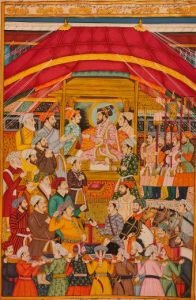
By the time the British arrived, they found the people already conditioned to please power. The colonizers simply refined the practice — turning a courtly art into an administrative science. Loyalty and praise became measurable traits, rewarded through medals, titles, and promotions.
Yet, history also records its rebels.
While courtiers sang praises, poets of defiance — from Bulleh Shah to Bahadur Shah Zafar — kept the embers of resistance alive. Their verses refused to bow, reminding future generations that the pen could challenge the throne.
The Historical Architecture of Flattery
- Styles of Flattery
Over centuries, flattery has taken many forms. There is complimentary flattery — a simple “you look great, sir,” which oils the wheels of social grace. Then there is insincere flattery, the dangerous kind — used to manipulate, deceive, or advance personal gain.
In the Mughal era, courtly flattery was institutionalized through poetry and ritual. In the colonial period, bureaucratic flattery evolved — where the right gesture or phrase could secure a posting.
Today, public flattery thrives in media and politics. On television talk shows and Twitter timelines, praise functions like currency — traded for attention, protection, or opportunity.
Even symbolic flattery survives — in gestures of exaggerated respect, gift-giving, or ceremonial obedience. The vocabulary may have changed, but the grammar of submission remains intact.
- Historical Periods
- Ancient & Early Medieval: Kings were divine, priests their poets. Praise was a sacred duty, not strategy.
- Delhi Sultanate: Persian poets immortalized sultans through verse, turning vanity into virtue.
- Mughal Era: Akbar institutionalized praise as part of court culture. Jahangir’s memoirs glow with self-admiration inspired by courtiers.
- Colonial Period: The British converted flattery into hierarchy — “loyal servants” earned medals and titles; truth-tellers were exiled or ignored.
- Post-Colonial Era: The same script plays on. Bureaucrats, journalists, and politicians replaced courtiers; merit was measured not by integrity, but by tone.
Why It Matters
Because flattery was never just about manners — it was survival.
In systems where truth-telling is punished, flattery becomes strategy. Over time, it reshapes character and corrodes institutions.
The cost is collective: rulers are surrounded by praise, not truth; mediocrity thrives under the shadow of charm; reform becomes impossible when every room echoes with agreement.
Institutionalized Flattery: The Colonial Legacy in Modern Pakistan
Step into any government office and the script feels familiar. A bureaucrat’s rise often depends less on merit than on mastery of manner.
Those who flatter ministers with “Yes, sir” and “Brilliant idea, sir” move upward faster than those who speak frankly.
Judges, civil servants, and university administrators have all internalized a colonial etiquette — never challenge, always charm.
The British rewarded obedience with office; Pakistan continues to reward it with power.
Media outlets, too, often dance to the same rhythm. Anchors lavish praise on political leaders, corporations sponsor favorable coverage, and journalists learn that questioning authority can be career suicide.
In academia, research papers and proposals carry coded flattery — careful language designed not to offend, but to appease. The unwritten law of power remains: charm before challenge.
Political Patronage: The Power of Praise in Party Politics
Flattery today finds its purest form in Pakistan’s political culture.
In party meetings and rallies, leaders are not addressed — they are adored. Speeches begin and end with glorification. “Quaid ka vision,” “Madam ki rehnumai,” “Kaptaan ka jazba” — each slogan is an echo of submission disguised as devotion.
From PML-N, where members habitually praise Nawaz Sharif and Maryam Nawaz; to PTI, where Imran Khan’s persona is glorified as prophetic; to PPP, where Bilawal Bhutto and Asif Zardari are revered as political royalty — every party demands ritualized loyalty.
This isn’t mere political theater — it’s psychological conditioning. It tells party workers that personal allegiance matters more than public service.
Add to this the peeri-mureedi culture — the deeply ingrained habit of blind spiritual obedience — and you have a nation where questioning leadership feels like blasphemy.
In such systems, flatterers rise faster than thinkers. The loudest praise drowns the quietest truth.
Cultural and Social Transmission: Flattery as a Social Skill
The roots of this behavior run deep into everyday life.
Children are told to “speak nicely” to elders — a moral lesson that often translates into appeasement. Questioning authority is labeled disrespect.
Schools reward politeness over performance. Students learn to praise teachers rather than challenge ideas.
Language itself reinforces hierarchy. Words like “bara sahib,” “hazoor,” and “janab” are not mere courtesies — they are social armor, protecting one from offense and consequence.
Religious sermons often praise submission as virtue, humility as holiness — blurring the line between respect and obedience.
Thus, generation after generation, we train our children not to think critically but to speak carefully.
Flattery becomes both moral and social currency — the skill you must master to survive.
Modern Manifestations: The Digital Age of Deference
The digital revolution has not weakened flattery — it has weaponized it.
Twitter trends, Facebook posts, and LinkedIn endorsements now perform what once took a poet and a palace.
Politicians are tagged as “visionary,” CEOs as “inspiring,” and journalists as “brave voices” — often by those seeking favor, visibility, or validation.
Corporate award ceremonies resemble modern-day durbars — ritualized performances of mutual admiration. Television anchors introduce guests with rehearsed reverence: “Aap ka vision lajawab hai.”
Even academia is not immune. Conferences and journals overflow with “distinguished,” “renowned,” and “honorable” — titles that often substitute for substance.
The internet, instead of democratizing truth, has amplified sycophancy.
In a world of followers and likes, flattery has become algorithm-friendly.
Moral Crisis: The Cost of Compliments
The cost of all this is not just linguistic — it’s moral.
When flattery becomes the national language, truth becomes treason.
Those who resist it are labeled arrogant; those who master it are celebrated as successful.
In such an ecosystem, honesty feels naive. Speaking truth to power becomes a form of self-harm. The honest bureaucrat stagnates, the critical journalist is sidelined, the independent academic is quietly ignored.
And yet, the flatterer prospers.
Promotions, awards, and privileges flow to those who have mastered the melody of submission.
The result is predictable: meritocracy collapses, corruption thrives, and leadership lives in echo chambers.
A nation cannot reform when its rulers hear only applause.
Toward a New Ethic: Unlearning the Language of Submission
To unlearn flattery is not to unlearn respect. It is to rediscover courage.
Pakistan’s greatest need today is not more loyalty, but more honesty. Institutions must build cultures that reward dissent as contribution, not rebellion.
Education must teach students that disagreement can be moral, not disrespectful.
Media must honor critique as patriotism.
Politics must redefine loyalty — not as blind faith in individuals, but commitment to principles.
We must learn from societies that celebrate critics, not suppress them. In healthy democracies, leaders hire those who challenge them — not those who charm them.
Our task is cultural reconstruction:
- To replace “yes-men” with thinking citizens.
- To reward merit over manner.
- To teach courage over compliments.
Because every nation that flatters itself into comfort eventually deceives itself into decline.
The final line, perhaps, should be written as a prayer and a warning:
Teach your children courage, not compliments.