In a revelation that sent ripples across global diplomatic circles, former U.S. President Donald Trump reportedly vetoed a covert Israeli proposal to assassinate Iran’s Supreme Leader, Ayatollah Ali Khamenei. The plan—allegedly devised by Israeli intelligence and advanced by Prime Minister Benjamin Netanyahu—was widely seen as a desperate attempt to provoke a full-scale regional war under the pretext of nuclear containment, a narrative Israel has propagated for over three decades. Iran, notably, does not possess nuclear weapons—a fact repeatedly confirmed by international watchdogs.
Israel’s fixation on Iran is less about nuclear threat and more about Tehran’s refusal to accept Israeli dominance. Since its inception, Israel has systematically dismantled regimes that dared to challenge its military and political hegemony. Iran stands as the last ideological adversary. Netanyahu’s ambition to topple the Iranian regime is simply an extension of this hegemonic project. The “nuclear threat” is a convenient pretext—much like the discredited WMD narrative used to justify the invasion of Iraq.
As a Muslim bearing witness to the wounds of a fractured Ummah, one cannot help but feel a profound sense of despair, humiliation, and abandonment. Wherever Muslims have suffered—be it in Kashmir, Burma, Bosnia, Palestine, or Sub-Saharan Africa—they have been silenced, murdered, and exiled with brutal impunity. Tragically, no Muslim nation has risen in their defense—not militarily, diplomatically, or even morally.
Kashmir remains under siege by the Indian military. The region is a shadow of its former self, where political rights, economic freedom, and even basic civil liberties are denied. India has transformed it into a prison, while the world—particularly the Muslim world—turns a blind eye.
The same holds true for the Rohingya Muslims in Myanmar, driven from their homes, raped, and murdered in large numbers. Stateless and impoverished, they continue to languish in refugee camps. In Bosnia, the Serbian-led genocide displaced and killed millions of Muslims. In Gaza, generations have grown up knowing nothing but fear, hunger, and death. The civilian death toll in Gaza alone has exceeded 75,000—yet the silence from Muslim nations is deafening.
Meanwhile, Israel flourishes with impunity. Surrounded by Arab nations rich in oil and influence, it bombs Gaza, Syria, and Lebanon without pause or consequence. The October 7 attack by Hamas—widely condemned—was used by Israel as a moral blank check to raze entire neighborhoods, hospitals, schools, and refugee camps. Its justification? That Hamas hides among civilians. But no civilized legal or moral framework permits the mass killing of civilians as legitimate retribution.
Israel brands itself as “the most moral army in the world,” a claim that collapses under the weight of its own actions. When it bombs civilian targets in Gaza, it labels them military objectives. Yet, when Iranian missiles hit Israeli military sites, it cries foul. The hypocrisy is staggering.
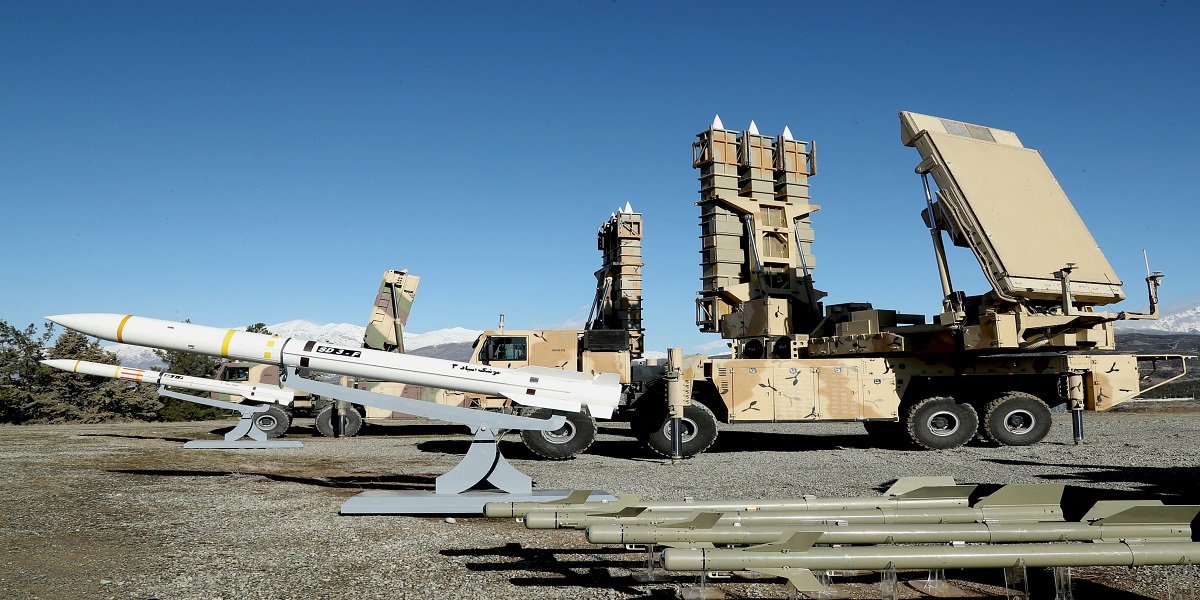
For the first time, however, the myth of Israeli invincibility has been shattered. Despite enduring over three decades of crippling Western sanctions, Iran demonstrated the will, technological capability, and national unity to retaliate with force. Its missiles bypassed Israel’s much-vaunted defense systems—Iron Dome, David’s Sling, and Patriot batteries—striking strategic targets and exposing the hollow core of Israeli arrogance. Iran’s defiance was not only military—it was deeply moral and symbolic.
What stunned global observers was the muted response from the international community. When Israel called for support, no nation rushed to its aid. Even President Trump held back, stating that the U.S. would not intervene unless American interests were directly threatened. This marked a tectonic shift in America’s traditionally unwavering support for Israel.
Trump’s broader strategy is now becoming clear.
In hindsight, his approach was almost Machiavellian. He encouraged both Israel and Iran to pursue nuclear diplomacy. When Israel undermined those efforts through provocative airstrikes, Trump remained publicly indifferent. He allowed Israel to bear the consequences of Iranian retaliation while quietly calculating the diplomatic fallout. Israel, emboldened by its own mythology and the illusion of unconditional support, believed Iran would not respond. But it did—with deadly precision.
The outcome? Israel stands isolated. Its defensive narrative is unraveling. Its allies are retreating. With its arrogance bruised and its myth of invulnerability shattered, Israel is now reconsidering negotiations. Trump, in turn, is signaling that a diplomatic resolution is not only possible—but likely.
Why now? Because Iran never abandoned diplomacy. It was Israel that walked away and triggered the escalation. Throughout, Iran maintained its position at the negotiation table while defending itself militarily. Now, with leverage and deterrence restored, it negotiates from a position of strength. This may offer the most realistic opportunity for a lasting resolution in years.
However, peace will not come easily. The U.S. and Israel’s demands go far beyond nuclear non-proliferation. They insist that Iran sever ties with Hezbollah, the Houthis, the Syrian government, and most notably, Hamas. These demands are meant to dismantle Iran’s ideological and strategic support for resistance movements that protect oppressed Muslim populations. But Iran is the only Muslim nation that has refused to capitulate. It backs the oppressed—not merely in rhetoric, but through diplomatic, financial, and military means.
This, in truth, is Iran’s “crime” in the eyes of the West—not its nuclear capability, but its unrelenting support for Palestine and other marginalized Muslim communities. That is the red line for Israel and the U.S., and it is why Iran remains a constant target.
Iran’s resilience should now serve as a beacon for the Muslim world. For decades, Muslim-majority nations have watched in silence as their brethren suffered. Iran, though economically isolated, stood its ground. Not only did it survive—it proved that it could stand up to those who believed themselves untouchable.
What Israel fears most now is not Iran’s missiles—but Iran’s example. If one sanctioned, isolated Muslim country can rise and challenge the status quo, what happens if others follow? What if other Muslim nations find the courage to confront oppression with action rather than silence?
This fear is precisely why Israel is escalating its propaganda campaign, attempting to paint Iran as a global threat. But that narrative is losing traction. Even long-time allies are becoming disillusioned by Israel’s endless cycles of aggression. The old formula—Israel strikes, the world backs it—is starting to crumble.
Let this moment be remembered not just as a military confrontation, but as a moral awakening. Iran has reminded the world that the oppressed are not voiceless. That dignity, when paired with courage, can challenge even the most entrenched empires. The centers of power are shifting—China is ascending, Europe is reasserting its independence, Russia remains a force, and now, Iran has emerged as a formidable symbol of resistance.
Let this also be a message to Muslims everywhere: silence is complicity. Action is the only antidote to oppression. The world may not hand over justice—but it respects those who demand it. And this time, a nation did. Iran did.