By Nayab Khan
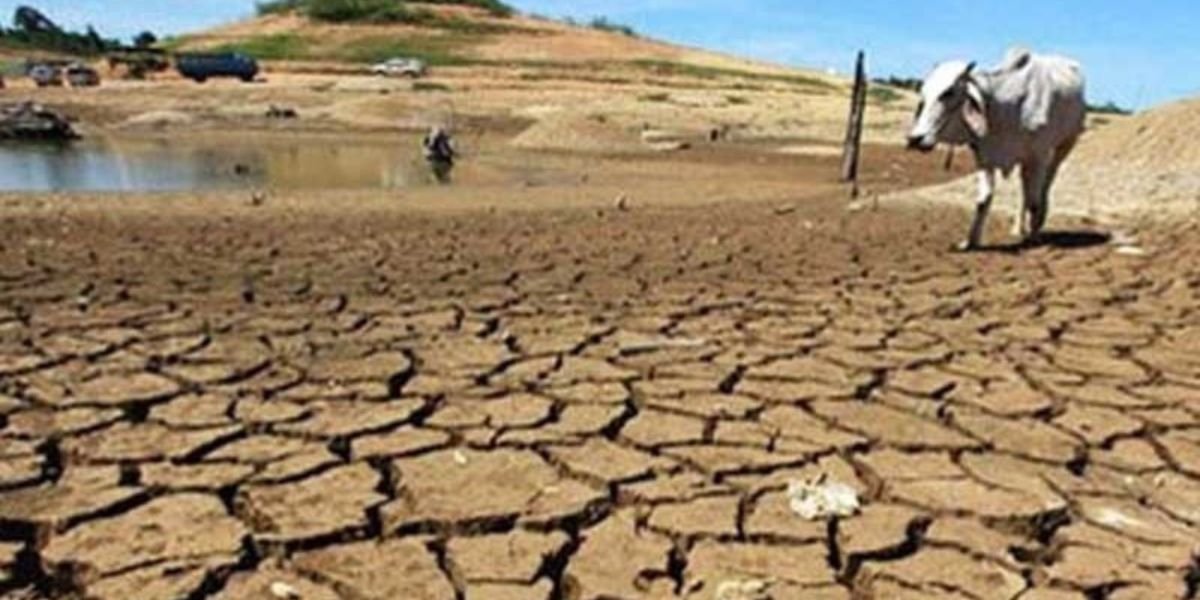
Pakistan’s largest province is disappearing, not from the map, but from beneath it. Balochistan covers nearly 44 Percent of Pakistan’s total landmass, yet today its farmers are watching their fields crack, their wells run empty, and their livelihood vanish into the ground that no longer holds water. This is not a natural disaster. It is a policy disaster decade in the making.
The numbers tell a story that politicians have long refused to read. Agriculture in Balochistan depends on groundwater for 90 percent of its needs, while a mere five percent of farmland is connected to canal irrigation. In a province that receives less than 200 millimeters of rainfall annually less than a third of the national average, that dependence is not just risky, but a catastrophic.
The consequences are already visible underground. The water table across much of the province sat at around 50 meters below the surface in 2000. By 2030, it had plunged to cover 150 meters, a threefold collapse in just over two decades. In Quetta alone, groundwater levels are falling at a rate of two to five meters every sing year, driven by unchecked extraction from more than 30,000 illegal tube wells Balochistan Agriculture department. At this pace, experts warn that some basins may reach a point of no return within a generation.
The human cost is already mounting. Nearly 50 percent of Balochistan ’s population is deprived of safe drinking water, and more than half of its land has become uncultivable due to water scarcity. Agriculture which is the backbone of life across the province is collapsing in slow motion. Major crops including wheat and cotton contracted by 13.5 percent in the last fiscal year alone dragging down national GDP growth by 0.6 percent, according to Pakistan Economics Survey in 2024. For province already ranked among Pakistan’s least developed, this is not a statistic. It is a sentence. Yet what makes these crises particularly unforgivable is that much of it was built by the very policies meant to prevent it and the solution, though urgent, remain well within reach.
For decades, the government of Pakistan offered farmers across Balochistan a simple deal: drill a tube well, receive subsidies electricity connection, and pump as much groundwater as your land demands. It seemed, at the time, like solution. Waterlogging was reduced. Irrigated area expanded. Agricultural output climbed. What the policy never accounted for was the bill that would eventually come due, not in rupees, but in water.
The numbers are staggering. In 1965, Pakistan had approximately 25,000 tube wells across all its province. By 2021, that figure had reached 1.4 million, a rise of 1,500 percent in under six decades. Balochistan alone now operated over 40,000 tube wells, more than 30,000 of which are illegal, extracting ground water at a rate that far exceeds any natural recharge. What began as an agricultural lifeline has become the province’s single greatest threat to its own water supply.
The subsidy structure that fueled this explosion was never reformed. Flat-rate electricity tariffs for agriculture tube wells meant farmers had no financial incentive to limit extraction, the less efficiency they used water, the less it cost them. When the Asian Development Bank, as a condition of a provincial loan, pushed for the rationalization of these subsidies, the policy stalled almost immediately. WAPDA, the national power authority, resisted, as flat rates had long allowed it to conceal internal electricity losses under agriculture consumption figure. The result was institutional paralysis, a government unable to reform the very mechanism destroying its province’s governance.
The consequences of this paralysis stretch far beyond Balochistan ’s borders. Since independence in 1947, Pakistan’s per capita water availability has fallen from 5,600 cubic meters person per year to under 900 cubic meters today, well below the internationally recognized water scarcity threshold of 1,000 cubic meters. By 2050, that figure is projected to collapse further to just 575 cubic meters. Pakistan is not simply approaching a water crisis. It has been living inside one for years, and Balochistan , where 72 percent of all water use comes from groundwater, where that crisis bites hardest.
What makes this trajectory particularly alarming is that the government’s most recent response risks accelerating it. Authorities have announced plans to convert approximately 30,000 tube wells in Balochistan from grid electricity to solar power, a move framed as modernization. In some basins, ground water levels are already declining by far more than five meters every year. Cheaper, uninterrupted solar-powered pumping, without any accompanying regulation on extraction volumes, may simply allow farmers to drain the aquifer faster, at lower cost, with greater ease. Dr. Muhibullah Kakar of the University of Balochistan had warned that the province reaching a hydrological point of no return, a collapse comparable to the water crises that paralysed Cape town, South Africa, in 2018. The government is not solving the problem. It is subsidizing its acceleration.
The Agricultural Fallout: What the Water Crisis Is Costing Balochistan
The nexus between water and agriculture in Balochistan is not simply one of dependency, it is one of survival. Nearly 70 percent of the province’s population depends on farming and livestock for their livelihoods. Yet as groundwater disappears and irrigation systems collapse, the land that once sustained millions is producing less, feeding fewer, and driving rural communities deeper into poverty.
The crops yield data tells a story of staggering waste, not of effort, but of potential. Balochistan’s wheat farmers, battling water shortages and inadequate inputs, achieve an average yield of just 2,380 kilograms per hectare. The national average stands at 2,900 kilograms per hectare. As per the ZTB Crops Yield Gap Aalyisis, 2020The province’s own potential yield—what its soil and climate could deliver under proper water management— is estimated at 6,693 kilograms per hectare. Balochistan ’s farmers are achieving barely 35 percent of what their land can produce. The gap is not geological, its political.
The consequences reach far beyond the farm. Balochistan has a multi-dimensional poverty incidence of 64 percent— the highest of any province in Pakistan. Food insecurity driven directly by agricultural collapse any water scarcity, has become structural rather than seasonal. Since 2017, flood-affected and drought-affected district of Balochistan have witnessed persistently high levels of acute food insecurity, according to the 2025 Global Report on Food Crises. In 2024, approximately 8.6 million people across vulnerable districts of Balochistan, Sindh and KPK were classified in IPC phase 3 crises of IPC phase 4 emergency. Balochistan accounted for 21 of the 47 districts analysed— the single largest provincial share.
Despite its significant agricultural output, Balochistan is paradoxically grappling with the highest levels of food insecurity and malnutrition in the country. High levels of poverty prevent many families from accessing the food they need, and both provinces are highly susceptible to climate change, leading to erratic weather patterns including droughts and floods that significantly impact crop yields. In rural communities, food prices rose by 50 percent in a single year in 2023, while the national inflation rate hit a record 28.3 percent, squeezing farmers already operating at the edge of viability.
The livestock sector, which supports more than half of Balochistan ‘s rural households, is equally under siege. Water scarcity has reduced grazing land, contaminated water sources, and driven animal deaths during prolonged drought cycles. Substantial livestock losses — reported by 29 to 30 percent of households across vulnerable districts — have directly impacted food security and stripped rural families of their primary economic buffer. In a province where a single drought can destroy the accumulated wealth of a generation, the absence of a functioning water management system is not a bureaucratic failure. It is a humanitarian one.
What Must Be Done
The solutions to Balochistan ’s water crises are neither experimental nor unproven. They are documented, costed, and in some cased already underway. What they lack is political will, institutional consistency, and the scale of investment the crises demand. The window to act is narrowing. The roadmap already exists.
- Harvest the Floodwater That Is Already There
Balochistan generates 12 million acre-feet of annual runoff, yet only 3 million acre-feet is currently captured. The remaining nine million acre-feet — enough to irrigate millions of acres — rushes off into the desert every monsoon season, often causing flash floods in the very communities it could have sustained. Managed Aquifer Recharge techniques, including infiltration wells, riverbed interception structures, and recharge ditches, could harvest floodwater to replenish the very aquifers that tube wells are draining. Check dams, which delay floodwater runoff for agricultural and domestic use, allow water to permeate into the ground and keep aquifers stable throughout the year. This is not a futuristic technology. It is an engineering solution that has existed for centuries — and one the government has consistently underfunded.
- Revive the Karez — Before It Is Too Late
Some of the karez systems in Balochistan were built before the arrival of the Mughals in 1525 AD — gravity-fed underground channels that delivered water to the surface without a single pump, without electricity, and without depleting any aquifer. These ancient systems are now vanishing due to neglect, a shift toward tube wells, and the effects of climate change. Yet revival is demonstrably possible. The Balochistan Rural Support Program recently rehabilitated the Alusai Karez in Pishin district through underground pipelining, minimizing water loss and rejuvenating agricultural land — proving that collaborative community investment can restore what decades of policy neglect have abandoned.
- Reform Irrigation at the Farm Level
The province can significantly improve water efficiency by planting low-water crops such as olives, pistachios, grapes, and pomegranates, and by adopting high-efficiency irrigation methods including drip, bubbler, and well-designed bed-and-furrow systems. Flood irrigation — still the dominant method across Balochistan — wastes up to 60 percent of every liter applied. Ten of Balochistan ‘s eighteen river basins are already facing severe groundwater decline, driven primarily by water-intensive flood irrigation practices. Transitioning even half of irrigated farmland to drip or bubbler systems would reduce groundwater demand dramatically while maintaining or increasing yields.
- Implement the Laws That Already Exist
In 2024, Balochistan passed its most significant water governance document in decades. The Balochistan Integrated Water Resources Management Policy 2024 provides strategic direction on how to safeguard, use wisely, and equitably allocate the province’s water resources — including a framework for shifting toward a low-water economy. In addition, the forthcoming Balochistan Water Act, developed with support from the FAO and World Bank and approved by the provincial cabinet, is expected to introduce a regulatory framework for equitable allocation and responsible use of water. Both documents represent genuine progress — but Pakistan has a long history of progressive water policies that never leave the cabinet room. Implementation, enforcement, and accountability mechanisms must be built alongside the legislation, not added as afterthoughts.
- Invest in Data and Digital Monitoring
The Government of Balochistan, with support from the Asian Development Bank, has launched the Balochistan Water Resources Development Project, which integrates infrastructure and technology for data-driven water management, including a satellite-based water information system and the improvement of 300 kilometres of canals, drains, and karez channels. Precise water-flow measurement, soil moisture sensors at the farm level, and a strong digital regulatory framework to monitor depletion and forecast needs are essential to prevent the government from making decisions blind. You cannot manage what you cannot measure.
The Bill Has Come Due
Balochistan does not have a water shortage. It has a water management crisis. The distinction matters enormously, because one is a geological verdict and the other is a political choice, and political choices can be reversed.
The evidence assembled across this article makes the case with painful clarity. A province that generates 12 million acre-feet of annual runoff captures only 3. A province where farmers could achieve wheat yields of 6,693 kilograms per hectare is settling for 2,380. A province sitting atop one of Asia’s most significant groundwater reserves has watched that reserve drain at two to five metres every year, not because of nature, but because of a subsidy structure that rewarded extraction and punished conservation. For decades, Balochistan has survived on its savings account: groundwater. But the account is now overdrawn.
Three urgent steps define the path forward. The tube well subsidy regime must be restructured immediately — flat-rate electricity tariffs that incentivize over-extraction must be replaced with basin-level pricing tied to groundwater data. The solar tube well conversion programmed must be paused until a binding regulatory framework governs extraction volumes — cheaper pumping without limits is not modernization, it is catastrophe at scale. And the 12 million acre-feet of annual floodwater must be treated as the strategic asset it is, not the annual disaster it has become.
The Balochistan Water Act and the 2024 IWRM Policy are promising signs. But Balochistan has produced promising policies before. What it has not produced is a government willing to enforce them against the agricultural, industrial, and bureaucratic interests that benefit from the status quo.
The farmers of Balochistan are not asking for miracles. They are asking for a functioning canal. A fair electricity tariff. A government that enforces its own laws. That is not too much to ask of a state. It is the minimum a state owes its people. Balochistan is running dry. But it does not have to be.

The author is PhD scholar, Agricultural Economist & M&E Consultant specializing in Agriculture, water and Climate Change.