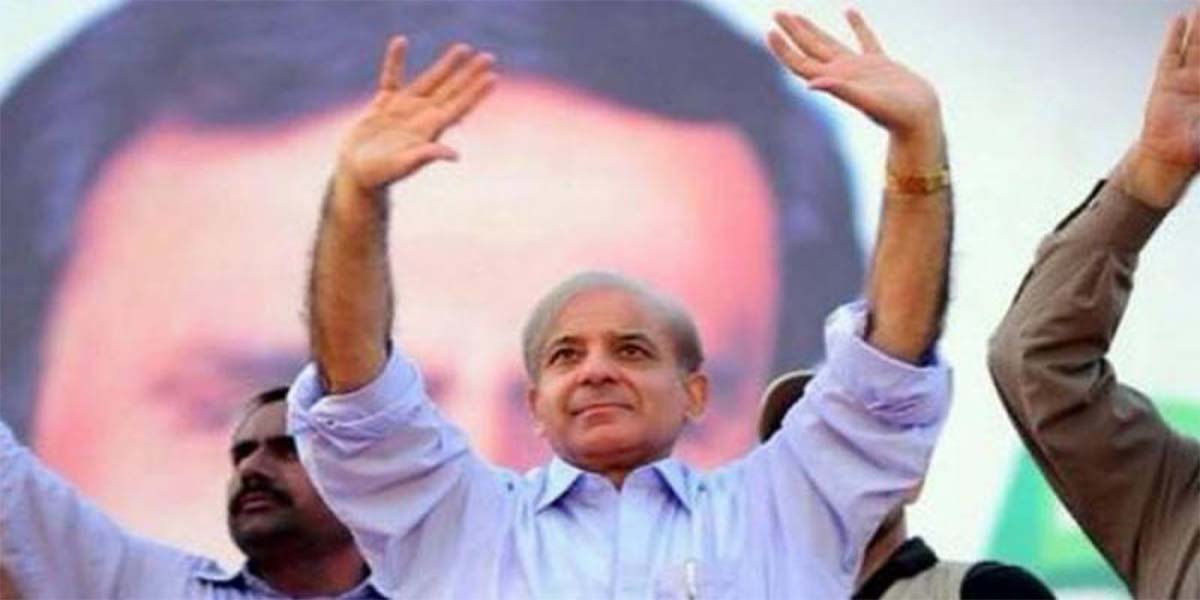
In the heart of Pakistan’s political theater, a familiar saga unfolds yet again, as Shehbaz Sharif ascends to the helm of the nation’s leadership. On a crisp Monday morning, amidst the grandeur of Aiwan e Sadr, the country’s 24th Prime Minister took the oath of office for the second consecutive time. President Dr. Arif Alvi presided over the solemn ceremony, witnessed by an array of dignitaries, including the esteemed Chief of Army Staff, Asim Munir.
The corridors of power buzzed with anticipation as leaders from across the political spectrum converged to mark this significant moment in Pakistan’s democratic journey. The presence of stalwarts such as Nawaz Sharif, Asif Ali Zardari, and Bilawal Bhutto-Zardari underscored the gravity of the occasion. Chief Ministers from Punjab, Sindh, and Balochistan added their weight to the proceedings, while ambassadors and diplomats lent an aura of international significance to the event.
Following the oath-taking ceremony, a guard of honor bestowed its reverence upon the newly anointed Prime Minister, symbolizing the weight of responsibility that now rested on his shoulders. Shehbaz Sharif’s return to power, clinching victory with a resounding mandate, echoes a narrative of resilience and determination.
Yet, behind the veneer of triumph lies a tale of intricate political maneuvering and calculated strategy. Shehbaz Sharif’s journey to the premiership is emblematic of his unwavering allegiance to his elder brother, Nawaz Sharif. Despite the lure of power and the tantalizing offers of coalition partnerships, Shehbaz Sharif’s loyalty has remained steadfast, a beacon of fidelity in a sea of shifting allegiances.
The contours of Pakistan’s political landscape bear the imprint of Shehbaz Sharif’s pragmatic governance style. In navigating the treacherous waters of power, he has forged alliances, brokered deals, and navigated political minefields with astute precision. His tenure as Prime Minister in April 2022 bore witness to a series of strategic concessions aimed at securing the return of Nawaz Sharif, his elder brother and political mentor.
In a bid to appease the military establishment, Shehbaz Sharif enacted legislation that bolstered the military’s institutional prerogatives, granting them unprecedented powers and influence. The passage of bills such as the Pakistan Army (Amendment) Bill 2023 and the Official Secrets (Amendment) Bill 2023 signaled a departure from traditional norms of civilian supremacy, entrenching the military’s foothold in the corridors of power.
However, amidst the accolades and triumphs, Shehbaz Sharif’s tenure is not without its challenges. The economic landscape presents a formidable hurdle, with inflation soaring and unemployment rampant. Law and order issues persist, with incidents of violence and terrorism posing a threat to stability. The specter of the Tehrik-i-Taliban Pakistan (TTP) looms large, casting a shadow of insecurity over the populace.
Furthermore, Pakistan’s foreign policy remains a delicate balancing act, with regional tensions and geopolitical rivalries complicating matters. The role of the military in civilian affairs has shrunk the space of civilian government affairs, undermining the principles of democratic governance and civilian supremacy.
As Pakistan embarks on a new chapter under Shehbaz Sharif’s stewardship, the echoes of his pragmatic governance approach reverberate across the nation. The strategic calculus of Shahbaz Sharif offers a compelling narrative of political resilience and realpolitik, illuminating the complexities of power in Pakistan’s tumultuous landscape.