From the moment Donald Trump took office, he cast his anti–drug cartel campaign as a war—not a mere policing effort. He declared that the malignant networks shipping fentanyl, cocaine, methamphetamine, and other illicit substances into the United States were not simply criminal syndicates but enemy forces undermining the homeland. In one address, he stated: “We are waging war on the cartels.” And indeed, his campaign has moved beyond rhetoric. This year, a special Homeland Security Task Force, now fully operational in all 50 states, has been credited with 3,000 arrests of cartel leaders, operatives, and gang members in “a matter of weeks”—a historic figure, according to his announcement. Among the seizures were more than 2 million pounds of fentanyl pills and over 1,000 illegal firearms removed from U.S. streets.
In the domestic theater, the stakes could not be higher. Each addict and each life destroyed by a fentanyl pill or cartel-driven gang violence represents not only a personal tragedy but a quiet collapse of productivity, hope, and trust. In 2023, about 105,000 Americans died from drug overdoses, almost 73,000 of them from fentanyl alone—roughly 200 deaths every day. Even after a record 27% drop in 2024, provisional data still show around 80,000 overdose deaths annually in the United States.
Behind these deaths stand an estimated 48.5 million Americans living with a substance-use disorder—about one in six people aged 12 and over—meaning that tens of millions of families now face addiction at the dinner table and in the workplace.
Economists in the Trump White House calculate that illicit opioids, primarily fentanyl, drained about $2.7 trillion from the U.S. economy in 2023 alone—roughly 9.7% of GDP—including $107 billion in lost labor-force productivity as workers are killed, disabled, or pulled from the workforce by addiction and incarceration.
The cartels feeding this plague are no longer small-time gangs but industrial-scale employers. One study in Science estimates around 175,000 people working for Mexican organized-crime groups, making them the country’s fifth-largest “employer” and anchoring a broader ecosystem of smugglers, enforcers, and operatives that stretches deep into the U.S. supply chain. It is this machinery that Trump brands the “ISIS of the Western Hemisphere,” and it underpins his argument that the supply side must not merely be intercepted at the border but hunted and dismantled at its source.
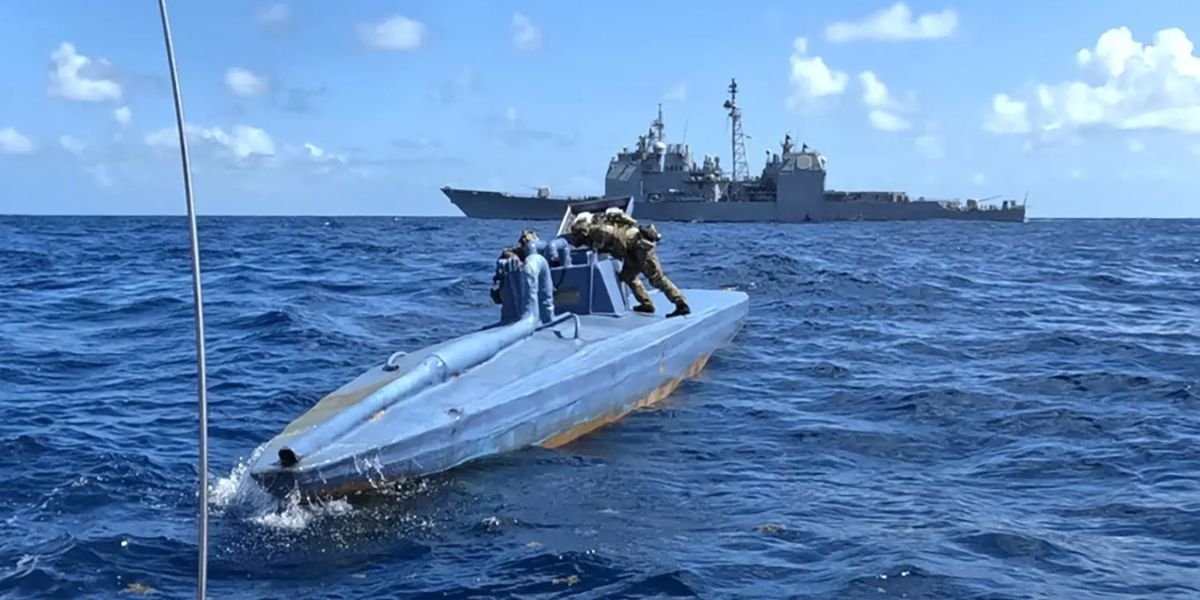
The war did not stop at the U.S. coastline. Trump expanded his strategy into the sea lanes, airspace, and political arenas of Latin America. In August 2025, he ordered a naval deployment—including an aircraft carrier strike group—into the Caribbean Sea as part of what analysts now call Operation Southern Spear. The goal was to choke off maritime cocaine, heroin, and fentanyl routes reaching American shores through Venezuela and Colombia. According to recent assessments, by mid-October the U.S. had carried out at least twenty strikes on vessels off the coasts of Venezuela and Colombia, killing about 80 suspected traffickers.
Relations with both Caracas and Bogotá have deteriorated sharply. The U.S. has accused Venezuela’s Nicolás Maduro regime of using the so-called “Cartel de los Soles” to traffic cocaine in exchange for military loyalty, and in August Washington doubled its reward for information leading to Maduro’s arrest to $50 million. Colombian President Gustavo Petro has condemned U.S. strikes that killed civilians—claiming one victim was a fisherman, not a cartel member. This has triggered a full diplomatic rift, with Trump calling Petro an “illegal drug leader” and suspending U.S. aid.
The urgency behind Trump’s campaign stems from the immense human cost. The Drug Enforcement Administration (DEA), in its 2025 National Drug Threat Assessment, identifies the Cártel de Sinaloa as one of the world’s most significant suppliers of fentanyl precursors bound for the U.S., warning that criminal groups are now operating advanced cargo networks, submarines, drones, and semi-submersibles. Trump argues that each shipment not intercepted means countless American lives lost and communities devastated.
At the same time, the domestic crime war remains deeply personal. Many of the gang and cartel foot soldiers dismantled by U.S. operations were once street-level traffickers exploiting underage girls and vulnerable young people in rings of trafficking, sexual exploitation, and drug distribution.
Here lies the central dilemma. Trump’s strategy is unrelentingly kinetic: he believes only overwhelming force will disrupt the financial-terror nexus of the cartels. The military buildup, naval strikes, and “armed conflict” classification of cartel networks are logical extensions of this war paradigm.
But critics warn of severe blowback. When a nation accuses its neighbors of criminal complicity, sends warships into their waters, and strikes vessels without transparent judicial process, it risks inflaming regional conflict, undermining alliances, and causing unintended civilian casualties. Indeed, Colombian officials argue these operations violate their sovereignty.
Diplomatically, the logic is clear: drug supply chains span multiple states, loosely regulated maritime corridors, and corrupt financial networks. If the U.S. insists on unilateral strikes, it may achieve short-term tactical victories but risk long-term strategic setbacks—turning partner governments into adversaries, forcing traffickers into more remote territories, and perpetuating the cycle.
The best path combines force with coordinated diplomacy. The U.S. should continue targeting cartel leadership, cutting supply routes, and interdicting weapons and chemicals. But it must also bring Colombia, Venezuela (even indirectly), Mexico, and other transit states into a unified partnership—sharing intelligence, financial tracking, legal frameworks, and extradition treaties. A joint task force could focus on dismantling entire networks: transport vessels, drone corridors, safe houses, and financial flows. Through such a coalition, traffickers would face fewer safe havens and higher risks wherever they operate.
In sum, America faces a critical test. Trump’s war on the cartels is bold and sweeping—3,000 arrests, millions of pounds of drugs seized, naval strike groups deployed, and sharp accusations leveled at regimes once seen as partners. Yet the campaign carries profound risks: state-on-state confrontation, civilian casualties, and regional instability.
The cartels are not merely criminal—they are, in Trump’s framing, quasi-terrorist networks operating global supply chains, corrupting institutions, exploiting vulnerable people, and undermining national sovereignty. To defeat them, the U.S. must rely not only on military action or diplomacy alone, but on a strategic blend of force, law, coalition-building, and moral clarity.
A lasting, transnational fight against drugs, gangs, and human trafficking requires Mexico, Colombia, Venezuela, and the United States to stand together. Only then can Trump’s promise—that no gang member, cartel leader, or trafficker will continue poisoning American communities—be fulfilled without undermining the alliances and principles that America seeks to uphold. The urgency is real. The moment is now.