
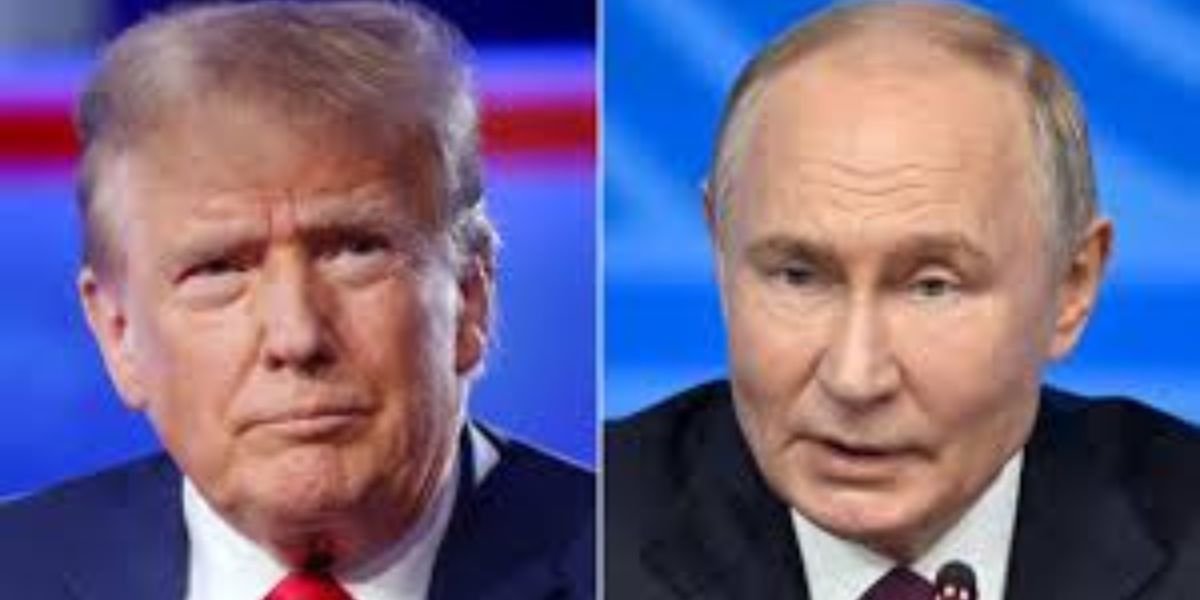
Since the beginning of his presidential campaign, Donald Trump repeatedly declared that he alone could stop the Russia-Ukraine war “within 24 hours.” He spoke with confidence—almost certainty—that his personal rapport with President Vladimir Putin, combined with his dealmaking skills, would secure a swift end to Europe’s bloodiest conflict since World War II. Trump often expressed frustration and even embarrassment over the continuation of the war, insisting that had he been in office earlier, he would have prevented the escalation altogether. Throughout 2024, he reminded Americans that he had intervened in conflicts before, pressuring Pakistan and India, Sudan, Cambodia, and the Congo into ceasefires by using the leverage of U.S. influence, IMF support, World Bank loans, military cooperation, and trade access. These were smaller nations with limited military capability, fragile institutions, and deep dependence on Western goodwill. In those cases, American pressure worked because the countries lacked the strength to resist.
But Ukraine and Russia were not Congo or Cambodia. They were not dependent battleground states that Washington could pressure into compliance. Ukraine, despite its limitations, had unwavering support from the United States, the European Union, the U.K., Canada, Japan, and NATO. And Russia was not a minor player—it remained a nuclear superpower with the world’s fifth-largest military, a vast industrial base, and deep historical and security ties to Ukraine. Trump discovered upon taking office that this war was not within his unilateral control. It was a conflict shaped by entrenched interests, strategic insecurities, clashing national identities, and the geopolitical rivalry between Russia and the West.
At the same time, the Middle East war presented a different strategic landscape. Trump used every tactic—pressure, incentives, sanctions, and diplomacy—to check Israel’s actions, expose its vulnerabilities, and bring forward facts the world had previously ignored. He openly criticized Netanyahu’s government and highlighted how Israel’s operations in Gaza and the West Bank were eroding its global legitimacy. The images emerging from Gaza—the starvation, bombardment of civilian areas, and displacement of millions—forced a global reckoning. Trump’s intervention, through threats and diplomatic maneuvers, produced outcomes many had considered impossible: halting Israel’s ambitions to absorb the West Bank, blocking the total annexation of Gaza, and exposing the scale of Israel’s military and political overreach. In this sense, Trump achieved in the Israel-Hamas conflict what he could not achieve in Ukraine: he forced restraint on a U.S. ally by revealing its excesses.
But Ukraine was fundamentally different, and this difference ultimately defeated Trump’s early optimism. Russia was not reliant on American aid. Its economy, though strained by sanctions, continued to function through energy exports to China, India, and numerous African and Latin American states. Militarily, Russia absorbed heavy losses yet maintained industrial capacity far greater than Ukraine’s. It possessed nuclear leverage and geopolitical depth. For Russia, Ukraine was not a distant battleground—it was the core of its security doctrine, a red line stretching back centuries. Putin repeatedly made it clear that he would not withdraw without guarantees: a neutral Ukraine, a permanent prohibition on NATO membership, recognition of Crimea as Russian territory, acceptance of Russian control over parts of Donbas, and limits on Ukraine’s military size. These were conditions, not requests.
Trump’s draft peace plan, a 28-point proposal quietly circulated among Western allies, reflected this new reality. The plan barred Ukraine permanently from joining NATO, capped its military at roughly 600,000 troops, froze frontlines in Kherson and Zaporizhzhia, accepted Russian control over Crimea and parts of Donetsk and Luhansk, and prohibited NATO bases in Ukraine. In exchange, the United States offered security guarantees, economic assistance, and a reconstruction fund estimated at $100–200 billion. Russia would receive sanctions relief and the possibility of rejoining the G8, provided it adhered to the agreement.
To Moscow, the plan offered almost everything it had demanded. To Kyiv, it amounted to a national surrender.
President Volodymyr Zelensky rejected the proposal immediately, declaring that Ukraine would never trade sovereignty for temporary peace and that no Ukrainian leader had the authority to cede internationally recognized territory. His security chief called the plan “unacceptable, humiliating, and dangerous.” European nations also rejected the deal. Their strategic objective remained unchanged: keep Ukraine armed, keep Russia contained, and maintain a buffer zone between Moscow and the heart of Europe. Many in the EU believed that Russia must be weakened militarily so it could not threaten Eastern Europe again. Whether this goal was realistic or not, Europe’s stance meant Trump could not pressure Ukraine the way he had pressured smaller states in the past.
China observed quietly but carefully. Beijing’s position has long emphasized territorial integrity, avoidance of nuclear escalation, and stability in Eastern Europe for its economic corridors and long-term strategic plans. China did not openly endorse Trump’s plan, but it saw aspects—especially Ukrainian neutrality—as aligned with its views. However, China also understood that a forced peace without Ukrainian consent would collapse, creating long-term instability detrimental to global markets and its strategic interests. China thus supported a negotiated settlement, not an imposed one.
The truth is that no peace plan can succeed without three elements: Ukraine’s willingness to accept painful compromises, Russia’s willingness to halt further ambitions, and the West’s willingness to accept a rebalanced security order in Eastern Europe. Trump’s plan offered a blueprint but lacked political acceptance from the actors who mattered most. That is why, despite months of intense diplomacy, pressure, promises, warnings, and deadlines, the war continued into November with no sign of a ceasefire.
Despite the disappointments, one conclusion is unavoidable: the longer the war continues, the greater the disaster for all parties. Ukraine loses thousands of lives, millions of citizens, and the foundations of its economy. Russia remains trapped in sanctions, global isolation, and perpetual confrontation. Europe faces energy shocks, increased military spending, and strategic vulnerability. The United States drains its treasury while gaining no guarantee of long-term security benefits. China watches with concern as instability spreads across Eurasia.
Peace—even an imperfect peace—will benefit all sides. War guarantees only destruction. A negotiated settlement, no matter how difficult, remains the only path to prevent decades of further suffering. For Ukraine to rebuild, for Russia to rejoin the world, for Europe to regain stability, and for the international community to escape the shadow of escalation, diplomacy must prevail. The alternative is perpetual conflict—a burden the world cannot afford.