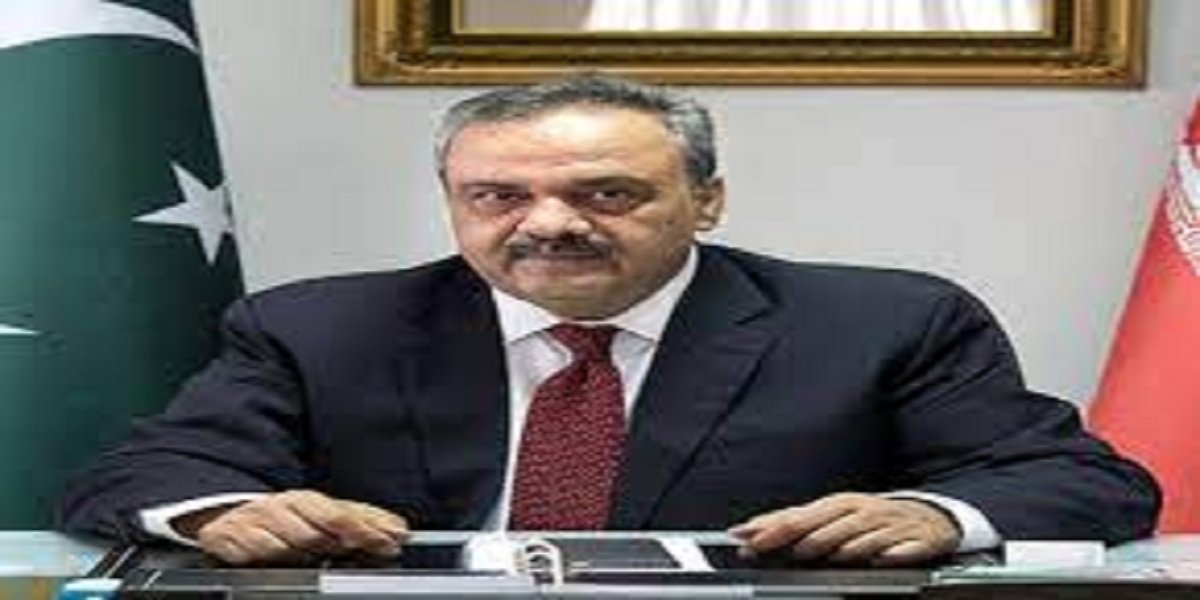
ISLAMABAD: Pakistan’s Special Representative on Afghanistan Ambassador Asif Durrani has said that Pakistan’s peace talks with the banned Tehreek-e-Taliban Pakistan (TTP) failed in the past because the militant group was neither ready to surrender nor swear allegiance to the constitution of Pakistan.
The third primary reason for the deadlock in talks was that the group didn’t want to face the law for the heinous crimes it committed, including the attack on the Army Public School (APS) in Peshawar, the special envoy was speaking at a consultation on “Afghan peace and reconciliation: Pakistan’s interests and policy options”, organized by the Pak Institute for Peace Studies (PIPS).
The talk was the 12th one in a series of discussions organized by the Islamabad-based think tank on the Afghan peace process. The main themes of the consultation included ‘Pakistan’s Afghan policy puzzle: Challenges and opportunities for the new government’ and ‘The counterterrorism and counter-extremism challenges for the new federal and provincial governments.’
Lawmakers of national and provincial assemblies, politicians, diplomats, academics, journalists, policy analysts, and experts on Afghan affairs participated in the event.
Ambassador Asif Durrani said that Pakistan, during talks, had told the interim Afghan government in Kabul that the latter needed to make TTP surrender and disarm the group and detain its leadership. He clarified that “TTP is the red line for Pakistan”.
Durrani went on to say that TTP had 5,000 to 6,000 militants in its cadres taking shelter in Afghanistan, adding, “If we include their families, then the number goes up to 70,000.” “It was apparent the interim Afghan government could not afford the per-day expenditure of such a large number of people, which meant that someone else was paying for their upkeep”, Ambassador Durrani maintained.
He was of the opinion that Pakistan had evidence that “TTP is getting money from India through Afghan proxies”.
Talking about the Pak-Afghan issue, the envoy said that Pakistan should implement the one-document regime on all border crossings with Afghanistan.
Former chief minister Balochistan and National Party leader Dr. Abdul Malik Baloch talked about parliamentary supremacy and said that the solution of all economic, political and foreign policy problems of Pakistan “only lies with the parliament.”
He also called for bringing “real public representation” in Balochistan to solve problems of the province.
Political analyst and expert on Afghan affairs ex-Senator Afrasiab Khattak viewed that the root cause of many problems of Pakistan, including its ailing economy and extremism, was its flawed policy for Afghanistan. “To come out of the crisis, Pakistan needs to change its Afghan policy and admit mistakes of the past,” he said, adding that interests of the west overwhelmed Pakistan’s internal and external policies.
PTI leader Ali Muhammad Khan said that Afghanistan should be given an opportunity to make its own decisions. He added that Pakistan could help its neighbor in peacebuilding.
“We understand that opening of borders and trade with Afghanistan was in the interest of Pakistan,” he said, and advised that the huge potential of Khyber Pakhtunkhwa could be used in promoting trade with the neighbouring country.
Secretary-General of the Balochistan National Party-Mengal (BNP-M) ex-Senator Dr. Jehanzeb Jamaldini underlined that the formation of comprehensive external and internal policies should be the priority for any government. “There should be some roadmap to address long-standing issues of Pakistan,” he said and urged the need for a grand dialogue among political parties to achieve the objectives. He also stressed for improving Pak-Afghan relations, especially in terms of trade.
Member of National Assembly Dr Shaista Jadoon said that her party PML-N had always facilitated Afghanistan whenever it came to power. She said that the new ruling coalition in the centre would look into all the matters concerning the Afghan policy.
Council of Islamic Ideology (CII) Chairman Dr Qibla Ayaz in his concluding remarks said that institutionalism was on the decline within ranks of Afghan Taliban and individualism had taken the centre stage among them. This is the reason, he said, that Afghan Taliban were inflexible in their decision about banning women’s education in Afghanistan.
At the outset, Director PIPS Muhammad Amir Rana said the discussion would revolve around various challenges and opportunities facing the incumbent federal and provincial governments, focusing on fostering positive relations with Afghanistan and addressing terrorism and militancy within the region.
Read more: Pak, Afghan agree to expand ‘counter-terrorism’ cooperation