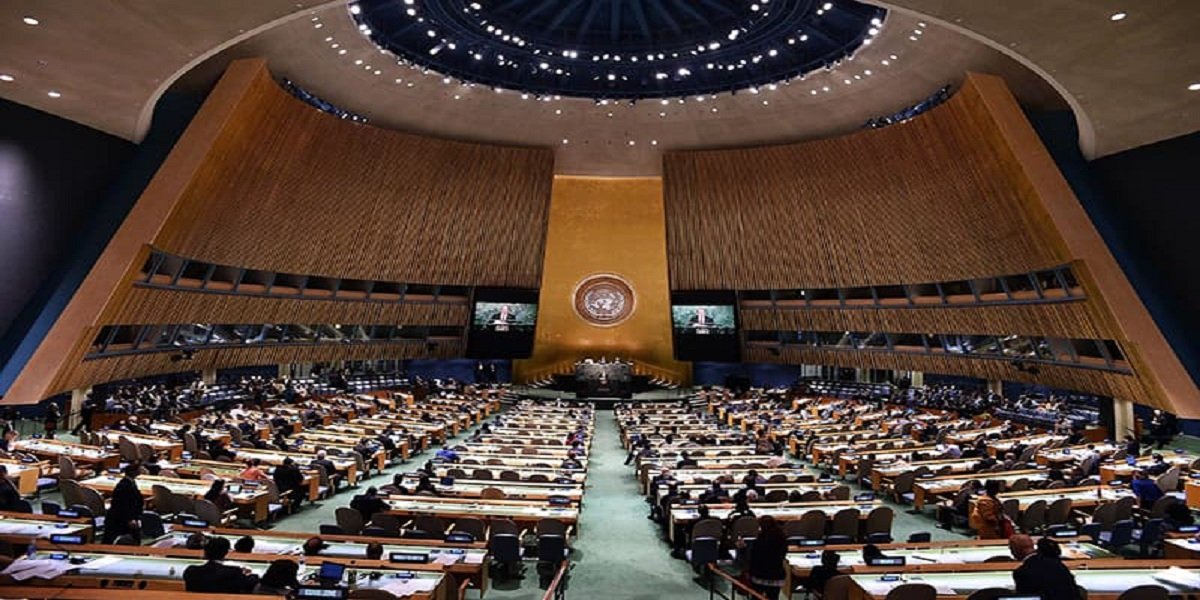
ISLAMABAD: The United Nations General Assembly (UNGA) adopted with consensus Pakistan-sponsored resolution, titled ‘Universal Realization of the Right of the Peoples to Self-Determination’, which “unequivocally supports the right to self-determination for all peoples under subjugation, alien domination and foreign occupation”, including those of Indian-occupied Kashmir.
The UNGA adopted the resolution sponsored by Pakistan and co-sponsored by 72 other members, said a statement of the Foreign Office (FO).
The FO stated that the adoption of the resolution with consensus would provide the people of Indian-occupied Kashmir with hope in their just struggle for self-determination and freedom from oppression and occupation.
The Pakistan sponsored resolution which was co-sponsored by 72 countries secured the support of all UN member states due to its “universal character of the right to self-determination and its continued applicability in situations of foreign occupation and intervention”, the FO said.
“This annual affirmation by the General Assembly serves to preserve the legitimacy of the freedom struggle of peoples under colonial and foreign occupation,” the statement said, adding that the resolution “offers hope that destinies will be decided in accordance with the principles of justice enshrined in the UN Charter, UN resolutions and international law”.
The conflict and unrest in Indian-occupied Kashmir has intensified since Prime Minister Narendra Modi came to power in 2014 and won a landslide re-election in 2019. Modi’s Hindu nationalist Bharatiya Janata Party-led government toughened its stance both against Pakistan, as well as, Kashmiri rebels amid rising attacks by Hindu hard-liners against minorities in India, further deepening frustrations among Kashmir’s Muslims.
The valley has been under a security lockdown since the Indian government stripped Kashmiris of the special autonomy they had for seven decades through a rushed presidential order in 2019.
Read more: Major markets under pressure due to lack of trust in government’s economic narrative