
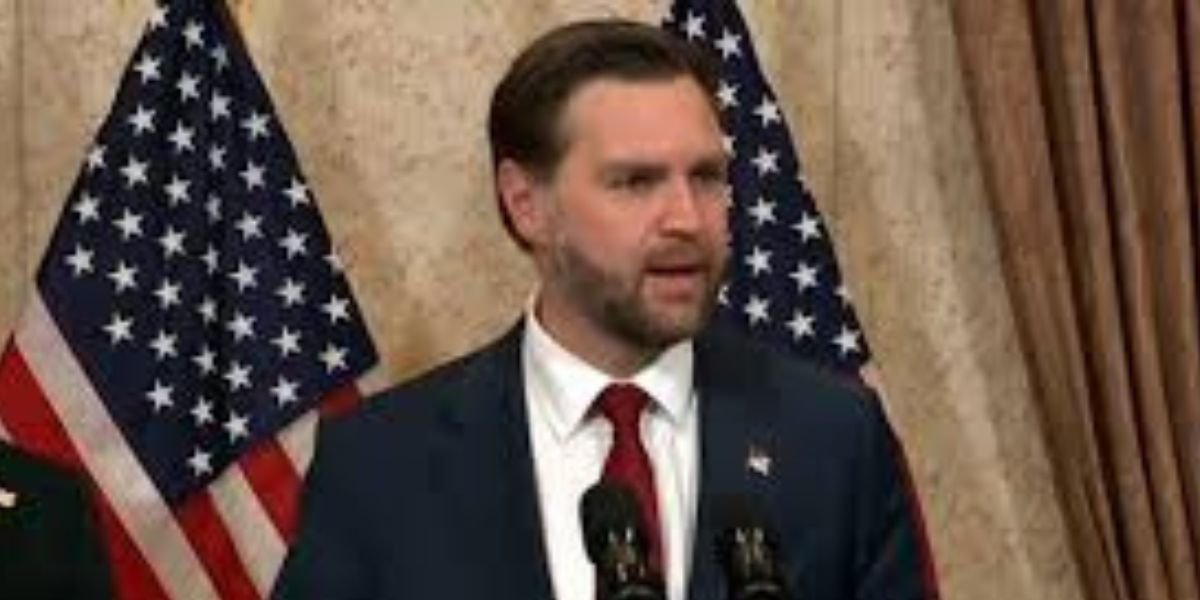
ISLAMABAD: Vice President of United States JD Vance said on Sunday that Washington and Tehran were unable to reach an agreement after 21 hours of “substantive discussions” held under the Pakistan-mediated “Islamabad Talks”, while appreciating Islamabad’s role in facilitating the high-stakes dialogue.
In his brief press conference in Islamabad after talks ended, Vance said “the bad news is that we have not reached an agreement, and I think that’s bad news for Iran much more than it’s bad news for the United States of America. we go back to the United States having not come to an agreement. We’ve made very clear what our red lines are,” he told to reporters in Islamabad.
Vance did not mention reopening the Strait of Hormuz, a choke point for about 20 percent of global energy supplies that Iran has blocked since the war began.
He added that the core dispute was on nuclear weapons. Iran insists it is not pursuing an atomic bomb, and the US and Israel bombed sensitive Iranian locations both in the war launched on February 28 as well as last year.
The talks, which held in Pakistan’s capital Islamabad, were the first direct US-Iranian meeting in more than a decade and the highest-level discussions since the 1979 Islamic Revolution.
Tasnim news agency of Iran said that “excessive” US demands had hindered reaching an agreement and that negotiations had ended. Before Vance spoke, Iran’s government had said in a post on X that negotiations would continue and technical experts from both sides would exchange documents.
Iran’s Ministry of Foreign Affairs said on Sunday that no one had expected that talks with the US would reach an agreement in one session.
“Naturally, from the beginning, we should not have expected to reach an agreement in a single session. No one had such an expectation,” ministry spokesperson Esmaeil Baghaei said, as per the state broadcaster IRIB.
He stated Tehran was “confident that contacts between us and Pakistan, as well as our other friends in the region, will continue”.
Pakistan’s foreign minister insisted on Sunday Washington and Tehran must uphold the ceasefire agreement, after marathon talks between the two sides to end the war in the Middle East ended without an agreement.
“It is imperative that the parties continue to uphold their commitment to ceasefire,” said Ishaq Dar, whose government hosted the talks and acted as a mediator.
Addressing a press conference in Islamabad after talks ended, Dar Dar stressed that diplomacy must continue despite the absence of a breakthrough.
Highlighting the importance of maintaining stability, Dar underscored that adherence to the ceasefire remains critical.
Reaffirming Pakistan’s diplomatic role, the foreign minister stated Islamabad would remain actively engaged in supporting future negotiations between Washington and Tehran.
As the talks started, the US military said it was “setting the conditions” to start clearing the Strait of Hormuz.
The Strait of Hormuz is a central to the ceasefire talks. The US military said two of its warships had passed through the strait and conditions were being set to clear mines, while Iran’s state media denied any US ships had transited the waterway.
Before the talks began, a senior Iranian source told Reuters the US had agreed to release frozen assets in Qatar and other foreign banks. A US official denied agreeing to release the money.
The US and Israel launched war on Iran on February 28 that expanded to the wider Middle East, with Tehran carrying out retaliatory attacks on Israel and neighbouring Gulf countries hosting US assets. More than 2,000 people have lost their lives and military and civilian areas have been damaged in the US-Israeli attacks on Iran.
The war also caused a global energy crisis following Iran put a chokehold on the Strait of Hormuz through which some 20pc of the world’s oil and gas exports pass.
Israel has insisted that the ceasefire does not affect its invasion of Lebanon, where Israel has carried out massive strikes and sent troops in response to fire from Hezbollah, the Iranian-backed Shia Muslim movement.
Also read:‘Step toward stability’: JD Vance, Shehbaz Sharif meet before Islamabad dialogue