
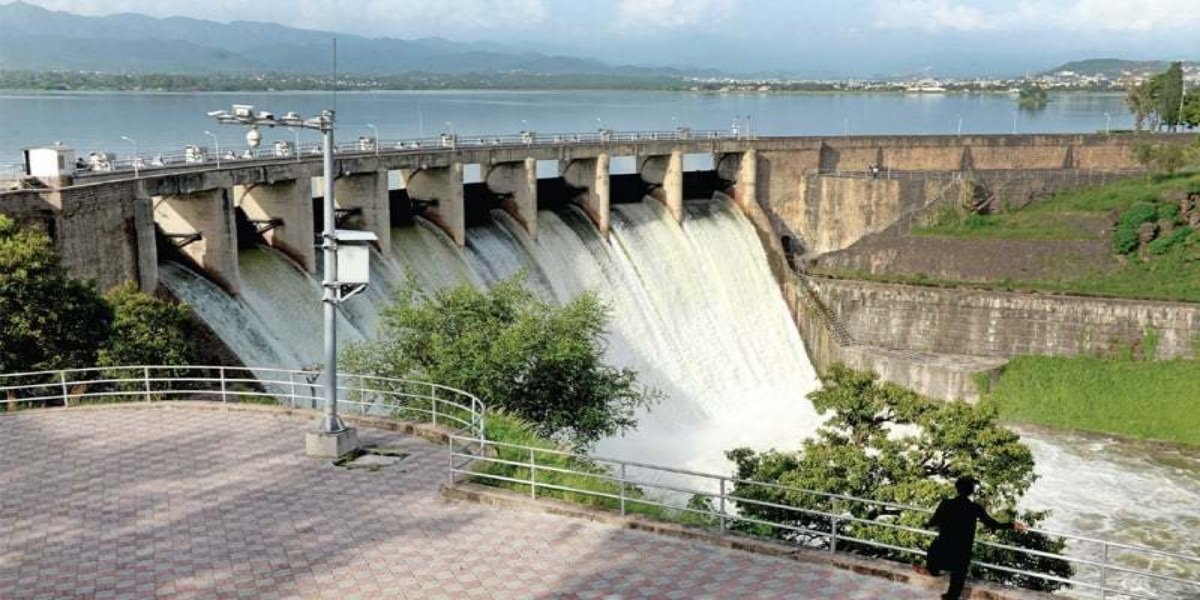
In recent years, the water and energy nexus has become increasingly relevant as the relationship and interdependence between these resources become more evident and the stress on them increases.
This relationship is becoming more important due to the growth of industries, the demand for resource use and consumption, and the increasingly variable climatic conditions, which require understanding this nexus and taking effective action to ensure water and energy security in the years to come.
This situation is particularly important in Pakistan, one of the most water-scarce countries in the world, where this resource plays a key role in energy generation, its main source being hydroelectric power and also essential for the generation of thermal energy required for steam production and cooling processes.
Among other conditions that make it necessary to understand the water-energy nexus in Pakistan, such as the high percentage of population without access to safe water, the accelerated growth of its population and the high dependence on agriculture that consumes large amounts of water.
The water-energy nexus is generally explained because power generation requires water, and the extraction, treatment and transport of water consume energy. Water is used in mining processes, hydroelectric power generation and other processes to obtain alternative energy. Energy is used for groundwater extraction, water transport, drinking water treatment and wastewater treatment. It is estimated that water pumping consumes up to 7% of the energy produced worldwide.
Pakistan, according to the International Monetary Fund, is among the most water-stressed countries in the world. Its geographical position is critical, on the one hand, 92% of the territory is classified as arid and semi-arid, and in addition, most of the water is obtained from the Indus River, which is highly dependent on the Himalayan glaciers (Parry et al., 2016). Climate change is causing the melting of these glaciers at an accelerated rate, resulting in variability in water availability and consequently affecting hydroelectricity generation.
This situation is aggravated by the accelerated growth that Pakistan has been experiencing since its independence in 1947; the population has quadrupled and is estimated to increase tenfold by the year 2100. This implies an increasing demand for water for domestic, industrial and agricultural use, which, by decreasing the availability of water per person, means that the country is also facing food security, basic sanitation and economic crises. This considering that the country still presents a very large gap in access to safe water, currently only 36% has this resource, similar to sanitation coverage, since only 58% of the population has access to basic sanitation services.
With per capita water availability decreasing year by year, conflicts also arise among users who need and have equitable rights to water, such as the domestic, industrial, agricultural and power sectors. These problems are compounded by the fact that Pakistan lacks a comprehensive water resources strategy or policy or a law defining water rights. In this situation, it is up to the government to take action to ensure efficient resource management and establish policies that benefit all sectors equally, as well as to invest in infrastructure and technologies that will maximize water use efficiency.
However, it must be considered that the investments required to address the water scarcity issue will inevitably increase energy consumption, as explained above in the processes of water extraction, transport and treatment, as well as for the construction of hydraulic infrastructures. Thus, the water-energy nexus is evident in Pakistan, where energy supply is highly vulnerable to water availability.
For example, the Indus River irrigation system has major inefficiencies at the canal, watercourse and field levels, only 30% of the water flowing through the system actually reaches the farms, and farmers at the end of the system often face water shortages. In addition, water management is inadequate because water prices and tariffs do not cover operation and maintenance costs, effective regulation is lacking, and traditional flood irrigation methods persist that result in over-irrigation and have caused waterlogging problems in some areas of the Indus basin.
Pakistan is supplied by 30% hydropower, 48% from fossil sources (gas and coal), 17% from nuclear energy and less than 5% from other renewable sources, all of which require water consumption in their generation processes. In the case of hydropower, the relationship is direct, so it could be the most vulnerable energy source in the face of water scarcity.
However, water is also important in the generation of energy from fossil sources, the most significant use being the cooling of equipment due to the excessive heat produced in the processes; also, water is used to generate high-pressure steam to drive turbines and generate electricity. Similar is the case with nuclear energy, which has been gaining more and more importance in Pakistan since the last three years, water is crucial in the cooling system of nuclear plants, also in some plants it is used as a neutron moderator and as radiation shielding in reactors.
Therefore, water availability is critical to ensure energy generation, which is also far lower in Pakistan compared to the global average consumption, with a generation of approximately 64 watts per person, compared to the global average of 410 watts per person.
Efficient water management and use are key to increasing energy from low-carbon sources such as nuclear plants, in combination with renewable energies such as wind and solar. In addition, thermal and nuclear power generation processes should operate with efficient, closed-cycle cooling systems, avoiding water waste.
The challenges of the water-energy nexus in Pakistan are numerous and reflect the intricate interdependencies between water management and energy generation. These challenges affect the sustainability of these resources and consequently the economic and environmental stability of the country.
To address them, it is necessary to establish policies that seek a balance between the two aspects, on the one hand, efficiency in water use must be balanced with energy consumption. Likewise, strengthening the country’s energy structure, which currently seeks to achieve 30% renewable energy consumption by 2030, but making efficient use of water and ensuring that it is affordable to the population.
Also Read:The Afghan warlords’ hydropower ambitions shake Pakistan’s establishment