By Sabaena Siddiqui
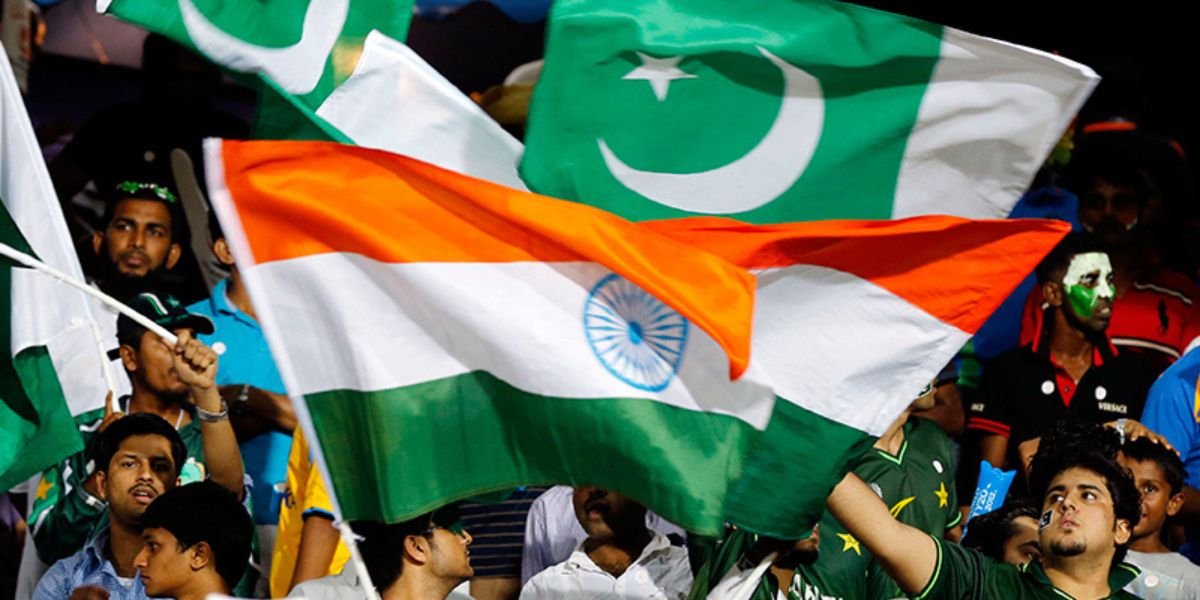
The Pakistan–India match did not start with a toss but with diplomatic drama playing out across ICC boardrooms, regional political corridors, and the offices of the Pakistan Cricket Board and the Bangladesh Cricket Board. Cricket, long celebrated as a unifying sport, increasingly functions in South Asia as a tool of nationalism and political signaling. Rather than bridging divides, it amplifies tensions, transforms players into symbols of national pride or public animosity, and turns each fixture into a site of ideological contest. Modern cricket in this region is as much about politics as performance.
On 15 February 2026, Pakistan announced it would play India in Colombo, a decision with significant political and economic implications. Earlier, Pakistan had refused to face India in solidarity with Bangladesh, disrupting ICC schedules and threatening revenues. Before agreeing, Pakistan set three key conditions: no penalties against Bangladesh, Bangladesh’s right to approach the ICC Dispute Resolution Committee, and hosting at least one ICC event between 2028 and 2031. These demands illustrate how participation is leveraged strategically to protect allies and secure institutional concessions.
Prime Minister Shehbaz Sharif approved the decision after consultations with Sri Lanka, Bangladesh, the UAE, and the ICC, reflecting an attempt to balance sport with diplomacy. Indian media framed Pakistan’s stance as a boycott, accusing it of hypocrisy and politicization. Analysts highlighted that India and the Board of Control for Cricket in India prioritize revenue and national prestige, while observers warned that skipping matches could financially backfire if the ICC deducted broadcasting losses from PCB revenue. Economic and political stakes thus dominate interpretations of sporting decisions.
Indian political reactions were sharply divided. Hasnain Masoodi argued that sports should remain separate from politics, while hardliners like Zia Ur Rehman Barq called for India to refuse engagement. Other MPs, including members of Congress, BJP, and Shiv Sena, criticized Pakistan’s approach and questioned India’s responses, highlighting the interplay of strategy, nationalism, and political signaling. Cricket has become an arena for domestic political positioning as much as for athletic performance.
Influencers and former cricketers amplified the discourse. Arnab Goswami called the situation “massive stupidity,” while former cricketer Harbhajan Singh dismissed it as “unnecessary drama.” Atul Wassan framed the boycott as “weaponized cricket,” driven by political interference rather than sporting logic. Public narratives and media commentary shape perceptions, turning a match into a symbolic event where patriotism, politics, and public sentiment intersect. Cricket now operates as a platform for projecting power beyond the pitch.
The politicization of cricket is rooted in its modern evolution. India’s 1983 World Cup victory and the joint hosting of the 1987 tournament with Pakistan shifted the sport’s center of influence to South Asia. The 1990s satellite television boom created the world’s largest cricket broadcast market, generating billions for the BCCI and cementing India’s economic dominance. By the early 2000s, India contributed over half of ICC revenues, giving it disproportionate influence over scheduling, tournament formats, and revenue allocation. Smaller boards, including Bangladesh and Zimbabwe, became dependent on ICC funding, showing how commercial power shapes governance.
The launch of the Indian Premier League in 2008 further consolidated India’s supremacy, dictating international calendars and restricting players from foreign leagues. Political elites and business leaders heading cricket boards illustrate how governance, commerce, and influence intersect. Pakistan–India matches epitomize these dynamics: each fixture carries diplomatic, economic, and symbolic significance. Broadcast revenues, sponsorships, and public attention make every match a tool of soft power, where financial and political stakes rival sporting considerations.
Pakistan’s earlier boycotts and conditional participation underscore cricket’s strategic function. The three demands—protection of Bangladesh, access to ICC dispute mechanisms, and future event hosting—demonstrate that sporting decisions now serve as instruments of negotiation, regional solidarity, and institutional leverage. National pride, historical rivalry, and economic implications intensify the stakes, making matches symbolic projections of influence. Off-field maneuvers, media framing, and political commentary often shape outcomes more than on-field performance.
In contemporary South Asia, Pakistan–India cricket exemplifies how sport, politics, and economics converge. Cricket no longer merely reflects political and commercial hierarchies; it actively produces them. Matches serve as arenas for diplomacy, revenue negotiation, media influence, and nationalistic signaling. Pakistan’s conditional engagement and India’s economic leverage highlight how commercial dominance, political strategy, and public perception govern modern cricket. Every fixture is a high-stakes negotiation, revealing that sport in this region is inseparable from the geopolitical landscape.
Sabaena Siddiqui, a NUML graduate, is a freelancer and content writer covering sports and exploring global security, foreign policy, and power dynamics through a strategic and analytical lens.