
In the dark and trembling hours of January 3, 2026, the military power of the United States reached deep into Caracas, Venezuela, in what President Donald Trump described as the most daring, precise, and coordinated military operation ever mounted in the Western Hemisphere. More than 15,000 U.S. ground, air, and naval personnel took part in the strike, moving with extraordinary speed to seal borders, disable command networks, neutralise security systems, and overwhelm any potential resistance before the first rays of dawn touched the capital.
By the time the city awoke, the mission was complete. Venezuelan President Nicolás Maduro and his wife had been captured and removed from Venezuelan soil without significant resistance from the military, intelligence, or political structures that once upheld the regime. Trump declared that Maduro would now face justice in New York under existing federal indictments accusing him of narcotics trafficking, financing cartel activities, and orchestrating the flow of cocaine into the United States—charges filed years earlier by U.S. prosecutors in the Southern District of New York.
Trump praised the operation as a triumph of intelligence mastery and overwhelming force, claiming that every movement of Maduro and every layer of Venezuela’s security apparatus had been mapped in advance. What followed during his press conference was even more striking. Asked who would govern Venezuela, Trump stated bluntly that the United States would run the country—practically, functionally, and administratively—until American oil companies were reimbursed for assets that had been nationalised, operational control restored, production rebuilt, and oil exports returned to full capacity.
In effect, Trump declared that the United States would govern Venezuela until U.S. corporations had recouped their economic losses. Only then, he said, would a transition to Venezuelan leadership occur. This was not framed as humanitarian intervention but as an explicit economic takeover tied to corporate restitution. The United States had not merely removed a president; it had assumed control of a nation holding the world’s largest proven oil reserves.
Trump went further, accusing Cuba of embedding personnel within Venezuelan security forces and sustaining the Maduro system. He labelled the Cuban government corrupt and economically ruined and warned that Havana could be next. Argentina and Colombia were also criticised as governments misaligned with American interests. Greenland was once again mentioned in strategic terms. The message was unambiguous: nations resisting U.S. political or economic priorities could face overwhelming pressure, including regime removal.
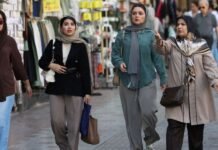
Simultaneously, the Middle East trembles. Iran, long battered by sanctions, now faces a severe economic crisis that has driven protests in more than 30 cities. The Iranian rial has collapsed to historic lows. Prices of food and essential goods have surged. Salaries have lost value. Inflation has hollowed out daily life. Demonstrations echo across Tehran, Isfahan, Shiraz, Mashhad, and beyond. Women openly remove hijabs on camera in defiance. Shops close. Traffic halts. Security forces respond with arrests and force. The government vows to restore order, but history suggests that no system survives indefinitely without economic stability.
Since the 1979 revolution, Iran has endured sanctions, cyber warfare, covert operations, assassinations, and isolation. This crisis, however, is different. It is rooted in kitchens, markets, currency exchanges, unpaid bills, and empty lunchboxes. Economic suffering has become political reality. Without currency stabilisation, market access, and sanctions relief, unrest is unlikely to fade.
Israeli Prime Minister Benjamin Netanyahu has long called Iran an existential threat, urging regime change. Trump now echoes claims that Iran’s leadership is weakening. Tehran insists otherwise. Yet history shows that no government survives on slogans alone—it must feed its people.
Against this backdrop, the United Nations appears sidelined, international law fragile, and sovereignty increasingly conditional. When a superpower can enter a sovereign state, seize its leader, transport him to New York, declare administrative control until corporate losses are repaid, and openly warn other nations, the global order has shifted.
Two human dramas now unfold in parallel. Venezuela has been overtaken administratively and economically. Iran teeters under internal strain driven by economic collapse. Meanwhile, warnings issued to Cuba, Argentina, Colombia, and Greenland signal a new era of open power projection.
Let us hope that amid these upheavals emerge dignity, prosperity, and justice for ordinary people whose lives are shaped by forces far beyond their control. In the era now unfolding, power no longer whispers. It speaks openly.