By Muhammad Ali Zafar
I travelled thousands of kilometres from the Cholistan Desert in southern Punjab to the Gobi Desert in Mongolia. But the real distance was not measured in kilometres. It was measured in years of struggle, learning, rejection and persistence.
My journey to Ulaanbaatar for the United Nations Convention to Combat Desertification (UNCCD) COP17 began long before I boarded a plane. It began in a small village near Hasilpur, where the realities of rural life and the Cholistan Desert shaped the way I understood the world.
Growing up near a desert teaches you things that no textbook can fully explain. Drought is not just a word, and water scarcity is not simply a statistic. Land degradation and changing weather patterns affect families, farmers, livestock, livelihoods and everyday decisions. This experience shaped my interest in economics, climate change, environmental issues and sustainable development.
My educational journey was also far from straightforward. I started my education in the madrassa system, moved to a government school and eventually reached a government university, where I studied economics and later pursued an M.Phil. My academic interests gradually moved towards environmental economics, climate change and sustainable development. I began to understand that many of the challenges I had witnessed were part of much larger global issues.
This encouraged me to look beyond Pakistan and seek international platforms where I could learn, contribute and represent communities like mine. But the road to my first international trip was filled with disappointments. I received a visa rejection for an opportunity connected with the World Food Forum in Italy. Later, I obtained visas for Brazil and Azerbaijan, but financial limitations meant that I could not travel.
These experiences were difficult, and at times I questioned whether such opportunities were really meant for me. Yet every setback taught me to continue preparing, learning and trying. Eventually, another door opened.
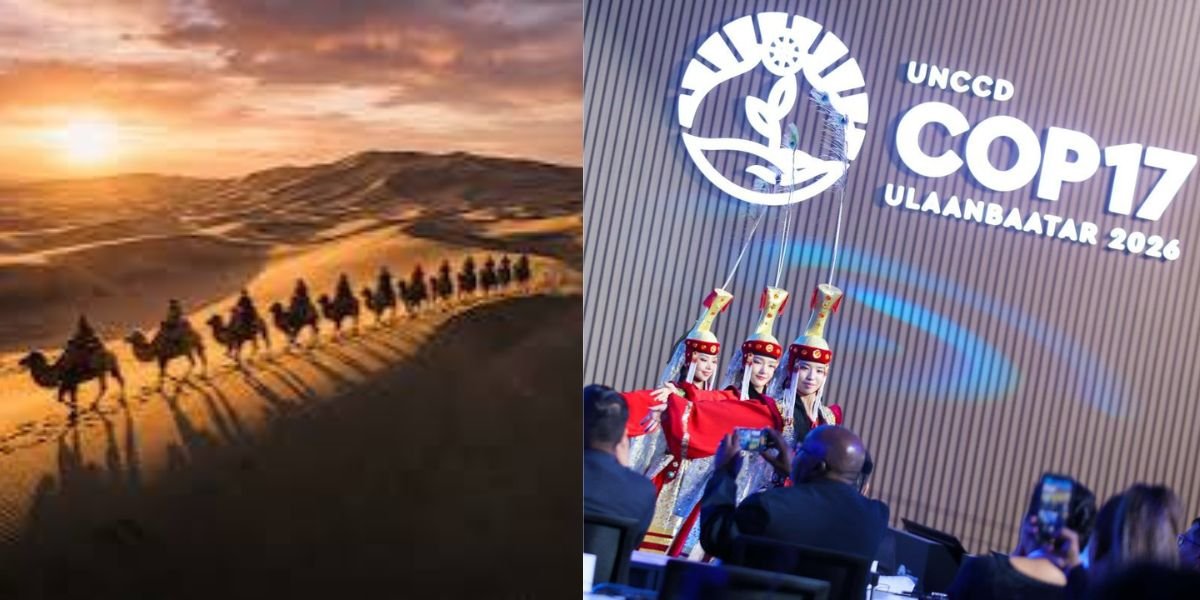
I travelled to Ulaanbaatar, Mongolia, as part of the Pakistan Youth Delegation to UNCCD COP17. It was my first international trip outside Pakistan, and reaching Mongolia meant much more to me than simply visiting another country. I was travelling from one desert-linked reality to another—from Cholistan to the Gobi.
The geographical distance between Cholistan and the Gobi is enormous, but the challenges connecting them are surprisingly familiar. Drought, water stress, land degradation, desertification and pressure on rural livelihoods affect communities across the world in different ways. Standing in Mongolia, I felt that my journey had come full circle.
The issues I had known locally were now being discussed at a global platform involving governments, international organisations, experts, businesses, civil society and young people. I did not want my participation in COP17 to be limited to sitting in conference rooms and listening to speeches. I wanted to participate, ask questions, share ideas, build relationships and understand how international processes could create practical possibilities for communities and countries.
Throughout the conference, I engaged with representatives from different countries, international organisations, youth networks, businesses and development stakeholders. These interactions helped me understand different perspectives on land restoration, climate action, sustainable development and youth participation.
The bilateral engagements were particularly valuable. At the Turkish Pavilion, I had a productive discussion about future cooperation, youth participation and opportunities connected with COP31 in Türkiye. We discussed how young people from Pakistan and other countries could become more actively connected with international climate processes and future initiatives.
At the Egyptian Pavilion, I also had a detailed exchange on environmental challenges, international cooperation and possible areas for future engagement. These conversations showed me that diplomacy and international cooperation are not limited to formal government meetings. They can also begin with meaningful conversations between young professionals, researchers, entrepreneurs and civil society representatives.
For me, networking at COP17 was not about collecting business cards or simply adding names to a contact list. It was about finding common ground and identifying areas where ideas, expertise and resources could come together. A conversation can lead to another meeting, a meeting to a partnership, and a partnership to a project that creates impact in a community.
I was also fortunate to have opportunities to speak rather than simply listen. At the GCCI Pavilion, I participated as a panellist in the session “Reviving Rangelands Through Collaboration: Strengthening Partnerships for Sustainable Land Restoration.” Sharing the panel with the Climate Minister of Nigeria made the experience particularly significant.
Rangelands are not an abstract environmental issue for countries such as Pakistan. They are connected with livestock, agriculture, rural communities, food security and livelihoods. Speaking from my regional and Pakistani perspective allowed me to connect local realities with the wider global conversation on land restoration.
Another important speaking opportunity came through the session “Sustainable Green Practices: Driving Climate Action Through Everyday Solutions,” organised by the United Nations Association of Mongolia. The session focused on how everyday choices, responsible business practices and sustainable solutions can contribute to wider climate action.
For me, it was also an opportunity to connect my professional interests in business and entrepreneurship with environmental responsibility. Climate action cannot remain only within policy documents; it must also become part of how businesses operate and how communities make everyday decisions.
One of the strongest lessons I took from COP17 was the importance of youth. Young people are often described as the leaders of tomorrow, but this can overlook what they are already doing today. Young researchers are producing knowledge, entrepreneurs are developing solutions, professionals are working in communities, and youth advocates are bringing local concerns into international discussions.
Young people need more than recognition. They need meaningful space to participate, speak, lead, negotiate, build partnerships and contribute to decisions that affect their future. My experience at COP17 reinforced my belief that Pakistan has a large pool of young people who can contribute to global climate and development efforts if they are given the right platforms, skills and connections.
At the same time, international exposure becomes truly valuable only when knowledge and relationships are brought back home and translated into action. COP17 therefore became more than a conference for me. It became a platform for learning, speaking, relationship-building and opening doors for future work.
The discussions on land restoration, drought resilience and rangelands were important, but their real value will depend on what happens after the conference. It will depend on how countries implement commitments, how communities receive support, how investment reaches vulnerable areas and how young people are included in the process.
I am also grateful to Pantera Farms for facilitating my participation in UNCCD COP17 and supporting my journey to this important international platform. Their support helped turn an international opportunity into a real experience of learning, contribution and representation.
For someone whose journey began in a small village in Southern Punjab, that support meant much more than simply reaching Mongolia. It provided access to a global platform where I could learn, speak and build connections that may contribute to future work.
For me, the real work begins after returning from Mongolia. I want to bring back the knowledge, experiences, relationships and possibilities developed during COP17 and connect them with Pakistan’s needs.
This includes creating pathways for young people, exploring research and collaboration, supporting sustainable business ideas, connecting stakeholders and contributing to conversations around land restoration and climate resilience. International exposure is meaningful only when it creates value beyond the individual and contributes to communities and the country.
When I look back at the journey, I see more than a trip from Pakistan to Mongolia. I see a path that began in a small village, moved through a madrassa, a government school and a government university, and passed through visa rejections and financial limitations before eventually bringing me to an international platform.
“From Cholistan to the Gobi” is therefore more than a geographical journey. It represents the connection between local experience and global action. It reminds me that a person can come from a small village and still find a place in global conversations.
Setbacks may delay a journey, but they do not have to define its destination. I made it from Cholistan to the Gobi, but reaching Mongolia was not the end of the journey. It was the beginning of another one: bringing what I learned back to Pakistan, turning international connections into meaningful partnerships, creating more space for Pakistani youth and transforming ideas into practical action.
The real measure of COP17 will not be how many people attended, but what we do with what we learned after returning home.
The writer can be reached at aliizaffaar@gmail.com