By Riaz Waheed
Imagine a rickshaw driver in Karachi who has never heard the word “chokepoint”. When diesel prices rise, he does not read about the Strait of Hormuz. He simply works longer hours for the same income and takes less money home. A waterway thousands of kilometres away has quietly become part of his household budget.
That is what makes Hormuz different from other flashpoints. It is not merely a place where states compete. It is a valve in the global economy, and when it tightens, ordinary people everywhere feel the pressure.
Geography as leverage
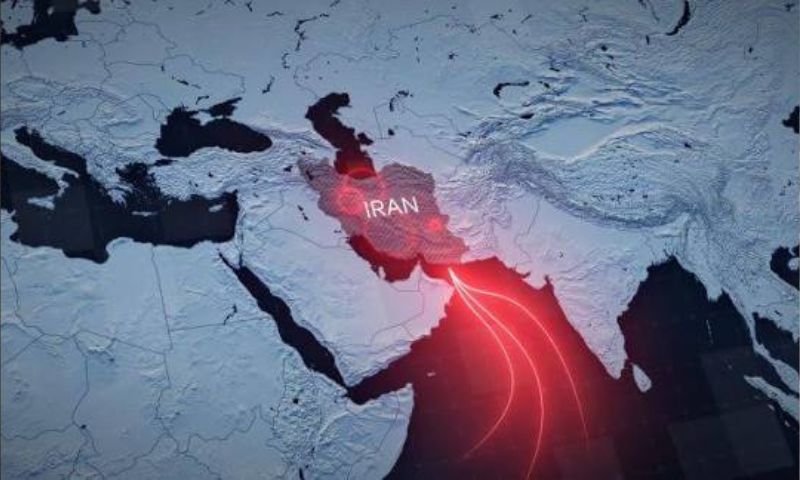
At its narrowest point, the strait is about 39 kilometres wide. Around 20 million barrels of oil and petroleum products passed through it daily in 2025, accounting for roughly a quarter of global seaborne oil trade, alongside approximately one-fifth of global liquefied natural gas (LNG) trade.
The deeper issue is concentration. The global energy system did not deliberately concentrate its dependence on a single corridor; rather, that dependence developed over time because the cheapest route usually wins. Efficiency created this dependence, but resilience was largely overlooked until it became necessary.
This dependence is also uneven. China and India together account for approximately 44 per cent of crude oil flows through the strait, making Asian economies far more exposed to disruption than Europe or America. Those who bear the risks are not necessarily the ones who control the waterway. This imbalance is what turns a regional war into a global bargaining chip.
Why disruption spreads so fast
When the war began, daily vessel transits fell from approximately 130 in February to just six in March, according to UNCTAD. Brent crude prices rose from approximately $72 to nearly $120 before easing to around $98.
But the price of oil is only the first layer of the problem. Insurance, freight and borrowing costs also rise, and these additional costs are ultimately borne by importers who had no part in the conflict.
This is why developing economies suffer twice. They pay more for energy, food and fertiliser, while nervous investors withdraw capital from precisely those countries least able to afford it.
UNCTAD expects global trade growth to slow from about 4.7 per cent to between 1.5 and 2.5 per cent this year. A supply shock thus becomes a financial shock, which, in turn, becomes a social one.
The limits of workarounds
Saudi Arabia and the UAE have pipelines capable of transporting oil around the Strait of Hormuz, with a combined capacity of approximately nine million barrels a day. However, their available spare capacity is significantly lower, limiting the extent to which disrupted shipping can be replaced. Beyond the numbers lies a harder truth: a bypass merely shifts vulnerability elsewhere.
Alternative pipeline routes reduce dependence on Hormuz but introduce other logistical and security risks, including exposure to maritime threats in the Red Sea and, depending on the destination, the Bab al-Mandeb Strait.
Fixed pipelines are also vulnerable to attacks. Unlike oil, LNG has fewer immediate alternatives because replacing disrupted Gulf supplies requires available production capacity, specialised vessels and suitable import infrastructure elsewhere.
Iran’s own position is paradoxical. Closing the strait gives Tehran leverage, but it also disrupts its own trade and angers neighbours and buyers whose goodwill it needs. A chokepoint is a weapon that wounds its wielder, which is why it is more effective as a threat than as a policy.
This logic helps explain the current confusion: the political status of the waterway and the actual movement of commercial shipping are not the same thing. Tehran insists that the strait must remain closed until its terms are met.
Yet Kpler data reported in September 2026 indicated that regional non-Iranian crude and condensate exports had approached pre-war levels, while confirmed flows through Hormuz itself remained more than a quarter below pre-war levels, with some exports moving through alternative routes.
Oil continues to flow, but under a cloud of risk that markets cannot ignore.
Even if shipping fully resumes, higher insurance premiums, damaged infrastructure, disrupted supply contracts and geopolitical uncertainty could continue to affect energy markets long after the immediate disruption ends. The immediate disruption is the visible crisis; long-term vulnerability is the one that lingers.
Why Pakistan cannot look away
An estimated 81 per cent of Pakistan’s oil imports come from the Gulf, while domestic reserves remain dangerously thin. According to the Finance Ministry’s official reporting in April, the country’s commercial and strategic stocks provided approximately 12 days of crude oil and 25 days of diesel cover.
Its exposure is therefore both economic and strategic. However, Pakistan’s diplomatic relationships with Tehran, Washington and the Gulf capitals could provide Islamabad with opportunities to contribute to regional de-escalation and efforts to restore maritime security.
The effects extend well beyond the petrol pump. A higher import bill puts pressure on foreign exchange reserves and the current account. Rising fuel prices feed into transport and food costs, while more expensive fuel increases the cost of electricity generation.
Fertiliser and food supply chains are also exposed, while remittances from overseas Pakistanis depend on the stability of the Gulf economies that host millions of workers.
What the world should learn
Three lessons emerge. First, diversification is no longer a luxury. Strategic reserves, renewable energy and multiple routes to markets are forms of insurance, not extravagance. Second, freedom of navigation is a shared interest that requires collective guarantees, not merely naval escorts.
Third, the most effective protection against a closed strait is a political settlement that gives no party a reason to shut it.
A narrow waterway cannot, by itself, threaten the global economy. What threatens it is our habit of depending so heavily on so little. The strait will remain approximately 39 kilometres wide at its narrowest point. How vulnerable we choose to be is up to us.
(The writer is a political analyst and researcher at SPIR, QAU.)