Dawoood khan
How does one explain the origins of Pakistan? It is a hodgepodge—a complex idea deeply rooted in diverse viewpoints. One point of view is that Pakistan was the result of the British policy of ‘Divide and Rule’. Mahatma Gandhi, in the Second Round Table Conference, contended that the differences between the Muslims and the Hindus were coeval with the British advent in the Indian Subcontinent.
However, his stance totally ignores the reality that the differences between the two nations date back to Aurangzeb’s era. His attempts at the Islamization of his court and government resulted in Hindus’ resentment towards him.
Hindus under the Marathas revolted against him, and they became so powerful that the Muslim empire began to decline. This led Shah Wali Ullah to write a letter to Ahmad Shah Abdali to implore him to invade India and protect the Muslim empire from the Hindus.
Another major view is that the introduction of the separate electorate for Muslims in 1909 widened the gap between the Muslims and the Hindus. This, too, is an exaggerated view. This does not consider the literary differences that existed at that point between the nations.
The two most prominent books depicting Muslim and Hindu ways of life were Hali’s Musaddas (The Ebb and Flow of Islam, 1879) and Bankim Chandra Chatterjee’s Anandamath (The Abbey of Bliss, 1882). Hali, in his book, criticised the Muslims for adulterating Islam with Hindu customs and traditions, while Chatterjee depicted Muslims as oppressors and the British as their liberators.
One of the most strongly believed points of view on Pakistan’s side is that Pakistan became a reality solely because of Jinnah’s excellent leadership and his sound political tactics. Like the above two views, this, too, does not depict the complete picture.
There is no doubt that Jinnah played a profound role in the Pakistan Movement. Nonetheless, he would have never been able to get Pakistan had Iqbal and the likes of him not instilled into the Muslims their separate nationhood and the uniqueness of Islam from Hinduism.
Another major view in this regard is that Pakistan became inevitable because of the lack of patience and far-sightedness on the Congress’s side. Maulana Abul Kalam Azad has endorsed this view in his book.
He has argued that had Congress’s leaders shown some patience and given the Muslim League some concessions, Pakistan would not have been inevitable. Like the before-mentioned views, this is also an extreme view that does not consider the multiplicity of the factors that contributed to the creation of Pakistan. What then turned the dream of Pakistan into an inevitable reality?
Initially, the Muslims despised western education and political system. However, when they realized that they were lagging politically and economically because the Hindus had embraced Western education, the Muslims, then under the leadership of Sir Sayyid Ahmad Khan, devoted themselves to Western education.
This created an atmosphere of competition between the two nations. With the passage of time, this competition, for better economic and political opportunities, turned into a deep chasm.
Another major factor contributing to the formation of Pakistan was the gradual transfer of power from the British to the Indians. Both Hindu and Muslim leaders zealously attempted to gain power for their own nations. The Congress ministries in 1937 deepened Muslim fears of being completely ignored by the Hindu majority if they were to live in a united India.
Cultural differences also played a crucial role. Islam believed in an egalitarian society, while the Hindu society was deeply rooted in a calcified caste system.
Lastly, the idea of a separate Muslim state meant no competition with the Hindus, who were far ahead in education, because the new state would have a Muslim majority, thereby providing greater opportunities to the Muslims.
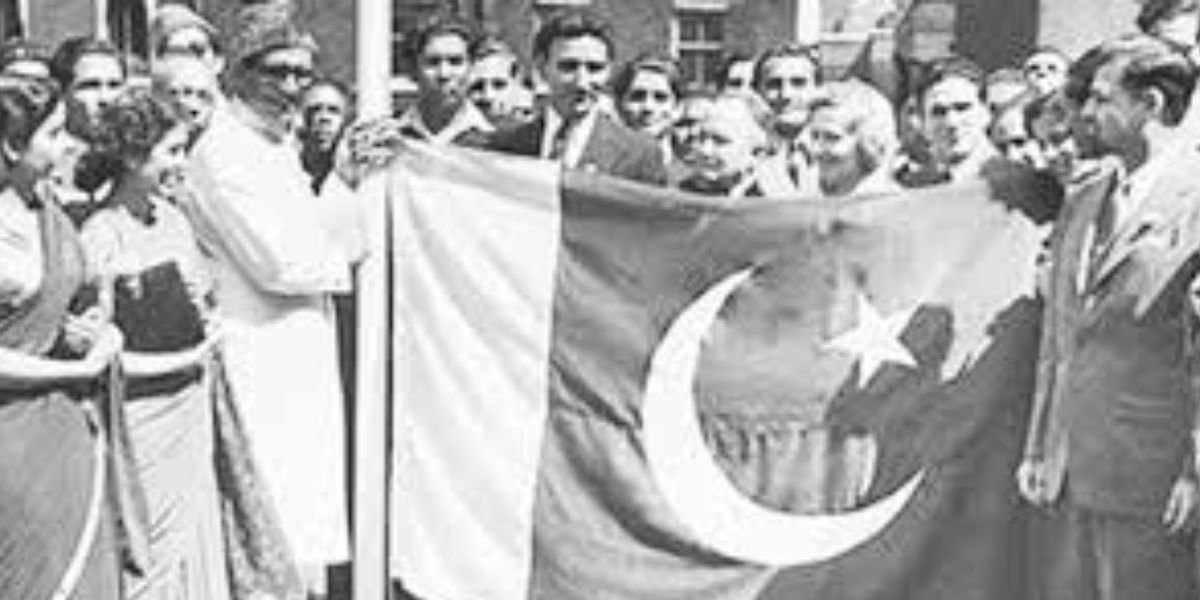
All these factors, along with the ones mentioned in the beginning, created an atmosphere that made Pakistan an inevitable reality.
The author is a political analyst based in Malakand and can be reached at dawoodawkum7@gmail.com