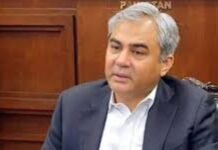

KARACHI: Sindh Chief Minister Murad Ali Shah, in a late night message on Thursday, announced that taraweeh prayers throughout the province will only be observed by the mosque’s administration (4-5 people) in the mosque premises.
The Chief Minister, said that Friday prayers and taraweeh prayers by the people at large must be observed at home.
The chief minister said that he had spoken to President Arif Alvi in this regard and had received his nod for the decision. “The president said it is up to the provincial government,” said Shah.
Shah said taking such “difficult decisions” are a government’s responsibility and this decision was taken especially keeping in mind doctors’ recommendations.
Shah said that on Friday, as had been the practice over the past four Fridays, a strict lockdown would be imposed between 12pm and 3pm, during which movement by people will be banned and congregations of more than five people in mosques prohibited.
Meamwhile, group of Karachi’s leading doctors, belonging to the Pakistan Medical Association, on Wednesday had painted a sobering picture of the on-the-ground realities faced by frontline workers in the fight against the coronavirus.
Urging the government and religious leaders to continue to abide by recommended precautions instead of easing restrictions, they warned a point will otherwise come when they will have to choose between one of two patients to save.
Dr Abdul Bari, who is the CEO of Indus Hospital, had said that the arrival of Ramadan, which had prompted the government to review the measures taken and subsequently ease restrictions, had resulted in a surge in cases.
“This led to great anger and stress in the doctor community as they are the experts in this situation [and must be heard],” said Bari, adding: “All of Karachi’s medical facilities are now almost full to the brim with patients.”
Dr Saad Niaz, a gastroenterologist at the Dow University of Health Sciences, echoing Dr Bari’s sentiments had said wards are “already 80% saturated” and that “there are more patients who are under 60 years of age”.
Dr Niaz had also drawn attention to the fact that more and more doctors are getting affected, with as many as 162 who had already fallen prey to the disease from Sindh.
“We will have great difficulty in the coming days such as refusal to admit patients because of no beds,” he said.
The DUHS doctor explained that the country’s current capacity had so far sustained the volume of patients “because due to a lockdown in place, they were only trickling in”.
“Projected figures stand at 70,000 and if even 10% of those are serious cases, we don’t even have the capacity to accommodate those. There are no ventilators.”
“Our only option is to be aggressive with precautions,” Dr Niaz had stressed.
Read more: Death toll by COVID-19 reaches 237 while infections cross 11,155