ISLAMABAD: Pakistan’s Prime Minister Muhammad Shehbaz Sharif on Thursday reaffirmed his commitment to utilizing all available resources for the welfare and prosperity of the people of Gilgit-Baltistan and Azad Jammu and Kashmir, APP reported.
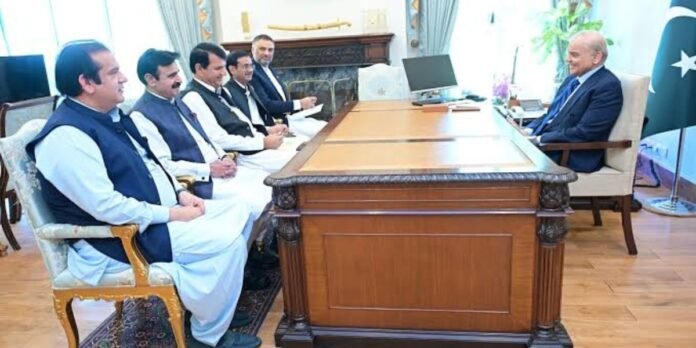
The prime minister expressed these views during a meeting with Minister for Kashmir Affairs and Gilgit-Baltistan, Engr Amir Muqam, who called on him at the PM House.
Minister for Public Affairs Unit Rana Mubashir Iqbal, Minister of State for Power Abdul Rehman Khan Kanju, and Special Assistant to the Prime Minister Talha Barki also attended the meeting.
During the meeting, they discussed the overall political situation in the country.
PM directed the authorities concerned to expedite the public service agenda and ensure that resolving public issues remained the top priority.
ISLMABAD: The Pakistan Peoples Party (PPP) has announced candidates for all constituencies for the 2026 elections in Azad Jammu and Kashmir, according to party sources.
As per a press release, the parliamentary board has been empowered to scrutinize candidates and award party tickets for the elections.
A board’s meeting has been scheduled for June 27, 2026, at 2:00 pm at Zardari House in Islamabad.
For constituencies in Bagh, Sudhnoti, and Poonch, the party awarded tickets to Sardar Qamar Zaman, Faisal Mumtaz Rathore, Sardar Amjad Yousaf, Sardar Saud Sadiq, Sardar Yaqoob, Sardar Muhammad Abid Khan, and Sardar Faheem Akhtar Rabbani.
For Neelum Valley and Muzaffarabad, including Mian Abdul Waheed, Sardar Javed Ayub, Syed Bazil Naqvi, Sardar Mukhtar Ahmad Khan, Mubashir Munir Awan, Ashfaq Zafar, and Dewan Ali Chughtai, party surces said.
According to the party’s candidate list, Afsar Shahid will contest from LA-1 Mirpur-I, Qasim Majeed from LA-2 Mirpur-II (Chakswari), Yasir Sultan from LA-3 Mirpur City, Chaudhry Sohaib Arshad from LA-4 Khari Sharif, and Chaudhry Pervez Ashraf from LA-5 Bhimber-I (Barnala).
In the Kotli Division, Malik Zafar has been nominated for LA-8, Javed Iqbal Bhadhanvi for LA-9, Chaudhry Yasin for both LA-10 and LA-12, and Chaudhry Akhlaq for LA-11.
The party also announced candidates for refugee constituencies, including Chaudhry Asif Gujjar from LA-35 Gujranwala, Chaudhry Ahsan Ismail Gujjar from LA-36 Sialkot, Shaheen Kausar Dar from LA-37 Narowal-Shakargarh, Raja Shahid Iqbal Advocate from LA-38 Gujrat-Wazirabad, Chaudhry Fakhar Zaman from LA-39 Jhelum-Rawalpindi-Attock, Aamir Abdul Ghaffar Lone from LA-40 Karachi, Ghulam Abbas Mir from LA-41 Lahore, Javed Butt from LA-43 Rawalpindi, Muhammad Rashid Islam Butt from LA-44 Rawalpindi-Islamabad-Attock, and Abdul Majeed Khan from LA-45 Khyber Pakhtunkhwa.
The announcement marks the formal launch of the PPP’s campaign for the 2026 Azad Jammu and Kashmir elections.
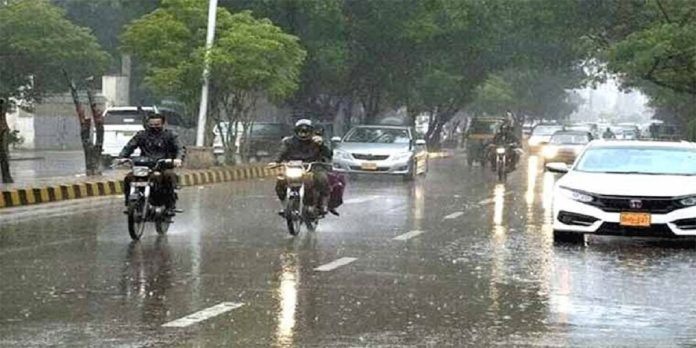
ISLAMABAD: The National Disaster Management Authority (NDMA) has issued a nationwide weather alert, warning that thunderstorms, strong winds, heavy rainfall, urban flooding and glacier related flood risks could affect several parts of Pakistan over the next 12 to 24 hours, with vulnerable mountainous regions facing an elevated threat of flash floods, landslides and Glacial Lake Outburst Floods (GLOFs), APP reported.
As per the National Emergencies Operation Centre (NEOC), the forecast weather pattern is consistent with the seasonal outlook issued three to four months ago.
The NDMA said it has been continuously providing advance warnings and risk assessments to relevant federal, provincial and district authorities to ensure timely preparedness and effective response measures ahead of potential emergencies.
The alert forecasts rain accompanied by thunderstorms, windstorms and dust storms in most parts of the country.
In Punjab and Islamabad, rainfall is expected in Rawalpindi, Murree, Attock, Chakwal, Talagang, Mandi Bahauddin, Sargodha, Gujar Khan, Gujrat, Jhelum, Sialkot, Gujranwala, Hafizabad, Lahore, Faisalabad, Khushab, Jhang, Mianwali, Dera Ghazi Khan, Kasur, Okara, Sahiwal, Multan, Bahawalpur and Rahim Yar Khan.
In Gilgit-Baltistan and Azad Jammu and Kashmir, thunderstorms and rainfall are likely in Gilgit, Skardu, Diamer, Astore, Ghizer, Hunza, Ghanche, Shigar, Neelum Valley, Muzaffarabad, Rawalakot, Bagh, Kotli, Poonch, Hattian, Mirpur and Bhimber.
The NDMA has also issued a separate alert regarding the risk of Glacial Lake Outburst Floods in Gilgit-Baltistan, Khyber Pakhtunkhwa and Azad Kashmir. Authorities warned that GLOF incidents could trigger sudden flooding, landslides and debris flows in vulnerable mountainous areas.
In Khyber Pakhtunkhwa, rainfall with thunderstorms is expected in Chitral, Dir, Swat, Battagram, Mansehra, Abbottabad, Haripur, Swabi, Mardan, Charsadda, Peshawar, Kohat, Parachinar, Karak, Bannu, Dera Ismail Khan and Waziristan.
Balochistan is also likely to receive thunderstorms and rain in Turbat, Kech, Awaran, Khuzdar and Zhob, while parts of Sindh, including Jacobabad, Sukkur, Larkana, Khairpur, Dadu, Ghotki, Kashmore, Shikarpur, Shaheed Benazirabad and Karachi, may experience strong winds, dust storms and rainfall at isolated locations.
The NDMA said district administrations and relevant agencies are maintaining continuous monitoring of vulnerable areas and have been directed to remain on high alert.
Rescue and emergency response teams have also been instructed to ensure readiness for any developing situation.
Tourists and travelers have been advised to avoid unnecessary travel during periods of intense rainfall and to check weather forecasts and road conditions before visiting northern regions, where road closures due to flooding, landslides and debris flows remain a possibility.
The authority urged citizens to stay updated through the official “Pak NDMA Disaster Alert” mobile application and to immediately contact local administration and rescue services in case of any emergency.
The NDMA has directed all provincial and district authorities to remain vigilant and take precautionary measures to mitigate the impact of the expected weather system.
ISLAMABAD: Speakers at an expo emphasised importance of strengthening academia-industry linkages to enhance graduate employability and support innovation-driven economic growth.
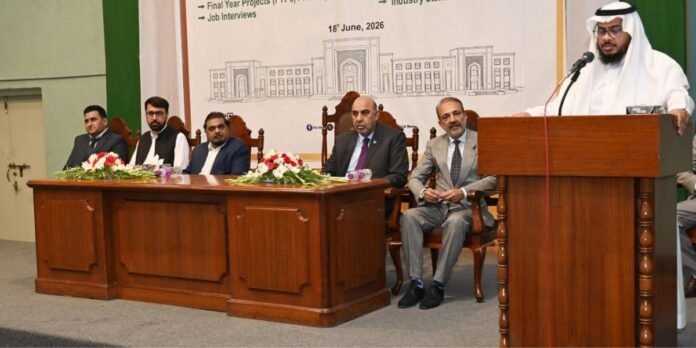
The Career Expo 2026 held at International Islamic University Islamabad (IIUI) brought together academia, industry, researchers, entrepreneurs and students on a common platform to promote innovation, commercialization, entrepreneurship and career development.
President and Acting Rector of International Islamic University Islamabad, Prof. Dr. Ahmed Saad Alahmed, introduced new career pathways for students utilizing his global exposure to market practices the world over as he took keen interest in developing exhibition areas, interacted with students and industry representatives, and appreciated the innovative projects and entrepreneurial initiatives presented during the event
Speaking on the occasion, the university leadership said that the Expo reflected IIUI’s commitment to promoting innovation, entrepreneurship, applied research and industry engagement.
The event provided students with opportunities to showcase their skills, interact with employers and explore pathways for transforming innovative ideas into commercial ventures.
Senior students appreciated the initiative by the president of the university, saying that it will go a long way in defining their career pathways. They said Prof. Dr. Ahmed Saad Alahmed has brought with him an idea of Saudi Vision 2030 for Pakistani youth and students must benefit from his ideas as much as they can.
The Expo was organized under the patronage of Prof. Dr. Ahmad Shuja Sayyed, Vice President (Research & Enterprise), supervised by Prof. Dr. Muhammad Amir, Dean Faculty of Engineering and Technology (FET). Prof. Dr. Ahmad Shuja Sayyed attended the event as the Guest of Honour.
Food insecurity has become a growing issue, especially in metropolitan cities of Pakistan such as Islamabad, Lahore, and Karachi. It is affecting major segments of society, particularly lower- and middle-class communities, which make up a significant portion of Pakistan’s population. Among the most affected are students living in hostels while pursuing higher education.
These students often struggle to access healthy and adequate food, which negatively impacts their health, finances, and academic performance. Many are unable to focus on their studies due to poor-quality hostel meals and recurring health problems. A large number of these students reside in Islamabad, the capital city, because of its educational opportunities and proximity to many towns and smaller cities. However, students who come seeking a better future are often confronted with poor mess food and unhealthy living conditions.
Abdul Wasay, a 19-year-old Mass Communication freshman from Faisalabad studying at NUST Islamabad, currently resides in a private hostel, Karachi Boys Hostel, in Sector H-13. Since joining the hostel, he has faced numerous health problems due to unhealthy and contaminated mess food.
“Hostel meals are often a mixture of dirt particles and inedible food floating in excessive oil and grease. The kitchen staff usually work without head covers, which increases the risk of food contamination. I’m tired of the poor-quality mess food and losing focus on my studies because of recurring health issues. My teachers ask me about my declining grades, but I cannot explain how these health problems are affecting my education,” he said.
He further added that he had frequently found hair strands in his food. Due to these ongoing issues, he eventually started skipping meals.
Another student, Nabi Ahmed, a 19-year-old Civil Engineering student from Multan living in Shah Boys Hostel in H-13, also shared his experience. He explained how repeated exposure to undercooked meat in the hostel mess caused him to develop allergies.
“These allergies have completely changed my eating habits. I had to remove meat from my diet because the quality served in the hostel is unacceptable. I never faced these issues before coming to Islamabad,” he said.
He further explained that he had become so sensitive to meat that even a small amount in his food could cause nausea and severe reactions.
“This should never happen. University students are already under academic pressure and dealing with many challenges. Good food quality is a basic standard that still has not been met,” he added.
Contaminated water is another major problem faced by hostel students. It contributes to illnesses such as hepatitis and also affects students’ skin and hair, leading to skin diseases and hair loss.
Hasnain Habib Bhatti, a 20-year-old student residing in one of NUST’s internal hostels, described his experience.
“My friends who were already living in the hostel warned me about the water, but I ignored them. Soon, I started suffering from stomach aches. At first, I thought it was due to environmental changes, but the pain kept returning. Later, I realized the contaminated water was causing these problems. On top of that, I started experiencing hair fall. Now, unfortunately, these issues have become part of my daily routine,” he said with a sigh.
Dr. Arif Hussain, who previously worked at Benazir Bhutto Hospital Islamabad and is currently serving as a Medical Officer at the Social Security Dispensary in Khewra, explained that food poisoning cases among students are common.
“I handled such cases two to three times during my duty calls. Most patients were accompanied by roommates or hostel wardens. They usually presented symptoms such as diarrhea, vomiting, and abdominal pain. In most cases, the root cause was hostel mess food or meals from local eateries where proper hygiene standards were not followed,” he said.
Dr. Hussain recalled the case of a 19-year-old girl who became severely dehydrated after eating at a local dhaba near her university.
“She had only eaten two or three bites, but even that was enough to upset her stomach. She continued vomiting and had to stay overnight at the hospital,” he explained.
He also described another incident in which several students from the same hostel were brought to the emergency room suffering from food poisoning after eating rice served at lunch.
“We had to create a proper triage system to manage patients according to the severity of their condition,” he said.
Dr. Hussain also pointed out that many students delay seeking medical treatment because they try home remedies to save money, which often worsens their condition.
He stressed that hostel administrations must strictly follow hygiene SOPs in kitchens and avoid using substandard food items simply to reduce costs.
“These practices put students’ lives at risk just to save a small amount of money,” he warned.
The discussion highlighted how serious these health issues can become, often leading to hospitalization. At the same time, many students hesitate to spend money on medical treatment because they are already struggling financially.
Another overlooked issue is the financial burden caused by poor hostel food. Since students are dissatisfied with hostel meals, many rely on food deliveries or dining out, forcing them to spend significantly more money. Most students live on limited allowances, and a large portion of their budget goes toward finding healthier food options. This increases financial pressure not only on students but also on their families, who are already burdened with tuition fees and household expenses.
Zaib Batool, a 21-year-old third-year Sociology student at Quaid-e-Azam University, shared her concerns.
“The unhealthy hostel food often forces me to spend extra money outside. When there is no decent meal available, I order food, buy instant noodles, biscuits, fruits, or sometimes skip meals entirely,” she said.
She further explained: “These alternatives affect both my budget and my health. Instant noodles, snacks, and fast food are easily accessible, but consuming them regularly creates more health problems. Ordering food is also extremely expensive, especially while living in the capital city.”
According to a survey conducted among students, the most common suggestions for improvement included better food quality, balanced weekly menus with healthier options, regular student feedback, basic cooking facilities, fresh fruit and milk in meals, and reducing excessive oil and spices.
An example of comparatively better facilities can be found in NUST’s internal hostels. During a conversation with a hostel in-charge, he explained:
“We provide a variety of meals according to a weekly menu and ensure cleanliness. Food is properly covered to maintain freshness and hygiene. Kitchen staff are required to wear gloves and head covers.”
He also stated that utensils are thoroughly washed and dried, adding that most students were satisfied with the mess quality.
The youth are a valuable asset to the nation and deserve proper facilities and healthy living conditions. These issues require immediate attention so that students can study in a safe and supportive environment. After all, prevention is always better than cure.
The author is entering her fifth semester of Mass Communication at the National University of Sciences and Technology (NUST). She highlights issues faced by students, and expresses her concerns through stories inspired by real-life student experiences.
She can be reached via Gmail at: [raaziazainab355@gmail.com](mailto:raaziazainab355@gmail.com)
ISLAMABAD: The Oil and Gas Regulatory Authority has increased liquefied natural gas (LNG) prices by up to 28 percent for May and issued a new price notification for consumers on the Sui Northern and Sui Southern gas networks.
Under the new rates, the LNG price for Sui Southern has been set at $16.04 per million British thermal units (MMBtu), an increase of $3.51 per MMBtu, the notification said.
The regulator also raised LNG prices on the Sui Northern Gas Pipelines Limited system by $3.40 per mmBTU.
Under the revised rates, the new LNG price for Sui Northern consumers has been set at $16.98 per mmBTU.
The revised prices will be applicable for the month of May, according to the OGRA notification.
Islamabad: ACT Alliance Pakistan has appreciated the Government of Pakistan, Prime Minister Muhammad Shehbaz Sharif, and the Federal Board of Revenue for continuing enforcement against the illegal tobacco industry, saying that firm and consistent action against tax evasion is essential for protecting Pakistan’s revenue base, formal businesses, and investor confidence.
In a statement, ACT Alliance’s Country Director Mubashir Akram said that the government’s recent enforcement posture against illegal cigarette manufacturing, non-duty-paid products, smuggled brands, and violations of the Track and Trace System reflects a much-needed seriousness in defending the documented economy.
“The illegal tobacco industry steals more than Rs. 300 billion from Pakistan’s tax revenue every year. The actual size of the illegal cigarette trade may be three to four times larger than the tax theft itself because the business includes manufacturing, transport, warehousing, wholesale distribution, retail sales, cash circulation, and protection networks,” Akram said.
He said Pakistan cannot afford to treat illegal cigarettes as a routine market violation. “This is organized economic sabotage. Every illegal cigarette pack sold without tax damages the national exchequer, weakens legal businesses, and undermines the credibility of the state’s enforcement system,” he said.
Akram said ACT Alliance Pakistan fully recognizes the importance of the government’s recent actions and believes these efforts must be sustained without interruption. “The Prime Minister and the FBR deserve appreciation for pushing enforcement in a difficult market where illegal operators have enjoyed space for far too long. The challenge now is continuity. Enforcement must not come in waves. It must become a permanent discipline of the state,” he said.
He added that enforcement against the illegal tobacco industry should be seen as part of a much broader national effort against all forms of illegal economy, including smuggling, counterfeiting, under-invoicing, non-duty-paid goods, and tax evasion in major sectors.
According to Akram, consistent action across the illegal economy can add enormous value to Pakistan’s fiscal position.
“If Pakistan keeps pressure on illegal businesses across sectors, the country can recover very large sums in tax revenue over time. This can add tens of billions of dollars to national tax income, improve documentation, and increase the circulation of lawful capital in the market,” Akram said. “Money that currently moves through illegal and undocumented channels must return to the formal economy, where it can support investment, employment, taxation, and growth.”
He said the enforcement campaign is also directly linked to Pakistan’s ability to attract domestic and foreign investment. As the world’s fifth-largest country by population, Pakistan offers a major consumer market, a young labor force, and broad business opportunities. However, investors look beyond population size. They also study whether the state can enforce rules, protect compliant businesses, and prevent illegal operators from capturing market share.
“Domestic and foreign investors are watching whether Pakistan rewards legality or allows illegality to dominate. If the state protects tax-paying businesses, investors will see Pakistan as a serious market. If illegal operators can use pressure to block enforcement, investors will read that as a warning,” Akram said.
He expressed concern over media reports that those involved in the illegal cigarette trade may attempt to use political, administrative, or other forms of influence against FBR officials and law enforcement agencies to stall or halt enforcement operations. “This would be extremely damaging. If illegal cigarette operators succeed in pressuring the system, it will weaken the standing of the government and damage Pakistan’s reputation before those responsible for bringing foreign direct investment into the country,” Akram said.
“No investor wants to enter a market where tax evaders can challenge enforcement through influence. That would be viewed as erosion of the state’s authority against the illegal economy.”
Akram urged the government to protect FBR officers, Customs teams, Inland Revenue officials, and other enforcement personnel from pressure and intimidation. He said officials acting against illegal businesses are not merely conducting raids, they are defending Pakistan’s economic sovereignty.
“These officers are standing between Pakistan’s tax base and the illegal cigarette mafia. They should receive full institutional backing, political support, and public recognition,” he said.
ACT Alliance Pakistan called for continued action against illegal cigarette factories, undeclared tobacco processing, non-TTS products, smuggled cigarette brands, illegal warehouses, and retail outlets selling non-duty-paid products. It also urged stronger coordination among FBR, Pakistan Customs, Inland Revenue, provincial administrations, police, Rangers, and district authorities.
“Pakistan loses trillions of rupees every year because of the illegal economy. The cigarette sector alone shows how damaging this problem has become. The government must not step back. It must move forward with greater force, better coordination, and complete resolve,” Akram said.
He concluded by saying that Pakistan’s message to investors must be clear. “The state stands with legal business, not with tax evaders. Compliance will be protected. Illegal trade will be punished. That is the only way Pakistan can strengthen revenue, rebuild confidence, and unlock its true economic potential.”
ISLAMABAD: Deputy Prime Minister and Foreign Minister Muhammad Ishaq Dar Friday said that the government had been successful in the repatriation of 11 Pakistani nationals, alongside 20 nationals of brotherly country Iran, through Singapore, who were aboard vessels seized in the high seas by the United States.
In a post on X, he said, “All individuals are in good health and high spirits. The welfare and well-being of Pakistanis abroad, particularly those in distress, remains our government’s highest priority. All individuals have reached Bangkok from Singapore and already boarded the flight scheduled to reach Islamabad later tonight. Our Irani brothers will then be facilitated to return to their homeland,” he added.
He said, “My sincere appreciation to the Foreign Minister Vivian Balakrishnan and the Prime Minister and the Government of Singapore for their continued support and engagement throughout this process, extended at my request. I also thank Foreign Minister of Iran, brother Abbas Araghchi, for reposing trust in Pakistan for the repatriation of our Iranian brethren.”
He said, “I extend gratitude to Government of the United States and Secretary Marco Rubio for close coordination in facilitating the smooth return of 31 Pakistani and Irani nationals, and to the Government of Thailand for facilitating, at our request, the transit of these individuals through Bangkok.”
“My heartfelt thanks to my colleagues at the Ministry of Foreign Affairs, Ministry of Interior, and Pakistan’s Missions in Singapore and Thailand for their timely coordination and dedicated efforts, ensuring the smooth, safe, and successful completion of the repatriation process,” he added.
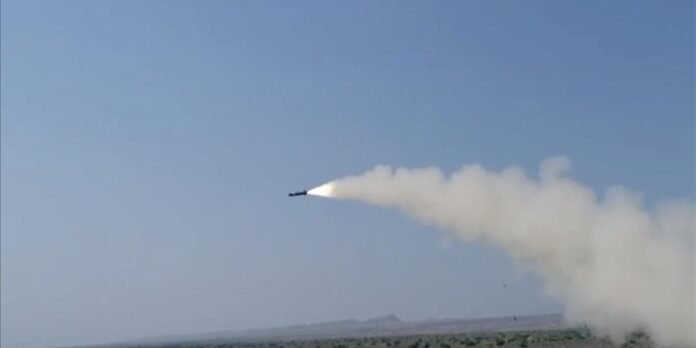
ISLAMABAD: Pakistan has successfully conducted a training launch of the indigenously developed Fatah-4 ground-launched cruise missile, according to the military’s media wing.
As per statement issued by the Inter-Services Public Relations (ISPR), the test was aimed at evaluating the missile’s technical performance and improving the operational readiness of troops.
The ISPR said that the Fatah-4 is equipped with advanced avionics and state-of-the-art navigational systems.
The missile system is capable of engaging long-range targets with high precision, reflecting Pakistan’s growing indigenous defence capabilities.
Military officials said the training launch was conducted by the Pakistan Army Rocket Force Command to validate the technical parameters of different sub-systems integrated into the weapon system.
The exercise was conducted to enhance the operational efficiency of troops while also assessing the missile’s improved accuracy and survivability features, according to the ISPR.
The military described the exercise as part of ongoing efforts to strengthen the operational preparedness of Pakistan’s strategic forces.
The launch was witnessed by senior officers from the Pakistan Army Rocket Force Command, as well as scientists and engineers associated with the missile’s development programme.
The ISPR said Asif Ali Zardari, Shehbaz Sharif, Chief of Army Staff, Chairman Joint Chiefs of Staff Committee, Chief of Naval Staff, and Chief of Air Staff congratulated the team involved in the successful launch.
ISLAMABAD: President Asif Ali Zardari on Wednesday conferred Pakistan’s civil awards on various personalities including the Pakistani nationals and foreigners in recognition of their outstanding services in various fields, APP reported.
The investiture ceremony was organised at the Aiwan e Sadr in which different personalities were decorated with the civil awards in recognition of their services in health, education, literature, journalism, public, research, diplomatic matters, sports and economy.
The ceremony was attended by First Lady Aseefa Bhutto, the federal ministers, Chairman Senate, parliamentarians, members of the civil society, diplomats, media and a large number of people.
Nishan-i-Imtiaz (posthumous) was conferred upon late Nawabzada Nasrullah Khan, and Irfan ul Haq Siddiqui in recognition of their outstanding services to the country.