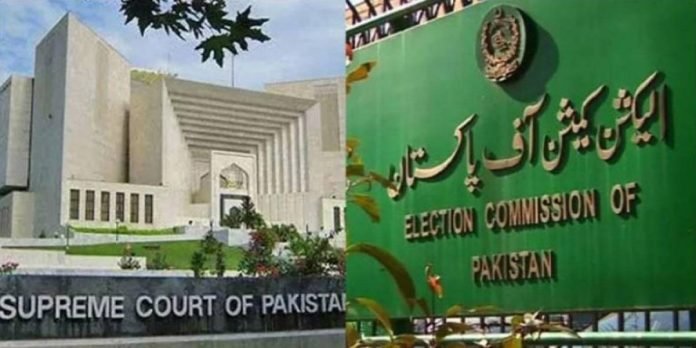
ISLAMABAD: The Election Commission of Pakistan (ECP) should conduct delimitation of constituencies in a transparent manner, Chief Justice of Pakistan (CJP) Umar Ata Bandial said on Tuesday.
“The Commission should conduct delimitation in a transparent way,” the top judge said while hearing petitions against delimitation of provincial constituencies PS 7, 8, and 9 Shikarpur. The delimitations were challenged in the apex court in 2018.
The CJP, during the hearing, further said if an official modified the circle even slightly, it could affect the votes of a candidate. He said delimitation of constituencies were a matter of public interest.
The top judge inquired when were the general elections being held. Director General (Law) Muhammad Arshad shrugged his shoulders while expressing his ignorance.
The chief justice then said as no date for the elections had been decided, the election commission should resolve all issues before the polls.
“This matter is more sensitive in Sindh. Grievances often come forth that delimitations in the province are not correct,” he added.
After hearing the arguments, the SC referred the matter back to the electoral watchdog.
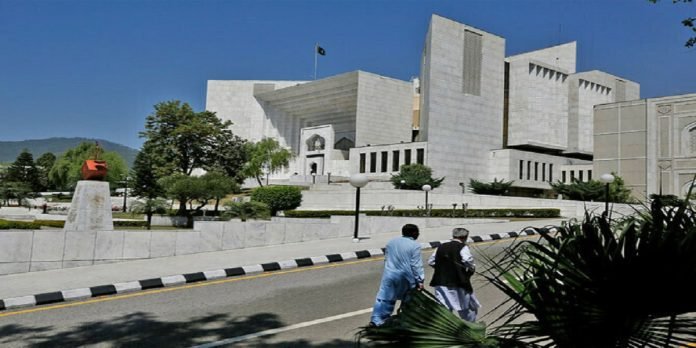
ISLAMABAD: The Supreme Court of Pakistan (SCP) on Tuesday dismissed the contempt petitions against former federal minister Ahsan Iqbal and former Tehreek-e-Labaik Pakistan (TLP) chief Khadim Rizvi.
The case was heard by a 2-member bench led by Chief Justice of Pakistan Justice Umar Ata Bandial.
The Chief Justice stated that it is the court’s responsibility to determine if contempt of court has occurred, and in this case, there is no ground to pursue it further.
He emphasised that no one is above the law and that contempt proceedings are the authority of the Supreme Court of Pakistan. The petitioner argued that no person or institution is above the constitution and the law, to which the Chief Justice responded that contempt of court should not be used casually and that serious matters would be considered accordingly. Later, the court dismissed the petition.
The court also dismissed a contempt petition against former Tehreek-e-Labbaik Pakistan (TLP) chief Khadim Rizvi, as both the petitioner and Rizvi had passed away. The case was dismissed due to the death of the parties involved.
ISLAMABAD: The Anti-Terrorism Court (ATC) of Islamabad has rejected the bail of PTI Chairman Imran Khan in three different cases impending in the court.
ATC Judge Abul Hasnat Zulqarnain pronounced a reserved verdict on the issues of three cases registered against the PTI chairman.
Out of the three cases against Imran Khan, two were registered in the Khanna police station and the third in Bhara Kahu police station.
The court dismissed the bails of Imran Khan due to his non-appearance.
On August 8, the Anti-Terrorism Court of Lahore had accepted PTI Chairman Imran Khan’s application for one-day exemption from appearance, and also extended his interim bail till August 11 in at least five cases of May 9 vandalism.
The court had announced a reserved verdict.
The application was filed on behalf of Imran Khan’s lawyer in the case of vandalism and arson at the Lahore Corps Commander House on May 9.
The petitioner’s lawyer pleaded that the PTI chief has been arrested.
Lawyer Salman Safdar hoped his client’s sentence would be suspended in a week.
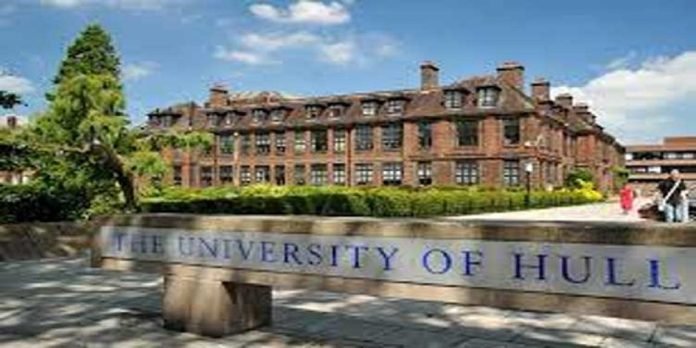
LONDON: Additional District and Sessions Judge Islamabad, Humayun Dilawar who handed down a sentence to former prime minister and Pakistan Tehreek-e-Insaf (PTI) chief on charges of concealing assets and corrupt practices, remains enrolled in the University of Hull’s programme, confirmed by university official.
Reports have been doing rounds on social media, suggesting that the Pakistani judge’s participation had been terminated due to an online campaign by the former ruling party.
However, as per the media reports, the university officials said that these claims were baseless and lacking evidence. The university clarified that Judge Dilawar is continuing his scheduled coursework and will remain at the university until the programme concludes.
Earlier, the university explained that it has been offering human rights and rule of law training for Pakistani judges since 2014. The participants are selected by their respective high courts in Pakistan.
Other judicial officers participating in or visiting the Hull University program include Zeba Chaudhry, Kamran Basharat, Shoaib Bilal, Abida Sajjad, Saima Iqbal, Ayesha Shabbir, Saqib Jawad, Rizwan Qureshi, and Sanam Bukhari.
“The current group of participants has been chosen by the Islamabad High Court, the Peshawar High Court, and the Supreme Court of Pakistan. The university has no involvement in the selection of judges,” the statement noted.
Judge Humayun Dilawar, who sentenced the PTI chairman to a three-year prison term in the Toshakhana case, traveled to London after delivering the verdict.
Following the verdict, the PTI supporters in the UK expressed their intent to confront Judge Dilawar.
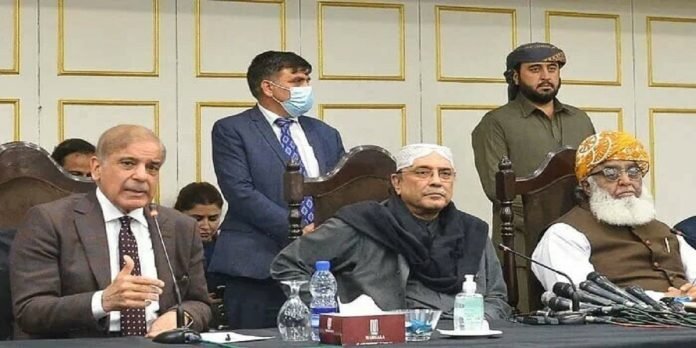
ISLAMABAD: In a significant development amidst heightened political tensions, the Pakistan Democratic Movement (PDM) and its allied parties have granted the right to Prime Minister Shehbaz Sharif over the nomination of caretaker setup.
This crucial decision was made during a video conference coalition partners meeting, convened to deliberate on the caretaker setup.
Sources privy to the matter said several prominent candidates were considered for the position of caretaker prime minister.
Among the strong contenders are Shahid Khaqan Abbasi, a seasoned politician known for his previous role as prime minister, and Hafeez Sheikh, a respected economist with vast experience in economic affairs. Aslam Bhutani, an esteemed civil servant, and Fawad Hasan Fawad, a prominent bureaucrat, were also among the names discussed during the virtual meeting.
Notably, the name of Zulfikar Magsi, a seasoned politician with a reputation for maintaining political balance, was also brought up during the deliberations.
All the names for the caretaker prime minister have now been submitted to Prime Minister Shehbaz Sharif, who will consult with the opposition leader, Raja Riaz, to finalise the selection.
Prominent political figures, including PDM chief Maulana Fazlur Rehman and heads of other allied parties, participated in the virtual meeting.
The discussions took place just a day after Prime Minister Shehbaz Sharif hinted at the possibility of dissolving the National Assembly on August 9.
Earlier on Thursday, Prime Minister Shehbaz Sharif addressing a speech at the dinner in honor of the lawmakers of parliament and said that efforts underway for such a caretaker setup that would be ‘acceptable to all’.
PM Shehbaz said that when PDM government took over the government in difficult times and ‘there were dangers everywhere’.
“The country was close to bankruptcy,” the prime minister said.
“In spite of all the criticism in 15 months, we saved the state and our conscience is satisfied that the country was saved from crisis by sacrificing politics,” Prime Minister said.
ISLAMABAD: In line with a short order issued by the Islamabad High Court (IHC), a district and sessions court in the federal capital resumed hearing the Toshakhana case filed against former prime minister Imran Khan.
Earlier today, the IHC overturned the trial court’s ruling declaring the Toshakhana case against the Pakistan Tehreek-e-Insaf (PTI) chairman maintainable. In his short order, IHC Chief Justice Aamer Farooq instructed the local court to decide the matter again after hearing the case.
At the outset of today’s hearing, the local court’s judge Humayun Dilawar asked Barrister Gohar Ali — Imran Khan’s counsel — about updates on the case in the high court.
“After approving the plea relating to the maintainability matter, the high court again sent the case to the sessions court,” replied the lawyer.
He pleaded with the court to grant an exemption to his client from personnel appearance.
Meanwhile, Election Commission of Pakistan’s (ECP) lawyer Amjad Parvez said that the trial court had issued notices to the relevant parties in the reference filed by the election watchdog for the trail of the deposed prime minister — who was removed from the office via a no-confidence motion in April last year — next week, adding that the IHC did not issue stay order over the matter.
“The PTI chairman’s requests for transfer of case has also been rejected,” Parvez added. In addition to this, directions have been given to the Federal Investigation Agency (FIA) regarding the fake Facebook posts, he said.
“And what about those who have floated fake Facebook posts?” the judge asked.
“You fall in love with those who wave Facebook posts,” the ECP counsel quipped, leaving the court filled with laughter.
The ECP’s counsel has completed its arguments, the judge observed and directed Khan’s lawyer to give his arguments at 8:30am tomorrow (Friday).
Meanwhile, the court summoned the PTI chairman in his personal capacity tomorrow and adjourned the hearing. The court will reserve its verdict in the case if the defendant’s counsel does not join the hearing tomorrow, warned the judge.
IHC voids sessions court’s verdict
Earlier today, the IHC declared the sessions court’s maintainability verdict in the Toshakhana case “void”.
IHC Chief Justice Aamer Farooq gave the court’s ruling on eight petitions of the PTI chairman after arguments by both parties — which were completed yesterday while the judgment was reserved.
The court, however, rejected the PTI chairman’s request to transfer the case to another court and said that Additional Sessions Judge Humayun Dilawar would hear the case.
The IHC today also issued a notice against the court’s decision to reject the list of witnesses.
Regarding the district and session judge’s alleged Facebook post, the court directed the Federal Investigation Agency (FIA) to probe into the issue.
On October 21, 2022, the ECP maintained that the former prime minister made “false statements and incorrect declarations” about the gifts and disqualified him under Article 63(1)(p) of the Constitution.
Subsequently, the election watchdog moved the sessions court to the federal capital. It sought criminal proceedings against the PTI chief for allegedly misleading the ECP regarding gifts received from foreign dignitaries while he was in office.
The PTI chairman was indicted in the case on May 10, while his petition to declare the case inadmissible was rejected by the court.
On July 4, the IHC overturned the same ruling and directed the sessions court to hear the petitioner and decide the matter within seven days.
On July 8, ADSJ Humayun Dilawar declared the Toshakhana case against Khan as maintainable, which was again challenged in the IHC.
Meanwhile, the trial continued at the court and was about to conclude soon.
During the proceedings, Khan’s lawyers also accused the presiding judge of bias on the basis of his Facebook posts and sought the transfer of the case.
On August 2, the trial court also rejected the PTI chairman’s witnesses, stating that he failed to prove their “relevance” in the criminal proceedings against him. It was also challenged in the high court.
Explanation for rehearing
Citing the repeated adjournments sought by Khan during the duration of the trial, the bench ruled that there was while the case should be reheard, there was no need for the case to be transferred to a different court.
“The order […] shows that a number of opportunities were provided to the petitioner to address arguments but adjournments were sought, hence the matter was decided in the absence of learned counsel for the petitioner.”
“…so the learned counsel for the petitioner is correct in saying that he has been condemned unheard and it would be only appropriate to remand the matter back to the Trial Court for decision afresh,” the order mentioned.
The order mentioned that it is not essential that the matter be sent to a different judge, emphasising that remitting the matter to a different jurist can be regarded as a matter of propriety and not a principle of law.
“However, in the instant case even remanding the matter to a different court is not mandated.”
The Supreme Court had earlier in the day dismissed the ex-prime minister’s petition against trial proceedings pertaining to the Toshakhana case following his withdrawal of the said plea.
The three-member bench hearing the case, led by Justice Yahya Afridi and comprising Justice Hasan Azhar Rizvi and Justice Musarat Hilali, heard Khan’s petition against the Toshakhana case.
“The trial court cannot decide on the Toshakhana case until the final decision of the High Court,” the bench ruled.
Earlier this week, the apex court had turned away Khan, asking him to await a verdict from the IHC.
“We believe that the high court can issue a better order than us. It is possible that it will give the order to stop the trial tomorrow,” he had said on Wednesday.
Under the rules governing Toshakhana — a Persian word meaning “treasure house” — government officials can keep gifts if they have a low worth, while they must pay a dramatically reduced fee to the government for extravagant items.
The Toshakhana has been under a microscope ever since the emergence of the allegations that Khan purchased the gifts he received as prime minister at throwaway rates and sold them off in the open market for staggering profits.
The 70-year-old cricketer-turned-politician was accused of misusing his 2018 to 2022 premiership to buy and sell gifts in state possession that were received during visits abroad and worth more than Rs140 million ($635,000).
The gifts included watches given by a royal family, according to government officials, who have alleged previously that Khan’s aides sold them in Dubai.
The gifts included seven wristwatches, six made by watchmaker Rolex, and the most expensive a “Master Graff limited edition” valued at 85 million Pakistani rupees ($385,000).
The election commission’s order had said Imran stood disqualified under Article 63(1)(p) of the Constitution.
ISLAMABAD: Jane Marriott, British High Commissioner-designate to Pakistan, arrived in Islamabad to take up her new posting at British High Commission Islamabad.
Jane arrives at an important time for UK-Pakistan relations, with a significant uplift in UK aid spending in Pakistan that focused on strengthening climate resilience and reducing humanitarian risks.
Last month, the UK also launched the new Developing Countries Trading Scheme, which will help Pakistan to boost exports by reducing tariffs and simplifying trade terms.
On arrival in Islamabad, she said, “I am delighted to be here in Pakistan, a country that deeply matters to, and has a long-standing relationship with, the UK. With over 1.6 million people of Pakistani heritage in the UK making up every part of British society, we have a special and ever-growing special bonds.
“Our friendship stems from our shared history and values, deep people-to-people ties, growing trade links and a renewed development partnership. I will be working hard to continue to expand these.
“With the climate emergency a growing threat to health and livelihoods across the world, I have a particular interest in ensuring the bilateral relationship between our countries is a green, sustainable one, she added.”
It is pertinent to mention here that Jane joined the UK Government’s Foreign, Commonwealth and Development Office in 2001. She was previously posted as British High Commissioner to Kenya from September 2019 to June 2023, and has served as British Ambassador to Yemen. She has also been posted to the USA, Iraq, Iran and Afghanistan as well as heading the UK’s Joint International Counter Terrorism Unit.
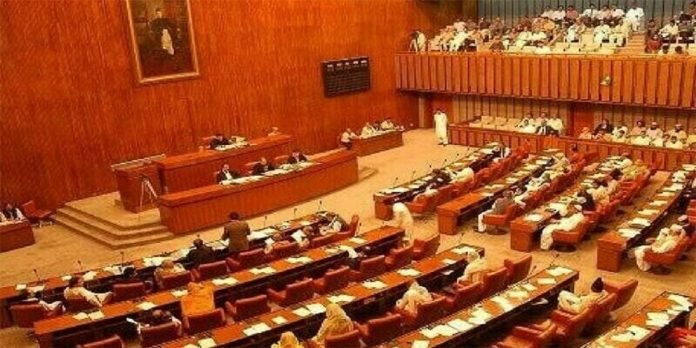
ISLAMABAD: A session of the Upper House (Senate) is set to be held at Parliament House at noon today, taking up several reports and bills for approval.
A 20-point agenda is likely to be on the table in the Senate.
According to the agenda of the session released, an amendment bill regarding prevention of violent extremism is on the agenda, as well as one for the establishment of a Pakistan Aviation Authority.
The House is also expected to approve the Pakistan Air Safety Investigation Amendment Bill, while the Pakistan Crescent Sighing Amendment Bill is also expected to be presented for approval.
Moreover, reports of several standing committees will also be presented in the Upper House.
‘Dangerous bill’
Earlier in day, Senator Mushtaq Ahmed of the Jamaat-e-Islami had expressed fears that the government may not send the bill to the committee concerned, allow debate on it and have it bulldozed during the session.
He called the bill dangerous, as he claims it will not end violent extremism, but increase it.
He also called sections 5 and 6 of the bill draconian, adding it is meant to ban the Pakistan Tehreek-e-Insaf.
The senator said the government’s attempts to eliminate or minus any political leader or party through state force are wrong.
He demanded the government send the bill to the committee concerned at all costs and not flour rules and regulations.
“Don’t make parliament a rubber stamp and redundant,” Senator Ahmed said.
ISLAMABAD: Islamabad Capital Territory (ICT) Administration announced two day official holiday for the capital city during the official visit of Chinese Vice Prime Minister, He Lifeng to Pakistan in connection with the celebrations of 10th anniversary of China –Pakistan Economic Corridor (CPEC).
Schools, colleges, and offices in Islamabad will remain closed for two days, on July 31 and August 1 (Monday and Tuesday), stated in a notfication issued by district administration.
Moreover, all private entities, companies; all markets/shops; all commercial banks will remain closed, the notification mentioned.
The announcement comes as He Lifeng, Vice Premier of China and Member of the Politburo of the Central Committee of the Communist Party, is set to visit Pakistan from July 30 to August 1.
During the visit, Vice Premier Lifeng — also a Special Envoy of President Xi Jinping — will attend the 10th-anniversary celebrations of the China –Pakistan Economic Corridor (CPEC) and call on the president and the prime minister.
Meanwhile, The disrict administration also closed important trails on the scenic Margalla Hills in Islamabad for hikers for two days.
The closure is part of the arrangements made for the visit of the distinguished Chinese Vice Premier, who is expected to arrive in the capital on July 31.
According to an official notification, Trail 3 and Trail 5 will be closed on July 31 and August 1, respectively, to ensure the smooth movement and security of the high-level foreign delegation.
ISLAMABAD: In honor of the ten-year anniversary of the China-Pakistan Economic Corridor (CPEC), important trails on the scenic Margalla Hills in Islamabad will be closed for two days.
The closure is part of the arrangements made for the visit of the distinguished Chinese Vice Premier, who is expected to arrive in the capital on July 31.
According to an official notification, Trail 3 and Trail 5 will be closed on July 31 and August 1, respectively, to ensure the smooth movement and security of the high-level foreign delegation.
The closure coincides with a local public holiday in Islamabad, leading to the suspension of all government and private educational institutions, offices, companies, and banks.