ISLAMABAD: President Asif Ali Zardari on Wednesday conferred Pakistan’s civil awards on various personalities including the Pakistani nationals and foreigners in recognition of their outstanding services in various fields, APP reported.
The investiture ceremony was organised at the Aiwan e Sadr in which different personalities were decorated with the civil awards in recognition of their services in health, education, literature, journalism, public, research, diplomatic matters, sports and economy.
The ceremony was attended by First Lady Aseefa Bhutto, the federal ministers, Chairman Senate, parliamentarians, members of the civil society, diplomats, media and a large number of people.
Nishan-i-Imtiaz (posthumous) was conferred upon late Nawabzada Nasrullah Khan, and Irfan ul Haq Siddiqui in recognition of their outstanding services to the country.
ISLAMABAD: The State Bank of Pakistan (SBP) said on Wednesday it had received $1.3 billion from the International Monetary Fund (IMF) following the lender’s approval of the latest disbursements under two financing arrangements.
In a post on X, the central bank said, “The IMF Executive Board completed the third review under the Extended Fund Facility (EFF) in its meeting held on May 8 and approved the disbursement of SDR 760 million for Pakistan. Furthermore, the IMF Executive Board has also approved the disbursement of the second tranche of SDR 154 million under the Resilience and Sustainability Facility (RSF).”
“Accordingly, SBP has received SDR 914 million (equivalent to about US$ 1.3 billion) under the EFF and RSF in value May 12 from the IMF,” it said.
It further added that the amount would be reflected in the country’s foreign exchange reserves for the week ending on May 15.
Earlier, the IMF approved the latest review of Pakistan’s economic reform programme, paving the way for the release of nearly $1.1 billion under the Extended Fund Facility (EFF) and an additional $220 million through the Resilience and Sustainability Facility (RSF). With this latest tranche, total disbursements under both programmes have climbed to approximately $4.8 billion.
While announcing the funding approval, the IMF said the support would help strengthen Pakistan’s short-term economic position, but cautioned that the external outlook remains uncertain. In its post-review statement, the Fund warned that Pakistan’s recent economic gains could still face risks from rising global instability, particularly due to spillover effects from the ongoing conflict in the Middle East.
“The authorities’ strong policy implementation, despite the Middle East conflict, has helped preserve economic stability and improve financing as well as external sector conditions,” the IMF said.
According to IMF, shocks stemming from the Middle East war highlighted the need to preserve strong policies and continue structural reforms aimed at achieving durable long-term growth.
IMF Deputy Managing Director and Acting Chair Nigel Clarke also stressed the risks arising from the external situation and the need for continued policy discipline. “Amid a more challenging and highly uncertain external environment since the onset of the war in the Middle East, Pakistan needs to maintain strong macroeconomic policies while accelerating reform efforts, which are critical to managing further shocks and fostering higher sustainable medium-term growth,” he said.
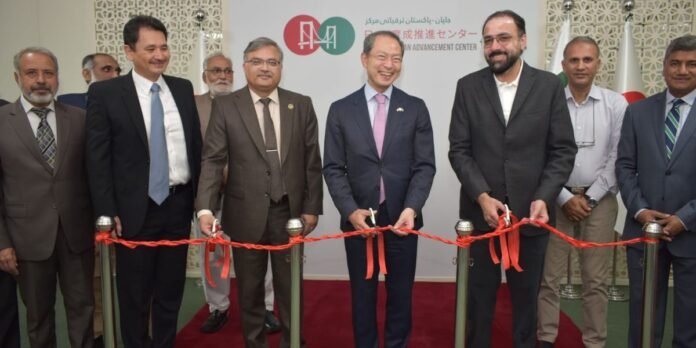
ISLAMABAD: Japan government donated over 168 English-language books to Allama Iqbal Open University (AIOU) Islamabad on Monday under the “Read Japan Project, while also inaugurating a new center aimed at promoting academic, cultural and employment links between the two countries.
The books, donated through the Nippon Foundation’s “Read Japan Project” launched in 2008, cover subjects including Japan’s history, politics, economy, security, international relations, philosophy, literature, language and culture.
Akamatsu Shuichi, Ambassador of Japan to Pakistan, presented the diverse collection spanning Japan’s history, politics, economy, security, international relations, philosophy, literature, language, culture and more to Prof. Dr. Nasir Mahmood, AIOU Vice-Chancellor during a hand over ceremony held on May 12.
Ambassador Akamatsu congratulated students and faculty, stating, “books are bridges of knowledge that allow you to explore the rich tapestry of Japan, understand our perspectives, and even inspire new ideas and innovations here in Pakistan.” He praised JPAC as a key step to strengthen Japan-Pakistan ties in terms of education, employment, and entrepreneurship.
In his remarks, Prof. Dr. Nasir Mahmood expressed sincere gratitude to the Nippon Foundation and the Embassy of Japan, noting the donation of books would help students learn about Japan and enhance bilateral relations. He expressed his determination to cultivate outstanding students and strengthen relations with Japan through JPAC.
Federal Minister for Overseas Pakistanis and Human Resource Development, Chaudhry Salik Hussain, also attended the event and praised JPAC’s initiatives, expressing hope they would further promote friendship and cooperation between Pakistan and Japan.
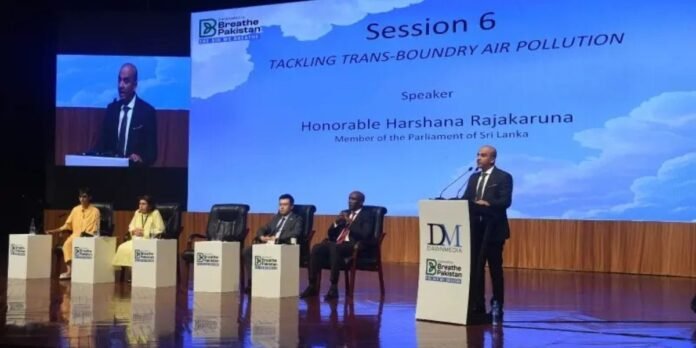
ISLAMABAD: The second edition of the Breathe Pakistan International Climate Change Conference, held by DawnMedia, concluded in Islamabad on Thursday after two days of discussions on climate resilience, climate finance and equitable policymaking.
The conference brought together policymakers parliamentarians, international organisations and climate experts to examine Pakistan’s climate vulnerabilities and the reforms needed to strengthen climate resilience.
Across both days, speakers stressed that climate change was no longer solely an environmental issue, but a broader economic and development challenge requiring coordinated implementation, regional cooperation and long-term planning.
Discussions highlighted the need for climate-responsive urban planning, investment in energy infrastructure, stronger inclusion of vulnerable communities in policymaking, and greater regional collaboration on shared environmental challenges.
The day featured addresses and discussions involving Khyber Pakhtunkhwa Sohail Afridi, Punjab Senior Minister Marriyum Aurangzeb, Romina Khurshid Alam, Mohamed Yahya, Shehzad Roy, Sharmila Faruqui, representatives from the UN, UNEP, WHO, Unicef, IFAD, IRENA, IEEFA, SECP, and others.
In her closing remarks, Dawn CEO Nazafreen Saigol Lakhani thanked speakers, partners, guests and the media for contributing to the conference and helping bring visibility to climate issues.
She said the discussions over the two days reinforced that climate change was now a present reality, with Day 1 focusing on its impact on agriculture, water systems and livelihoods, while Day 2 centred on implementation, resilience and equitable climate action.
Highlighting the role of journalism in climate discourse, she said: “At DawnMedia, we recognise that the role of media in this space is essential. Breathe Pakistan is not just about convening conversations but sustaining them and driving accountability.”
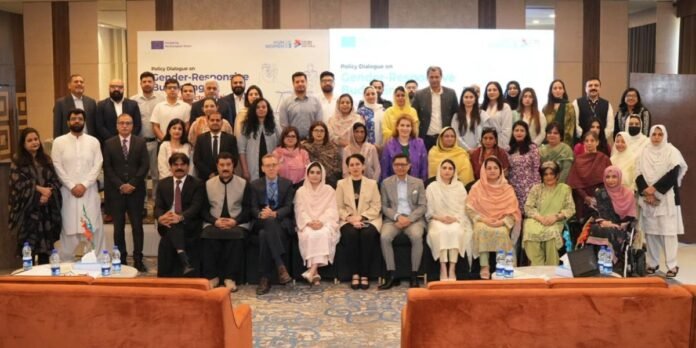
Islamabad: Through European Union financing and support, UN Women Pakistan convened a high-level policy dialogue on gender-responsive budgeting in justice sector institutions in Khyber Pakhtunkhwa and Balochistan, bringing together key stakeholders to strengthen equitable, accountable and evidence-based public finance systems.
UN Women is the United Nations entity dedicated to gender equality and the empowerment of women. It works globally to eliminate discrimination against women and girls, empower women, and achieve equality between women and men.
The dialogue focused on translating fiscal evidence into actionable reforms by examining how provincial budget allocations shape women’s access to justice and protection services.
Insights from the Gender Analysis of Provincial Budgets FY 2025–26 underscored a critical gap between increased overall spending and limited targeted investment in gender-responsive services within the justice sector.
In his keynote remarks, Jeroen Willems, Head of Cooperation to the European Union Delegation to Pakistan, underscored the importance of aligning financial systems with justice sector reform and said, “Gender-responsive budgeting is not merely a technical exercise, it is a governance imperative.
Ensuring that justice sector resources are allocated and utilized in ways that respond to the needs of women and girls is essential to building equitable, transparent and effective institutions.”
Speaking at the event, Fahmida Iqbal Khan, Deputy Country Representative, UN Women Pakistan, emphasised the need to translate investments into justice outcomes and stated, “While justice sector allocations have increased, the key challenge lies in ensuring that these investments lead to improved access to justice for women and girls.
Gender-responsive budgeting is critical to ensuring that justice systems are not only strengthened, but also inclusive and responsive to those most in need.”
Abdul Khaliq Sheikh, Secretary, Ministry of Human Rights, highlighted the importance of institutional accountability within justice systems and said that Integrating gender perspectives into justice sector budgeting processes is essential to ensure that institutions effectively respond to the needs of all citizens, particularly women and vulnerable groups.
He said that strengthening accountability across justice institutions will be key to delivering equitable justice outcomes.
The dialogue featured technical presentations and a moderated discussion on strengthening gender-responsive budgeting within justice sector institutions, including police, prosecution and judiciary systems.
Technical experts presented key findings from the gender budget analysis, highlighting critical gaps between increased overall sector allocations and limited targeted investment in gender-responsive services, such as survivor support, reporting mechanisms and gender-sensitive infrastructure.
These insights informed a panel discussion titled “From Fiscal Growth to Gender Outcomes: What Must Change in Upcoming Development Budgets?”, which brought together representatives from provincial finance and planning departments, justice sector institutions, civil society and development partners.
Participants identified priority reforms for upcoming development cycles, including strengthening gender budget tagging within justice portfolios, improving data and tracking systems, and enhancing coordination across institutions responsible for justice delivery.
The event concluded with a shared commitment to advance gender-responsive public finance reforms within the justice sector, ensuring that future provincial budget allocations translate into improved access to justice, protection services, and institutional responsiveness for women and girls in KP and Balochistan.
The dialogue was convened under the European Union-funded programme “Promoting Rule of Law and Enhancing the Criminal Justice System in Khyber Pakhtunkhwa, Newly Merged Districts and Balochistan,” with a total value of approximately USD 20 million, implemented by UNDP, UN Women and UNODC to strengthen rule of law and expand equitable access to justice, particularly for women and marginalized groups.
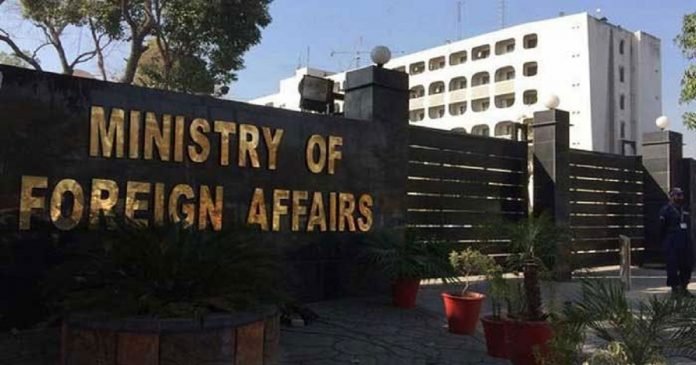
ISLAMABAD: Pakistan has rejected a statement by the British Special Representative regarding the situation along the Pakistan-Afghanistan border, describing it as one-sided and not reflective of the ground realities or the complex situation in the region.
Lindsay had shared a post by the UN Assistance Mission in Afghanistan (UNAMA) on the social media platform X, which stated it had documented “tens of civilians killed or injured” in strikes in eastern Afghanistan, including a university.
Foreign Office spokesperson Tahir Andrabi reiterated that Pakistan continues to face cross-border terrorism, with reports of attacks from Afghan Taliban forces on the Pakistani side.
He added that these incidents have resulted in the martyrdom of 52 civilians and injuries to 84 others.
Andrabi said since the announcement of the temporary pause, “indiscriminate and unprovoked cross-border attacks by the Afghan Taliban, and terrorist activities by Afghan Taliban-supported Indian proxies inside Pakistan, resulted in the martyrdom of 52 civilians and 84 injuries”.
The spokesperson rejected the Afghan authorities’ claims of civilian casualties, dismissing them as baseless and without evidence.
Islamabad urged the international community to view the situation in the region in light of Pakistan’s sacrifices and stance against terrorism, calling for a fact-based, impartial perspective.
ISLAMABAD: Tehran has submitted its latest proposal for negotiations with the United States, Iranian state media and a Pakistani official said on Friday, a move that could offer hope for breaking a deadlock in efforts to end the Iran war.
The official, involved in Pakistani mediation over the war, said Pakistan had received the proposal late on Thursday and had forwarded it to the U.S.
Neither the official nor Iranian state news agency IRNA gave details, and the White House declined to comment, while saying negotiations continued. Global oil prices, which remain well above $100 a barrel, eased following news of the proposal.
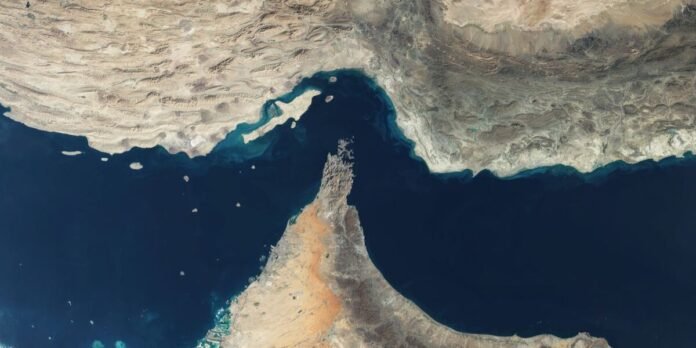
The closure of the Strait of Hormuz has caused unprecedented disruption to energy markets, choking off 20% of the world’s oil and gas supplies and causing a record rally in oil prices.
The blockade of the vital sea channel has also increased concerns that there will be an economic downturn. The U.S. Navy is blocking exports of Iranian crude oil, and on Friday the U.S. Treasury warned shippers that they risked sanctions if they paid tolls to Iran to pass through the Strait.
A ceasefire has been in place since April 8 but reports that U.S. President Donald Trump was to be briefed on plans for new military strikes to compel Iran to negotiate had pushed global oil prices up to a four-year high at one point on Thursday.
Iran has activated air defences and plans a wide response if attacked, having assessed that there will be a short, intensive U.S. strike, possibly followed by an Israeli attack, two senior Iranian sources told Reuters on condition of anonymity.
Washington has not said what its next steps are. Trump said on Tuesday he was unhappy with the previous proposal from Iran, and Pakistan has not set a date for new talks on ending a war that has killed thousands, mainly in Iran and Lebanon.
After U.S. and Israeli airstrikes on February 28, Iran fired at U.S. bases, infrastructure and U.S.-linked companies in Gulf states, while the Iran-backed Lebanese group Hezbollah launched missiles at Israel, which responded with strikes on Lebanon.
Underlining the concerns of the Gulf states, UAE presidential adviser Anwar Gargash said the “collective international will and provisions of international law” were the primary guarantors of freedom of navigation through the strait.
“And, of course, no unilateral Iranian arrangements can be trusted or relied upon following its treacherous aggression against all its neighbors,” Gargash wrote.
Trump faces a formal U.S. deadline on Friday to end the war or make the case to Congress for extending it under the 1973 War Powers Resolution.
The date looks set to pass without altering the course of the conflict after a senior administration official said that, for the purposes of the resolution, hostilities had terminated due to the April ceasefire between Tehran and Washington.
Financial and energy markets remained on edge because of concerns about the impasse over negotiations and worries that there could be a prolonged closure of the Strait of Hormuz.
Iranian Foreign Ministry spokesman Esmaeil Baghaei cautioned on Thursday against expecting quick results from talks.
A senior official of Iran’s Revolutionary Guards said any new U.S. attack on Iran, even if limited, would usher in “long and painful strikes” on U.S. regional positions, while Aerospace Force Commander Majid Mousavi was quoted by Iranian media as saying: “We’ve seen what happened to your regional bases; we will see the same thing happen to your warships.”
WASHINGTON: Work has not halted to bridge gaps between the United States and Iran, sources from mediator Pakistan said, despite the absence of face-to-face diplomacy after President Donald Trump called off a trip by his envoys over the weekend.
Iranian sources disclosed Tehran’s latest proposal on Monday, which would set aside discussion of Iran’s nuclear programme until the war is ended and disputes over shipping from the Gulf are resolved. That is unlikely to satisfy Washington, which says nuclear issues must be dealt with from the outset.
Hopes of reviving peace efforts have receded since the U.S. president scrapped a visit on Saturday by his envoy Steve Witkoff and son-in-law Jared Kushner to Islamabad, the Pakistani capital, where Iranian Foreign Minister Abbas Araqchi shuttled in and out twice over the weekend.
Araqchi also visited Oman over the weekend and went to Russia on Monday, where he met President Vladimir Putin and received words of support from a longstanding ally.
OIL PRICES RISE AGAIN
With the warring sides still seemingly far apart on issues including Iran’s nuclear ambitions and access through the crucial Strait of Hormuz, oil prices resumed their upward march when trade reopened on Monday. Brent crude was up around 3.5% at around $108.8 a barrel by 1500 GMT.
“If they want to talk, they can come to us, or they can call us. You know, there is a telephone. We have nice, secure lines,” Trump told “The Sunday Briefing” on Fox News.
“They know what has to be in the agreement. It’s very simple: They cannot have a nuclear weapon; otherwise, there’s no reason to meet,” Trump said.
Araqchi had a different perspective, telling reporters in Russia that Trump requested negotiations because the U.S. has not achieved any of its objectives.
ISLAMABAD REOPENS AFTER LOCKDOWN TO HOST TALKS
Senior Iranian sources, speaking on condition of anonymity, told Reuters the proposal carried by Araqchi to Islamabad over the weekend envisioned talks in stages, with the nuclear issue to be set aside at the start.
A first step would require ending the U.S.-Israeli war on Iran and providing guarantees that Washington cannot start it up again. Then negotiators would resolve the U.S. blockade and the fate of the Strait of Hormuz, which Iran aims to reopen under its control.
Only then would talks look at other issues, including the longstanding dispute over Iran’s nuclear programme, with Iran still seeking some kind of U.S. acknowledgment of its right to enrich uranium for what it says are peaceful purposes.
In a sign that no face-to-face meetings are planned any time soon, streets reopened in Pakistan’s capital Islamabad, which had been locked down for a week in anticipation of talks that never took place. The luxury hotel that had been cleared out to serve as a venue was again taking reservations from the public.
Pakistani officials said negotiations were still taking place remotely, but there were no plans to convene a meeting in person until the sides were close enough to sign a memorandum.
SHIPPING SNARLED BY BOTH SIDES
Although a ceasefire has paused the U.S.-Israeli strikes on Iran that began on February 28, no agreement has been reached on terms to end a war that has killed thousands, driven up oil prices, fuelled inflation and darkened the outlook for global growth.
Both sides could be settling in for a test of wills, to see who can endure the economic pain before making concessions.
Iran has largely blocked all shipping apart from its own from the Gulf through the Strait of Hormuz since the war began. This month, the United States began blockading Iranian ships.
Six tankers loaded with Iranian oil have been forced back to Iran by the U.S. blockade in recent days, ship-tracking data shows, underscoring the impact the war is having on traffic.
Between 125 and 140 ships usually crossed in and out of the strait daily before the war, but only seven have done so in the past day, according to Kpler ship-tracking data and satellite analysis from SynMax, and none of them were carrying oil bound for the global market.
With his approval ratings falling, Trump faces domestic pressure to end the unpopular war. Iran’s leaders, though weakened militarily, have found leverage with their ability to stop shipping in the strait, which normally carries a fifth of global oil shipments.
Authorities on Sunday formally lifted traffic restrictions across the twin cities and highly commended the residents of Islamabad and Rawalpindi for showing patience during the recent security-related road closures.
Security was heightened, and restrictions were imposed for several days in the area ahead of anticipated US-Iran peace talks.
“Traffic restrictions around the Serena Hotel and the Red Zone have been lifted as of today. I extend my deepest gratitude to the people of Pakistan—particularly the residents of Islamabad and Rawalpindi—for their patience and cooperation,” Deputy Prime Minister and Foreign Minister Ishaq Dar wrote on his X account.
DPM Dar said their support had enabled the government to ensure the safety of the state guests and to advance the efforts for regional peace. “We remain committed to these objectives and deeply value your continued prayers and well wishes,” he maintained.
Authorities were seen removing barricades in the twin cities on Sunday.
The development comes as Prime Minister Shehbaz Sharif earlier said he had spoken to Iranian President Masoud Pezeshkian on April 25 after the second round of US-Iran negotiations in Islamabad were called off and reiterated Islamabad’s commitment to facilitating “durable peace”.
President Donald Trump said on Sunday that Iran can reach out to the United States if it wants to negotiate an end to the war between the two countries.
“If they want to talk, they can come to us, or they can call us. You know, there is a telephone. We have nice, secure lines,” Trump said in an interview on Fox News’ “The Sunday Briefing.”
Trump cancelled a trip by his envoys Steve Witkoff and Jared Kushner to Pakistan on Saturday, dealing a new setback to peace prospects after Iranian Foreign Minister Abbas Araghchi departed Islamabad after speaking only to Pakistani officials.
ISLAMABAD: Iranian Foreign Minister Abbas Araghchi arrived in Pakistan on Sunday following completing a brief visit to Oman as Islamabad intensified diplomatic efforts to revive stalled talks between Washington and Tehran.
He is undertaking the trip against the backdrop of ongoing diplomatic efforts, notably by Pakistan, to bring Tehran and Washington to the table to talks aimed at ending the conflict that began with US-Israeli strikes on Iran on February 28.
In Oman, Araghchi held talks with Sultan Haitham bin Tariq al-Said on security in the Strait of Hormuz and diplomatic efforts to end the Iran-US conflict.
The Iranian foreign minister is scheduled to depart for Moscow following his engagements in Pakistan.
Earlier, Iran’s official IRNA news agency reported that Araghchi would stop again in Islamabad before travelling to Russia.
According to Iran’s ISNA news agency, Araghchi is expected to meet Pakistani officials during his return visit to convey “Iran’s positions and views on the framework of any understanding to completely end the war”.
Araghchi had been in Islamabad only the day before, after which he travelled to Oman, while other Iranian envoys had headed back to Tehran “to consult and obtain the necessary instructions on issues related to ending the war”, according to ISNA news agency.
Before Saturday’s Iran-Pakistan meetings in Islamabad, the White House had announced that Trump’s peace envoy Steve Witkoff and son-in-law Jared Kushner were planning to leave for Pakistan to engage in further negotiations.
But Trump later told Fox News he had scrapped the trip, saying there was no point “sitting around talking about nothing”.
He dismissed Tehran’s negotiating position, but added that it had revised its proposal within minutes of his decision.
“They gave us a paper that should have been better and — interestingly — immediately when I cancelled it, within 10 minutes, we got a new paper that was much better,” he told reporters, without elaborating.