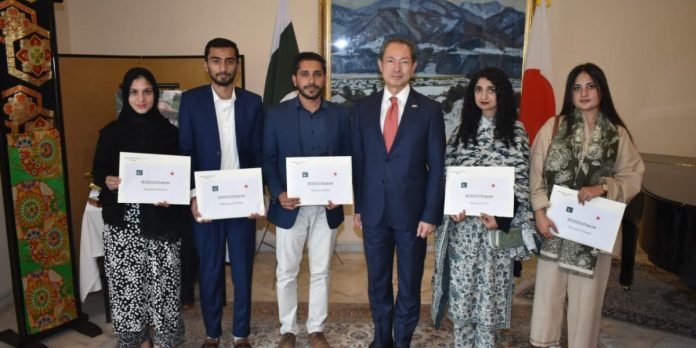
ISLAMABAD: On the invitation by the Government of Japan, five Pakistani university students will visit Japan to participate in the JENESYS (Japan-East Asia Network of Exchange for Students and Youths) program
This year’s program centers on the theme ‘Environmental Sustainability and Disaster Resilience.’ The students are scheduled to visit Japan from December 16 to 23, joining a delegation of 35 high school and university students from SAARC countries.
During their visit, participants will engage in activities designed to deepen their knowledge of Japan’s economy, history, politics and diplomatic relations. They will also experience Japanese culture through lectures, discussions and site visits aligned with the program’s theme.
The Embassy of Japan in Islamabad today held a pre-departure orientation session for the visiting students from Pakistan to provide them useful information before their departure for Japan.
Ambassador of Japan to Pakistan Akamatsu Shuichi while interacting with the students, conveyed his best wishes, and expressed his hopes that the student’s visit would be enriching and encouraged them to maximize this unique learning opportunity. He highlighted the value of the homestay experience, offering both the students and their Japanese hosts a chance to share and appreciate their respective cultural heritages. The Ambassador emphasised the student’s role as cultural ambassadors, fostering stronger ties and greater mutual understanding between Japan and Pakistan.
Established by the Japanese Government, the JENESYS program is a youth exchange program between Japan and the Asia Pacific region that seeks to enhance mutual understanding and respect between Japan and the Asia-Pacific region
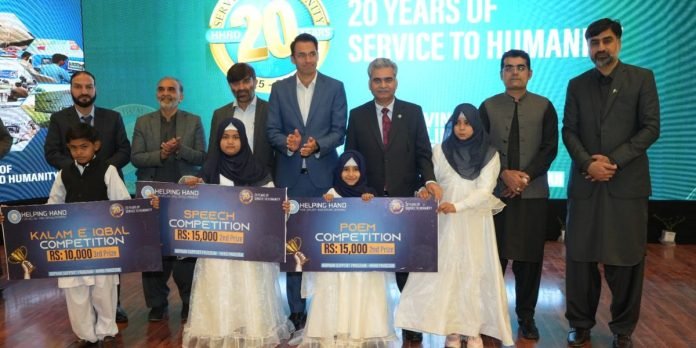
ISLAMABAD: Helping Hand for Relief and Development (HHRD) marked a significant milestone as it celebrated two decades of humanitarian service in Pakistan during a ceremony held in Islamabad. Addressing the gathering, Country Director HHRD Pakistan, Muhammad Saleem Mansoori, highlighted that the organisation—founded by Pakistani-Americans—has worked across all four provinces, Azad Jammu & Kashmir, and Gilgit-Baltistan, impacting over 45 million lives through its diverse programmes.
Over the past 20 years, HHRD’s extensive initiatives have delivered transformative results. Its emergency relief and disaster management programmes have aided over 10 million people, while seasonal projects have provided essential supplies to 4.8 million families. The organisation has ensured clean drinking water for 2 million individuals, supported the education of 340,000 students, and provided comprehensive care for 122,000 orphans. Additionally, its empowerment programmes have equipped 80,000 youth with employable skills, and its health initiatives have restored eyesight to 31,000 individuals through cataract surgeries.
The event was addressed by notable figures, including Prof. Dr. Anis Ahmed, Vice Chancellor of Riphah International University Islamabad; Chairman of Muawin Foundation, Admiral Muhammad Asif Sandila; Special Secretary Health, Dr. Aslam Ghouri; and other dignitaries, including Syed Samar Abbas and Naeem Arshad Awan. The speakers paid rich tribute to HHRD’s twenty years of dedicated service.
Dignitaries commended HHRD’s longstanding contribution, and awards were distributed among high-achieving orphaned and disabled children. The leadership of Helping Hand expressed profound gratitude to all donors and volunteers, reaffirming its commitment to expanding the mission of serving humanity with responsibility and sincerity in the years ahead.
ISLAMABAD: Pakistan’s digital commerce landscape is set for transformation with the launch of LUMU, a new eCommerce platform aiming to redefine how people buy, sell, and connect online. Positioned as a “business empowerment online portal,” LUMU seeks to uplift small enterprises, support local producers, and make quality products accessible to households nationwide.
Built on principles of empowerment, accessibility, and inclusivity, the platform connects manufacturers and producers directly with consumers, eliminating traditional wholesale and retail layers that drive up prices. This model enables customers to access premium-quality products at affordable rates without compromising on authenticity or value.
Founder and CEO Abdullah Shah said the initiative is designed to support Pakistan’s digital economic revival. “LUMU is not just a brand; it is a catalyst for economic revival. Our vision is to create thousands of new job opportunities and open digital doors for small and medium businesses across Pakistan. By connecting local producers and entrepreneurs directly with consumers, we aim to enable sustainable income generation and contribute to the country’s digital growth. LUMU aspires to position Pakistan as a competitive force in global eCommerce through empowerment, innovation, and inclusion,” he stated.
Co-founder and Chief Digital Officer Fahad Malik (Tamgha-e-Imtiaz in Digital Media & Technology) highlighted the platform’s commitment to trust, transparency, and quality. “We are leveraging data and personalised digital campaigns to replace generic online selling with a community-focused and engaging shopping experience. We are rigorously vetting local producers to ensure every product is authentic and meets the standards our consumers deserve. By cutting out intermediaries, we are reducing costs while building a direct relationship of trust between creators and consumers. This is eCommerce reimagined for the people,” he said.
Co-founder, Chief Marketing and Communication Officer (CMCO), Mr. Rafiqullah Siddiqui, shared the strategic vision: “The strategy for LUMU is built on scalability and sustainability. By digitizing the producer-to-consumer value chain, we are laying the structural foundation for Pakistan’s next wave of digital exports.
LUMU also aims to advance social responsibility by supporting underprivileged and small-scale producers, offering them a digital platform to showcase their work. The company says this approach will help uplift communities, create sustainable livelihoods, and promote local craftsmanship globally.
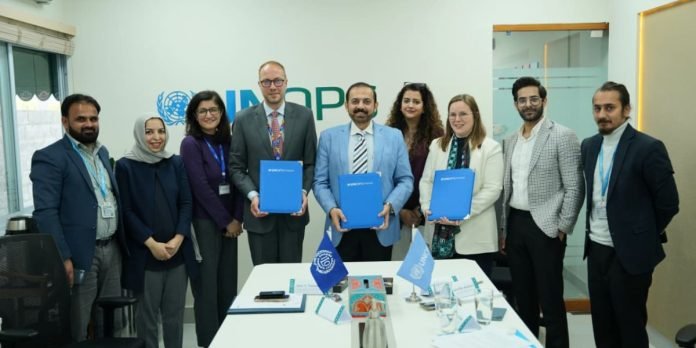
ISLAMABAD: The Coca-Cola Foundation (TCCF) is supporting the United Nations Office for Project Services (UNOPS) to launch a pilot project titled ‘Sustainability & Decent Work in Pakistan’s PET Recycling Value Chain,’providing USD 500,000 for the project, which will be implemented in the Islamabad Capital Territory (ICT)—an area that generates over 3,300 tons of municipal solid waste daily, of which an estimated 79% is recyclable.
The partnership was formalized in Islamabad by Dr Faisal Hashmi, Senior Director, Public Affairs, Communication & Sustainability, Coca-Cola Pakistan; Jennifer Ankrom, Country Manager, UNOPS Pakistan; and Geir Tonstol, Country Director, ILO Pakistan. Representatives from the International Labour Organization (ILO), UNOPS’ key project partner, were also present.
Key project activities include a comprehensive analysis of sectoral challenges, occupational safety and health training for waste pickers and handlers, facilitation of cooperative formation for waste pickers, and a diagnostic study to map the PET value chain. ILO, as the UN agency for decent work, will contribute essential expertise on labor rights, occupational safety, and worker formalization.
“This collaboration with UNOPS demonstrates The Coca-Cola Foundation’s commitment to advancing waste collection and management systems while ensuring that those at the heart of the system—the informal waste pickers—receive the recognition, protection, and opportunities they deserve,” said Carlos Pagoaga, President of The Coca-Cola Foundation.
Dr Faisal Hashmi senior director Public Affairs Communication and Sustainability, Coca-Cola Pakistan, echoed this commitment, “We thank TCCF for their support. This project represents a tangible step forward in creating shared value in the local community.”
Highlighting the importance of the initiative, Ms Jennifer Ankrom, Country Manager, UNOPS Pakistan, said: “By strengthening the PET recycling value chain, this initiative not only addresses the urgent challenge of plastic pollution but also empowers Pakistan’s informal waste pickers with safer, more dignified livelihoods. Together with The Coca-Cola Foundation, we are establishing a model to transform waste into opportunity.”
Geir Tonstol, Country Director for the International Labour Organization (ILO) in Pakistan, emphasized that improving the PET recycling value chain requires both technical solutions and a strong focus on people. He stated that this partnership offers an important opportunity to enhance working conditions for informal waste pickers and promote decent work practices throughout the system, drawing on ILO’s core expertise.
According to WWF, Pakistan generates nearly two million tonnes of plastic waste each year, 86% of which is not properly managed. Like many developing countries, Pakistan faces major challenges in waste collection and management, resulting in significant environmental impacts. The outcomes of this pilot project are expected to promote the adoption of a similar framework for more sustainable and inclusive waste collection, management, and recycling at the national level.
ISLAMABAD: OxfordAQA organanized its serious of ‘Continuous Professional Development’ (CPD) training sessions across Pakistan’s major educational hubs, Lahore and Islamabad, reinforcing its commitment to empowering teachers with world-class teaching methodologies.
the OxfordAQA, which conducted serious of sessions, is an international exam board that provides International GCSEs and A-levels to schools across the world. Created as a partnership between Oxford University Press, a department of the University of Oxford, and AQA, the UK’s largest provider of GCSEs and A-levels, OxfordAQA is built on unrivalled experience and expertise in education and assessment. OxfordAQA qualifications are designed specifically for international students, to equip them with the higher-order skills they need to succeed, at university and beyond.
Led by Jamie Kirkaldy, Head of Teaching and Learning Support at OxfordAQA, the sessions brought together teachers to explore practical strategies for embedding critical thinking into classroom practice.
“Critical thinking is at the heart of OxfordAQA’s qualifications,” said Jamie Kirkaldy. “Our CPD programme is designed to help teachers embed these skills into everyday teaching, so students learn to question, evaluate, and think independently.” He also elaborated how CPD, particularly CPD that focuses on enhancing higher-order critical thinking skills is a powerful catalyst for educational transformation.
Teachers who engage in CPD are better equipped to model critical thinking behaviors, design learning experiences that challenge students to move beyond surface-level understanding and facilitate deeper classroom discussions that encourage analytical reasoning – all of which are key components to success in examinations and higher education.
In the rapidly changing educational landscape, Continuous Professional Development serves as the bridge between traditional teaching methods and the dynamic needs of 21st-century learners. It enables educators to reflect on their practice, learn new strategies, and implement evidence-based approaches that directly impact student outcomes.
Salma Adil, Director OxfordAQA mentioned at the occasion “Embedding critical thinking into everyday teaching is not just important—it’s essential for preparing students to thrive in a complex, globalised world. At OxfordAQA, we believe this is the foundation for lifelong learning and success”. He added.
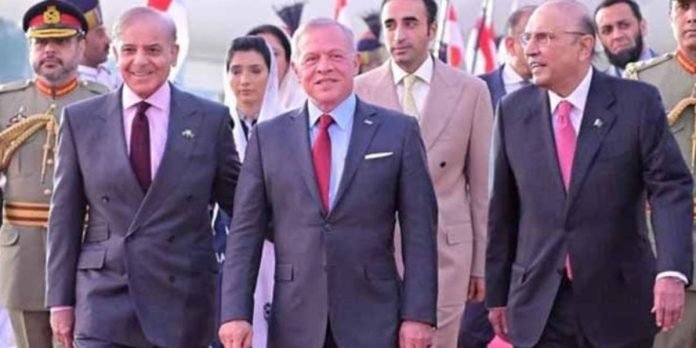
King Abdullah II ibn Al Hussein arrived in Islamabad on a two-day official visit to Pakistan, marking the first visit by a Jordanian monarch in 21 years. President Asif Ali Zardari and Prime Minister Muhammad Shehbaz Sharif received the King at Nur Khan Airbase.
Expressing his views on the occasion, President Asif Ali Zardari said that King Abdullah II’s visit would give Pakistan-Jordan relations a new strategic dimension. He said that the ties between the two countries are built on historical brotherhood, mutual trust and shared values.
King of Jordan is undertaking a two day state visit to Pakistan on the invitation of Prime Minister Muhammad Shehbaz Sharif.
Earlier, as the King’s aircraft entered Pakistani airspace, a formation of Pakistan Air Force JF-17 Thunder aircraft provided a protective escort and accompanied the royal flight to Islamabad.
During his visit, King Abdullah will hold meetings with President Asif Ali Zardari and the Prime Minister Muhammad Shehbaz Sharif.
During the meetings, complete range of bilateral relations between the two brotherly countries will be discussed.
A special investiture ceremony to confer the highest civilian award upon King Abdullah II will also take place at Aiwan-e-Sadr.
King Abdullah II’s visit to Pakistan reflects the long-standing brotherly relations between Pakistan and Jordan. This visit will further strengthen the political, economic and cultural ties between the two countries.
King Abdullah II ibn Al Hussein arrived in Islamabad on a two-day visit to Pakistan. It is the first official visit by a Jordanian monarch in 21 years.The King of Jordan,
President Asif Ali Zardari and Prime Minister Muhammad Shehbaz Sharif received the King at Nur Khan Airbase.
ISLAMABAD: Pakistan moved closer towards its vision of a cashless and digital future as first-ever cashless weekly bazar was inaugurated in Sector H-9 on Friday. The ceremony was attended by Chairman of the Capital Development Authority (CDA) Muhammad Ali Randhawa, along with officials from the State Bank of Pakistan, Zindigi and the Islamabad administration.
Chairman Randhawa reviewed the digital payment system across the bazaar and made purchases using cashless methods. Shoppers were informed about the benefits of digital transactions, including convenience, transparency, and security. Special discounts are also being offered for payments made electronically.
The CDA chief told said on this occasion that the cashless system will be extended to all commercial centres, hospitals, restaurants, and Islamabad Airport. He urged banks to provide maximum facilities to traders and consumers and directed a public awareness campaign to ensure smooth adoption.
“This initiative aligns with the vision of the Prime Minister and Interior Minister to transform Islamabad into Pakistan’s first fully digital city,” he said, emphasizing that cashless transactions will help prevent fraud while facilitating citizens and businesses alike.
Prime Minister Shehbaz Sharif has called an emergency meeting of the federal cabinet today (Wednesday) to assess Pakistan’s deteriorating security situation and consider key policy responses, official sources said.
According to the sources, cabinet members have been instructed to remain available for the session, although a formal agenda has not yet been shared with them.
The cabinet is expected to deliberate on important measures concerning national security, while other major political and administrative issues will also come under discussion.
The meeting comes amid a renewed surge in militant activity linked to groups operating from across the Afghan border.
On Tuesday, a suicide bombing in Islamabad killed 12 people and injured 36 others, while tensions along the Pakistan-Afghanistan border have also intensified in recent weeks.
ISLAMABAD: After two consecutive days of detailed discussions, the joint parliamentary committee of the Senate and National Assembly on Law and Justice approved the draft of the 27th Constitutional Amendment on Sunday.
A report on the proposed amendment has also been finalised and will be presented in the Senate on Monday, with its presentation in the National Assembly likely the same day.
The joint session, co-chaired by Senators Farooq H. Naek and Mehmood Bashir Virk, was convened to review and finalise the draft of the amendment. The meeting was attended by Federal Law Minister Azam Nazeer Tarar, Minister of State for Railways and Finance Bilal Azhar Kayani, Attorney General Mansoor Usman Awan, PPP leader Naveed Qamar, and several other members.
While Jamiat Ulema-e-Islam (JUI-F) had boycotted the previous day’s proceedings, one of its representatives attended Sunday’s session. However, members of the PTI, Majlis Wahdat-e-Muslimeen (MWM), Pakhtunkhwa Milli Awami Party (PkMAP), and Sunni Ittehad Council continued their boycott and did not participate.
The committee’s work was divided into two sessions. During the first session, members approved amendments to Article 243, as well as provisions for establishing a constitutional court and other key clauses, paving the way for judicial reforms.
An amendment extending the time frame for pending case decisions from six months to one year was also approved. Under the new provision, any case remaining inactive for a year will be considered disposed of. Additionally, a clause granting lifelong immunity to the President of Pakistan received approval.
Following a short recess, the second session lasted over two hours, during which members gave final approval to the complete draft of the 27th Constitutional Amendment. The committee will now submit its report to the upper house.
Government coalition partners presented three additional amendments, while the Awami National Party (ANP), Balochistan National Party (BNP), and Muttahida Qaumi Movement (MQM) also put forward their proposals. Some were deferred for further discussion, while others were rejected.
Confirming the development, Senator Farooq H. Naek said that the draft had been approved with certain changes incorporated during deliberations. “The Law Minister and I have been authorised to make minor modifications where necessary,” he stated.
When asked by journalists about the immunity clause for President Asif Ali Zardari, Naek responded, “The amendment hasn’t even been passed yet — why are you getting upset already?”
Speaking to reporters after the meeting, Deputy Prime Minister and Foreign Minister Senator Ishaq Dar expressed satisfaction, saying it was encouraging that members had reached consensus on the proposed amendments. “Everything, including Article 243, has been agreed upon. The report will be presented in the Senate tomorrow,” he remarked, calling it “a positive step for the country.”
Law Minister Azam Nazeer Tarar indicated possible progress on MQM’s proposals, noting that the report would be tabled in the Senate on Monday at 11:30 a.m. He added that the amendment was expected to pass with a majority vote and could also be presented in the National Assembly later the same day.
Tarar further stated that most clauses of the amendment bill had been finalised, while a few newly received proposals were still under discussion. He confirmed that consultations were held on a possible name change for Khyber Pakhtunkhwa and that suggestions from the MQM and Balochistan Awami Party (BAP) were under review.
“The ANP and BAP will consult their leaderships before reaching a final decision,” he added.
It is worth mentioning that a constitutional amendment requires a two-thirds majority in both houses of parliament — 64 votes in the Senate and 224 in the National Assembly. The opposition, which currently holds 30 seats in the Senate, is expected to oppose the amendment.
As a student, reporter, and researcher who experienced university life from 2022 to 2025 and spent several years among young people, I often meet boys who feel confused about friendships with girls at university. They do not always understand where a friendly gesture ends and where someone begins to take unfair advantage. This article aims to raise awareness, not to attack girls or make boys fearful, but to help both sides build respectful and equal relationships.
University life in Islamabad is colorful. Students meet new people, share ideas, and join groups. For many boys, this is their first time living away from family. They want to be liked, they want to help, and they often carry strong hopes about romance. These feelings are normal, but they can also make a boy vulnerable to influence.
Mothers often warn their children that people sometimes try to get what they need from others. Sometimes this is done honestly; other times through soft pressure. Soft pressure can look like giving extra praise, asking for favors again and again, using kind words only when help is needed, or ignoring someone after the work is done.
Both girls and boys can behave this way, but in discussions with male students, I often hear stories where a girl’s warmth becomes a tool to gain academic notes, transport, money for snacks, or personal favors.
Some common examples include borrowing lecture notes or assignments repeatedly, asking for daily pick and drop services, requesting mobile balance or small cash help on a regular basis, seeking help in research projects or presentations, asking for emotional support during stress, and using a boy’s contacts to attend social events. Each of these things can be fine inside a genuine friendship, but they become unhealthy when the kindness is one-sided and the boy feels used.
My friend Emaan Asim once asked, “Why do boys fall for it?” The best answer may be that boys in their late teens or early twenties often wish to feel important, hope for a future relationship, lack confidence in saying no, believe that helping will earn respect, or fear hurting someone’s feelings. These emotions create weakness when boundaries are unclear.
Here are a few real statements from counseling sessions, with names changed for privacy: Ziyad said, “She only called me when she needed help with assignments. After exams, I never heard from her.” Naseer shared, “I drove her every day for six months. When I asked if we could spend time as friends, she said I was like a brother.” Azam said, “I paid for lunch many times because I felt shy to refuse.” Umer said, “She told me I was special, but later I found she said the same to other boys.” Ahmed said, “I stayed up late doing her research work. She thanked me and blocked my number later.” Saad said, “I thought we were close. She would cry about her problems but never asked about mine.” Zeeshan said, “I gave her my notes before every quiz. She stopped talking after the semester ended.” Nadir said, “I felt proud when she chose me for help. Later I realized she only needed my contacts and blocked me after her work was done.”
These stories show sadness but also an important lesson about personal boundaries. Boys should keep a balance between giving and receiving, ask themselves if the friendship benefits both sides, learn polite ways to say no, and not confuse every act of kindness with hope of romance. Good friendships require honesty and respect from both sides.
Parents and teachers also play a key role. Universities can organize workshops on communication and respectful behavior. Parents should talk to their sons about confidence and emotional limits, not just grades.
Campus life in Islamabad can be a beautiful start to adulthood. Friendships with girls are part of learning and growth. But boys need awareness about emotional pressure so they do not lose focus or self-respect. Girls also benefit when friendships remain fair and clear. Respect, honesty, and balance protect everyone.
This article is written for educational purposes. Understanding manipulation in a psychological sense helps both men and women build better relationships and a safer university culture.
About the Author: Mansoor Ahmed Qaisrani is a scholar and researcher of international relations who has been affiliated with the Institute of Regional Studies, the South Asian Strategic Stability Institute, and PTV News. He writes on foreign policy, economics, defense, sociology, and the judiciary. Reach him at: mqaisrani634@gmail.com