
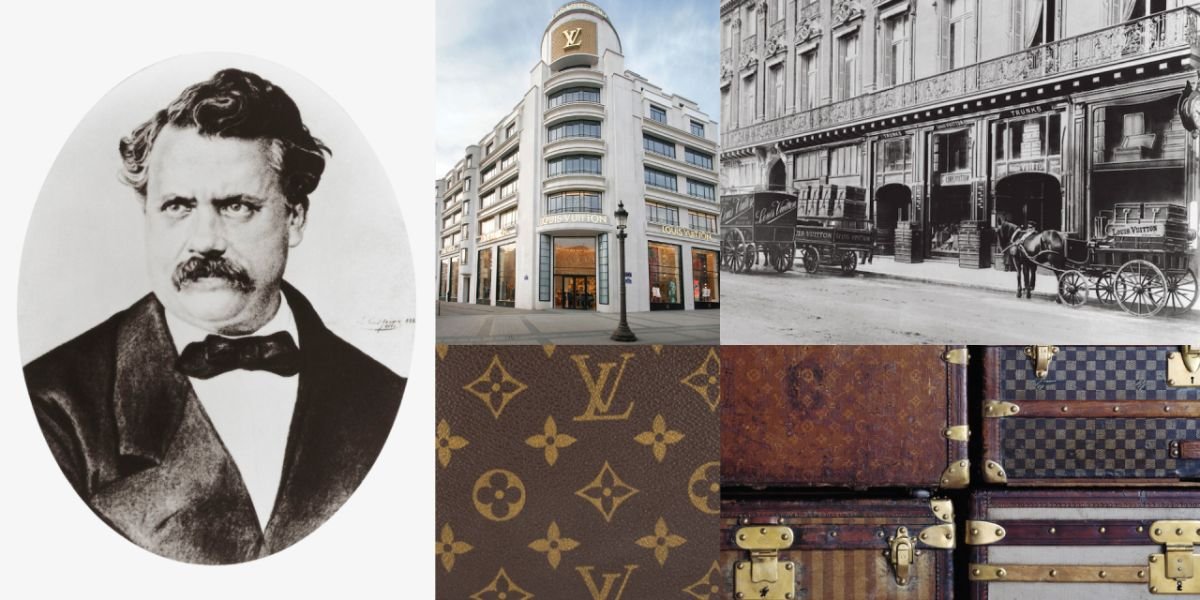
Before Louis Vuitton Became a Name, There Was a Young Man Walking to Paris
When people see the familiar Louis Vuitton monogram today, they usually think of luxury. The brown-and-beige pattern has become one of the most recognisable symbols in fashion, appearing on handbags, luggage and accessories around the world.
But there is another story behind those initials. It is a story about work.
Louis Vuitton was born in 1821 in Anchay, a small village in France’s Jura region. His family were millers, and he grew up in a setting where working with one’s hands was part of everyday life.
At 14, he left home and began making his way to Paris on foot.
It is difficult to imagine what that meant for a teenager in those days. Paris was hundreds of kilometres away, and Louis had neither a family business waiting for him nor any guarantee of what he would find there. He worked along the way, taking whatever employment was available.
By the time he reached Paris in 1837, he had already learned something that would stay with him for the rest of his life: if he wanted a different life, he would have to work for it.
In Paris, he found work with Romain Maréchal, a well-known trunk-maker and packer. This marked the beginning of his career and a long period of learning.
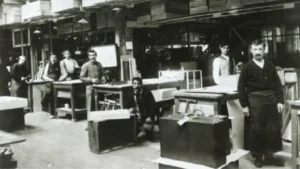
Louis Vuitton spent 17 years in the trade before opening his own workshop. That is easy to overlook when looking at the company he eventually built. Today, the name is associated with a global fashion house. At the beginning, however, it belonged to a young craftsman who had spent years learning how to make and pack trunks properly.
There was no shortcut. He learned his trade from the ground up, while the trade itself was changing.
Travel in 19th-century Europe was becoming more common and more sophisticated. People were travelling by carriage, railway and ship, and they needed luggage that could withstand the journey. Vuitton understood that this was not simply a matter of making attractive trunks. They had to be useful.
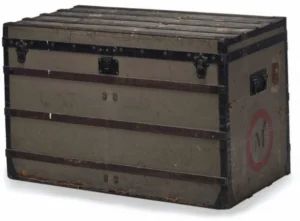
That practical approach shaped his business.
In 1854, he opened his own workshop in Paris. He began developing luggage that was lighter and more convenient for travellers. His flat-topped trunks were particularly useful because they could be stacked more easily.
It sounds like a small improvement today.
At the time, however, it was the sort of practical thinking that could set one craftsman apart from another.
Vuitton was not trying to invent luxury. He was trying to make a better trunk.
That distinction matters.
In 1859, as the business grew, he moved production to Asnières, outside Paris. The workshop became an important centre for the company’s trunk-making and craftsmanship. The location was also practical, with access to transport and the poplar wood used in the construction of the trunks. The historic workshop remains part of Louis Vuitton’s heritage.
By then, the name Louis Vuitton was becoming known among travellers and customers who valued the quality of his work.
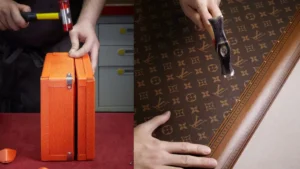
That reputation did not come from advertising campaigns or celebrity endorsements.
It was built slowly.
One customer at a time.
One trunk at a time.
One improvement at a time.
Louis Vuitton died in 1892, but the business continued under his son, Georges. The company expanded and eventually faced a problem familiar to successful businesses: imitation.
In 1896, Georges Vuitton introduced the canvas pattern that would become the famous LV Monogram. The design used his father’s initials along with floral motifs. It also helped distinguish Louis Vuitton products from copies.
The irony is that something which would eventually become a symbol of luxury had quite a practical beginning.

It was a way of identifying the product.
Over the decades, of course, the meaning of the name changed. Louis Vuitton moved well beyond trunks and luggage and became one of the world’s most recognisable luxury brands.
But when we look at the company today, it is easy to forget how ordinary its beginnings were.
There was no famous name when Louis left his home.
There was no luxury industry waiting for him.
There was a long road to Paris, some difficult jobs and then an apprenticeship that lasted 17 years.
The business came afterwards.
This is perhaps the most interesting part of the Louis Vuitton story. It is not really a story about fashion. It is a story about what can happen when someone learns a skill, takes his work seriously and stays with it for a long time.
We often hear that successful people are determined. But determination is rarely as dramatic as it sounds.
Most of the time, it means continuing when nobody is paying attention.
It means spending years learning something before anyone knows your name.
It means improving a product because you believe it can be better, even when the improvement seems small.
And it means accepting that recognition may come much later, if it comes at all.
Louis Vuitton’s life followed that pattern.
A teenager left a small village in France. He walked towards Paris. He found work. He became an apprentice. He spent years learning a craft. Eventually, he opened his own workshop and built a reputation.

His name then travelled much further than he ever could have imagined.
Today, the Louis Vuitton monogram is seen across the world.
But the monogram is only the visible part of the story.
Behind it are years of apprenticeship, hard work and persistence.
Before the brand became famous, the man had to become good at what he did.
And that may be the simplest lesson in the whole story.
The name came later. The work came first.