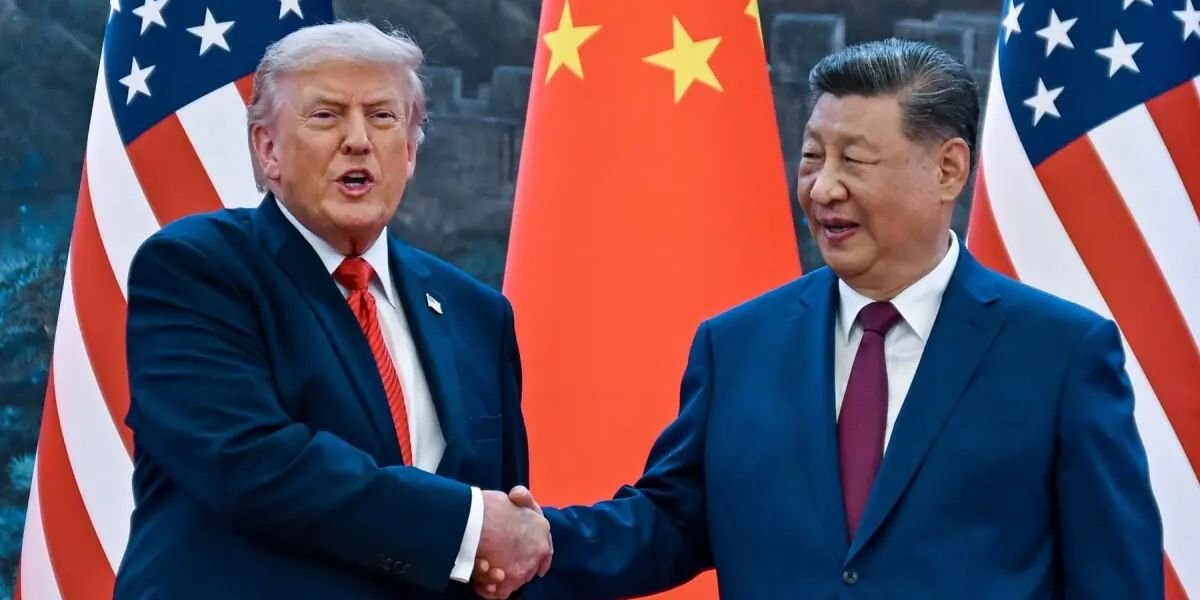
President Donald Trump’s May 2026 visit to Beijing was expected to reset global geopolitics, calm financial markets, pressure China on Iran, secure trade breakthroughs, and perhaps establish a new strategic understanding between the world’s two largest powers. Instead, the visit exposed something far more consequential: a visible shift in global leverage from Washington to Beijing. What was projected as a high-stakes diplomatic triumph increasingly appeared to many observers as a journey of strategic desperation, where the United States arrived seeking concessions while China calmly projected patience, confidence, and restraint.
The visit came at perhaps the worst possible moment for Washington. The United States entered Beijing politically exhausted, militarily stretched, economically pressured, and diplomatically weakened after months of confrontation surrounding Iran, the Strait of Hormuz crisis, sanctions battles, and growing instability in global energy markets. China understood this reality fully. Beijing knew that America’s military-industrial supremacy, once considered untouchable, had suffered reputational damage after Iran managed to withstand the combined pressure of the United States and Israel without surrendering its strategic posture. The longer the war dragged on, the more global markets, oil routes, and supply chains trembled.
Trump arrived in Beijing hoping to secure Chinese cooperation on several critical fronts. Washington wanted China to pressure Iran into reopening the Strait of Hormuz completely and stabilizing energy shipments. The United States also sought Chinese compliance with sanctions and shipping restrictions targeting vessels accused of supporting Iran. Another major American objective was to reduce Chinese economic engagement with Venezuela, whose oil exports had increasingly escaped U.S. pressure mechanisms. Simultaneously, Washington expected movement on agricultural purchases, aircraft deals, tariff relief, and broader trade normalization.
Yet despite all the ceremonial grandeur, lunches, tours, dinners, and carefully choreographed hospitality, China committed to virtually nothing concrete on the core geopolitical disputes.
The most sensitive issue of all remained Taiwan. Chinese President Xi Jinping reportedly warned Trump in direct terms that mishandling Taiwan could push both countries toward confrontation or even open conflict. Trump, unusually cautious throughout the visit, avoided public comments about Taiwan while in Beijing. Only after boarding Air Force One did he hint that he may reconsider arms sales to Taipei after hearing Xi’s objections.
That hesitation alone sent shockwaves through strategic circles. Taiwan represents the center of China’s national reunification doctrine under the “One China” policy. Beijing views Taiwan not as a separate sovereign state, but as a breakaway province destined eventually to return to the mainland—much like Hong Kong returned after decades of British control. China’s leadership believes time is now increasingly on its side. Hong Kong’s reintegration demonstrated Beijing’s long-term strategic patience, and Chinese policymakers appear convinced that Taiwan’s eventual absorption into the broader Chinese system is historically inevitable.
Trump’s reluctance to firmly reaffirm military backing for Taiwan revealed how complicated the balance of power has become. America once projected overwhelming confidence in East Asia. Today, Washington appears increasingly cautious about opening another major confrontation 9,500 miles away while already struggling to manage crises in the Middle East.
Equally important was China’s silence on the Iran war. Trump publicly claimed that Xi agreed a nuclear-armed Iran would be dangerous and even offered help in ending the conflict. Yet Beijing itself avoided confirming any such alignment. China maintained its carefully balanced diplomatic position, emphasizing only that all parties’ concerns should be considered.
That distinction mattered enormously. China has no interest in openly endorsing an American-led strategy that weakens one of Beijing’s critical energy and geopolitical partners. Iran remains central to China’s Belt and Road ambitions, regional connectivity plans, and long-term energy security. Beijing also deeply resented American efforts to interfere with Chinese shipping, oil imports, and maritime operations linked to Iran. The Chinese leadership clearly signaled that while it favors stability, it will not become an enforcement arm of U.S. pressure campaigns.
Meanwhile, the economic dimension of the trip produced more headlines than substance. Trump spoke enthusiastically about potential aircraft purchases, suggesting China could buy between 200 and eventually 750 Boeing planes. There were also discussions involving General Electric engines, agricultural products, investment boards, and reciprocal tariff reductions.
But the markets were not impressed. Global investors had expected major breakthroughs—perhaps a concrete trade accord, sanctions relief, maritime understandings, or joint statements stabilizing geopolitical tensions. Instead, what emerged was vague language, future possibilities, and broad diplomatic formulations without enforceable commitments.
Financial markets reacted negatively because traders recognized the gap between optics and outcomes. The world economy today is deeply fragile. Oil prices remain volatile. Shipping insurance costs are elevated. Supply chains are unstable. Fertilizer markets, aviation industries, and industrial production continue facing enormous uncertainty tied to Middle Eastern instability. Investors were hoping for decisive clarity. What they received instead was strategic ambiguity.